JERUSALEM, March 17, 2026 – Pancreatic cancer may start hiding from the immune system long before it is clinically detected, according to a new study from researchers at the Hebrew University of Jerusalem (HU).
The research, published in Gastroenterology, reveals that early precancerous pancreatic cell groups also seem to communicate directly with nearby immune cells in ways that may weaken the body’s ability to fight them.
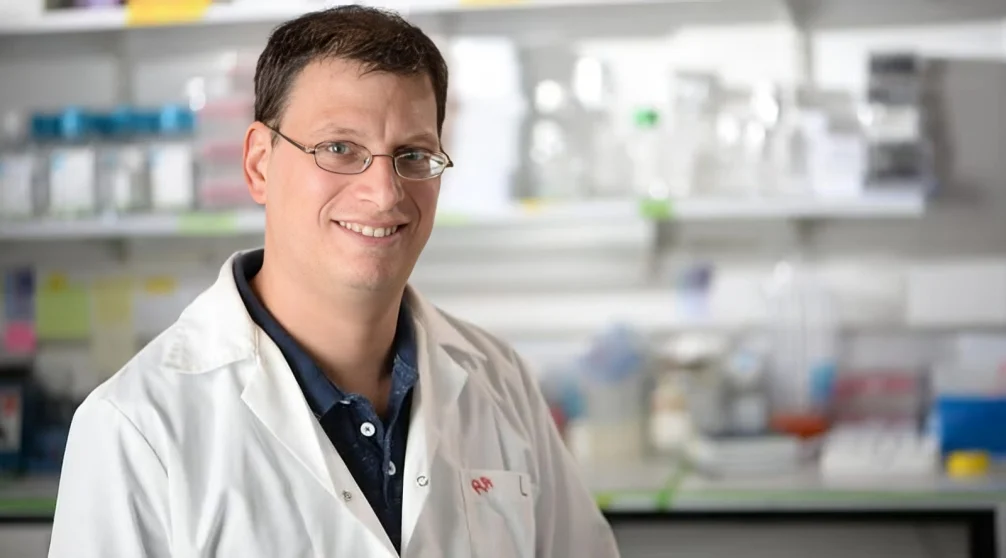
The study led by Dr. Oren Parnas and conducted by HU student Sebastian Arcila-Barrera, with the help of Dr. Sharona Tornovsky-Babeay, of the Faculty of Medicine at the Hebrew University, combined single-cell RNA sequencing with spatial transcriptomics to examine pancreatic tissue samples. The results could help scientists develop better ways to spot pancreatic cancer earlier.
“Our findings show that these early altered cells are not randomly distributed,” said Dr. Parnas. “Instead, cells with similar identities tend to cluster together, forming semi-homogeneous niches that appear to actively interact with specific immune cell populations.”
Pancreatic ductal adenocarcinoma is among the deadliest forms of cancer, largely due to late diagnosis and limited treatment options. Although precancerous lesions can exist for a decade or more before invasive cancer develops, little is known about how these early cellular changes are structured or how they influence the local tissue environment.
The study revealed that certain metaplastic cell states are consistently found in close proximity to immune cells associated with immune suppression, including specific subsets of neutrophils and macrophages. These interactions were linked to gene expression patterns known to dampen immune activity, suggesting that immune evasion may begin well before cancer becomes invasive.
Sebastian Arcila-Barrera noted that the organization of these cells provides important clues about disease progression. “The spatial patterns we observed suggest that cell identity is established early, followed by localized expansion,” he explained. “This helps clarify how premalignant lesions develop and evolve over time.”
Dr. Tornovsky-Babeay emphasized the translational importance of the findings: “Understanding the process of lesion formation and development, we may be able to better identify high-risk lesions and, in the future, design strategies that intervene before cancer fully develops,” she said.
Together, the results offer a more detailed picture of the earliest events in pancreatic cancer initiation and highlight how spatial organization and immune interactions may shape disease outcomes long before symptoms appear.
The research paper titled “Acinar Metaplastic Cells Generate Semi-Homogeneous Niches and Interact with Immune Cells” is now available in Gastroenterology.
Researchers:
Sebastian Arcila-Barrera, Oshri Yosefov-Levi, Yehuda Shovman, Yi Sun, Cheng-Yi Chen, Jiang He, Lior Lubek, Benjamin Glaser, Sharona Tornovsky-Babeay, Karine A. Atlan, Oren Parnas
Institutions:
The Concern Foundation Laboratories, The Lautenberg Center for Immunology and Cancer Research, Department of Immunology and Cancer Research-IMRIC, Faculty of Medicine, The Hebrew University of Jerusalem, Jerusalem, Israel.
Vizgen Inc., Cambridge, MA 02138, USA
Department of Endocrinology and Metabolism, Hadassah Medical Center and Faculty of Medicine, The Hebrew University of Jerusalem, Jerusalem, Israel.
Department of Pathology, Hadassah Medical Center, and Faculty of Medicine, Hebrew University of Jerusalem, Jerusalem, Israel.
About the Hebrew University of Jerusalem
Israel’s premier institution of higher learning and a beacon for visionary minds who challenge convention and shape the future, the Hebrew University of Jerusalem (HU) has pursued excellence in research, education, and innovation for over a century. Founded by luminaries like Albert Einstein, who entrusted his intellectual legacy to the University, HU is dedicated to advancing knowledge, cultivating leadership, and promoting diversity. Home to over 23,000 students from 90 countries, the Hebrew University drives much of Israel’s civilian scientific research and the commercialization of technologies through Yissum, its tech transfer company. Faculty and alumni of the University have earned ten Nobel Prizes, two Turing Awards, and a Fields Medal. For more information about Hebrew University’s academic programs, research, and achievements, please visit here.
About American Friends of the Hebrew University
American Friends of the Hebrew University (AFHU) is a national, not-for-profit organization based in the United States. AFHU is headquartered in New York and has seven regional offices working in close partnership with the Hebrew University of Jerusalem. AFHU provides supporters, Hebrew University alumni, and the public with stimulating programs and events, and organizes missions to Israel. For over 100 years, the organization’s activities have supported scholarly and scientific achievement at HU, created scholarships, funded new facilities, and assisted the University’s efforts to recruit outstanding new faculty. For more information, please visit here.