The United States baby food and infant formula market is undergoing a steady yet transformative evolution, driven by changing consumer expectations, scientific advancements in nutrition, and a growing emphasis on safety and quality. As modern parenting becomes increasingly informed and demanding, the industry finds itself at the intersection of innovation, regulation, and trust.
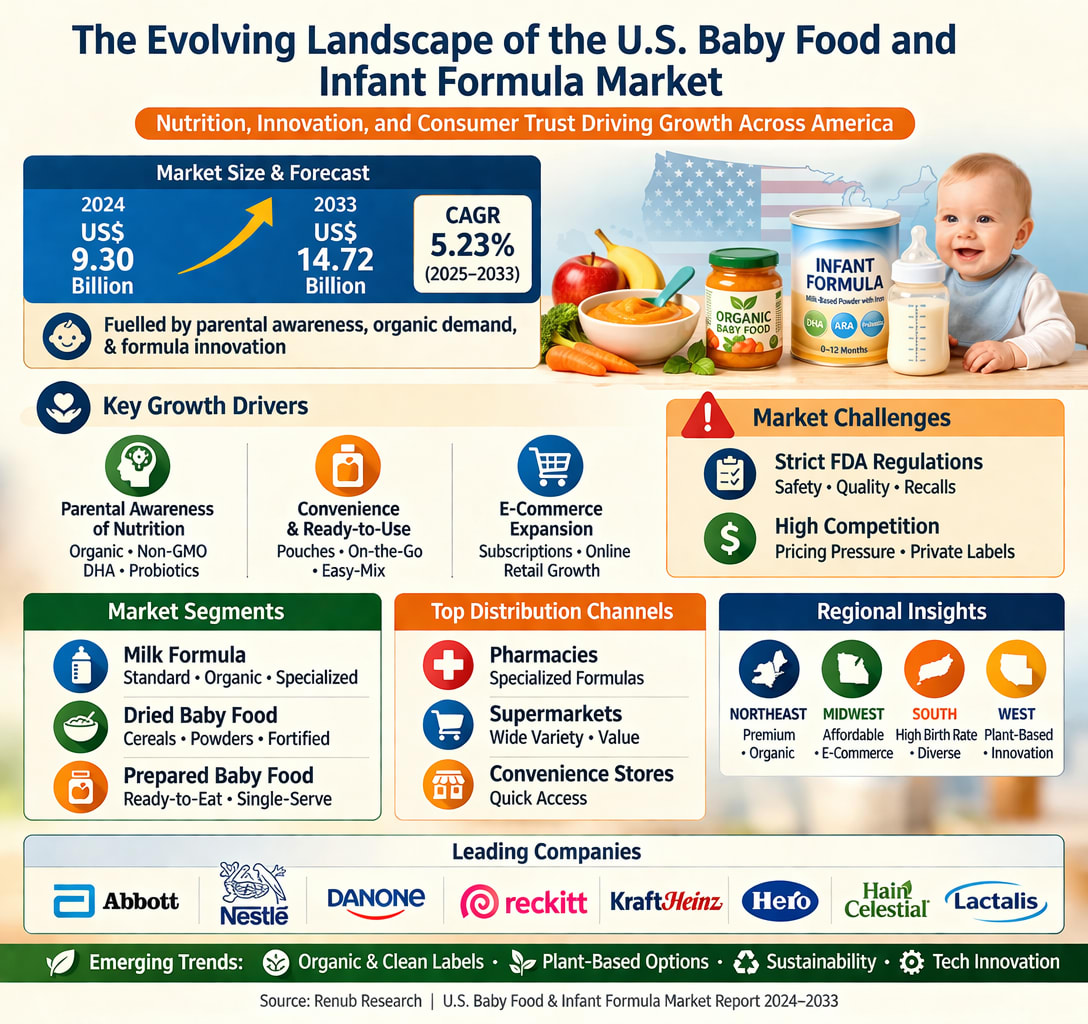
According to recent insights, the market is projected to grow from US$ 9.30 billion in 2024 to US$ 14.72 billion by 2033, registering a compound annual growth rate (CAGR) of 5.23% between 2025 and 2033 . This growth reflects not only demographic factors such as birth rates and urbanization but also a deeper societal shift toward health-conscious parenting and premium nutrition choices.
Understanding Baby Food and Infant Formula
Baby food and infant formula are essential components of early childhood nutrition. Baby food typically includes soft, easily digestible items such as purees, cereals, and ready-to-eat meals, designed to support infants during their developmental stages. Infant formula, on the other hand, serves as a substitute or supplement to breast milk, offering a balanced combination of proteins, fats, carbohydrates, vitamins, and minerals.
In the U.S., these products are especially crucial for working parents, premature infants, and children with specific dietary needs. As lifestyles become busier, convenience and reliability have become just as important as nutritional value.
Key Growth Drivers Transforming the Market
1. Rising Awareness of Infant Nutrition
One of the most powerful forces shaping the market is the growing awareness among parents about early childhood nutrition. Today’s caregivers are more informed than ever, actively seeking products that support brain development, immune health, and gut function.
Parents are increasingly drawn to:
Organic and non-GMO ingredients
Products fortified with probiotics and DHA
Clean-label offerings with minimal additives
This shift is not merely a trend but a long-term behavioral change. Scientific research and digital access to information have empowered parents to make better-informed decisions, pushing manufacturers to continuously innovate.
2. Demand for Convenience and Ready-to-Use Solutions
Modern parenting often involves balancing careers, household responsibilities, and childcare. As a result, convenience has become a critical factor in purchasing decisions.
Products such as:
Single-serve pouches
Ready-to-feed formulas
On-the-go snacks
are gaining popularity. These solutions save time while ensuring infants receive proper nutrition. The expansion of such offerings reflects the industry’s responsiveness to evolving lifestyles.
3. Expansion of E-Commerce and Retail Channels
The digital revolution has significantly impacted how baby food and infant formula are distributed. E-commerce platforms now allow parents to:
Compare ingredients and nutritional values
Read reviews and recommendations
Access subscription-based delivery services
This convenience has not only boosted sales but also increased transparency in the market. Traditional retail channels like supermarkets and pharmacies continue to play a strong role, but online platforms are rapidly gaining ground.
Market Challenges: Safety, Regulation, and Competition
1. Strict Regulatory Environment
The U.S. baby food and infant formula market is heavily regulated to ensure product safety and quality. The Food and Drug Administration (FDA) enforces strict guidelines related to:
Ingredient sourcing
Contamination levels
Manufacturing practices
While these regulations protect consumers, they also create challenges for manufacturers. Product recalls and concerns about contaminants, such as heavy metals, have heightened consumer vigilance, making trust a critical factor for brands.
2. Intense Competition and Pricing Pressure
The market is highly competitive, with established players and emerging brands vying for consumer attention. Premium organic products often come with higher price points, making them less accessible to some households.
At the same time:
Private-label brands offer affordable alternatives
Retailers push for competitive pricing
Innovation becomes essential for differentiation
This dynamic forces companies to strike a balance between quality, affordability, and profitability.
Segment Analysis: A Closer Look at Market Categories
Milk Formula Segment
Milk formula remains one of the most significant segments, catering to infants who require alternatives to breast milk. Available in various forms—standard, organic, and specialized formulas—this segment continues to grow due to advancements in nutritional science.
Ingredients like DHA, prebiotics, and probiotics are increasingly incorporated to enhance developmental benefits.
Dried Baby Food
Dried baby food, including cereals and powdered meals, remains a staple due to its:
Long shelf life
Ease of storage
High nutrient density
Manufacturers are enhancing these products with added nutrients such as iron and fiber, making them more appealing to health-conscious parents.
Prepared Baby Food
Ready-to-eat baby food products are gaining traction due to their convenience. These products are particularly popular among urban families who prioritize time efficiency without compromising on nutrition.
Distribution Channels: Where Parents Shop
Pharmacies
Pharmacies play a crucial role, especially for specialized and medical-grade infant formulas. Parents often rely on pharmacist recommendations for products tailored to specific health conditions.
Supermarkets and Hypermarkets
These remain the dominant distribution channels, offering a wide variety of products and competitive pricing.
Convenience Stores
Convenience stores provide quick access to essential baby food items, particularly for last-minute purchases. Although their product range may be limited, their accessibility makes them important in urban and suburban settings.
Regional Insights Across the United States
Northeast
Urban centers like New York and Boston lead in demand for premium and organic products. Consumers here are highly inclined toward sustainability and high-quality ingredients.
Midwest
Affordability and accessibility are key factors in the Midwest. Discount retailers and expanding e-commerce platforms are shaping purchasing patterns.
South
The Southern region benefits from higher birth rates and a diverse consumer base. Both premium and budget-friendly products coexist, with supermarkets playing a dominant role.
West
The Western U.S., particularly California and Washington, is a hub for innovation. Demand for plant-based, organic, and allergen-free products is particularly strong, reflecting a broader focus on health and wellness.
Competitive Landscape: Key Players Driving Innovation
The U.S. baby food and infant formula market features a mix of global giants and niche innovators. Leading companies include:
Abbott Laboratories
Nestlé
Danone
Reckitt Benckiser Group plc
Kraft Heinz Company
Hero Group
Hain Celestial Group, Inc.
Lactalis (Stonyfield Farm, Inc.)
These companies are investing heavily in:
Product innovation
Sustainable packaging
Supply chain optimization
Strategic partnerships and acquisitions are also common, enabling firms to expand their market presence and diversify their offerings.
Emerging Trends Shaping the Future
1. Organic and Clean-Label Products
Consumers are increasingly seeking transparency in ingredients. Clean-label products—free from artificial additives and preservatives—are becoming the norm rather than the exception.
2. Plant-Based and Allergen-Free Options
As dietary preferences evolve, plant-based infant formulas and allergen-free products are gaining popularity. These innovations cater to a growing segment of health-conscious and environmentally aware parents.
3. Sustainability and Ethical Sourcing
Sustainability is no longer optional. From eco-friendly packaging to responsibly sourced ingredients, companies are aligning their practices with consumer values.
4. Technological Advancements in Production
Advances in food science and manufacturing technologies are enabling the development of more sophisticated and nutritionally balanced products. These innovations are crucial for maintaining competitiveness in a rapidly evolving market.
Final Thoughts
The U.S. baby food and infant formula market stands at a pivotal moment. With a projected value of US$ 14.72 billion by 2033, the industry is poised for steady growth, driven by innovation, awareness, and evolving consumer preferences .
However, growth alone is not the defining story. The real narrative lies in how companies adapt to:
Increasing demand for transparency
Stringent regulatory requirements
Diverse consumer needs
In a market where trust is paramount, brands that prioritize safety, quality, and authenticity will emerge as leaders. As parents continue to seek the best for their children, the industry must rise to meet these expectations—delivering not just products, but peace of mind.
Ultimately, the future of infant nutrition in the United States will be shaped by a delicate balance of science, sustainability, and consumer trust—a balance that will define the next decade of growth and innovation.