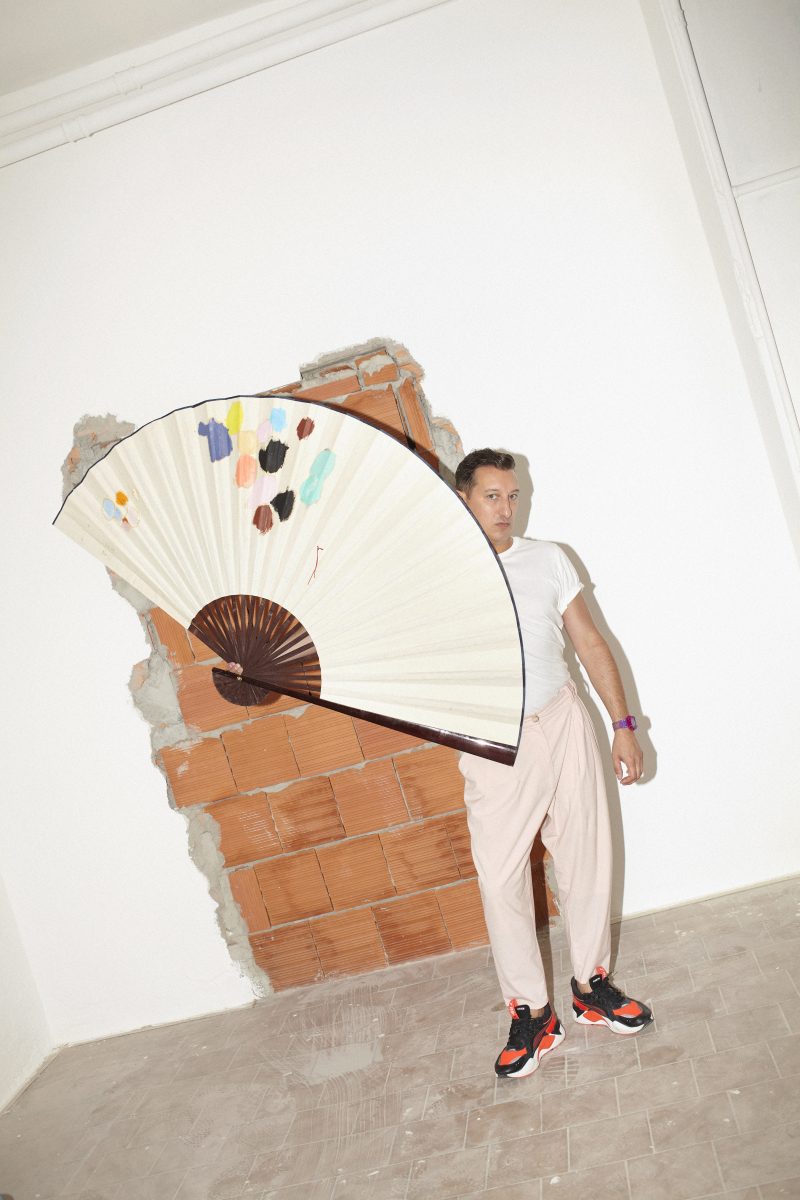
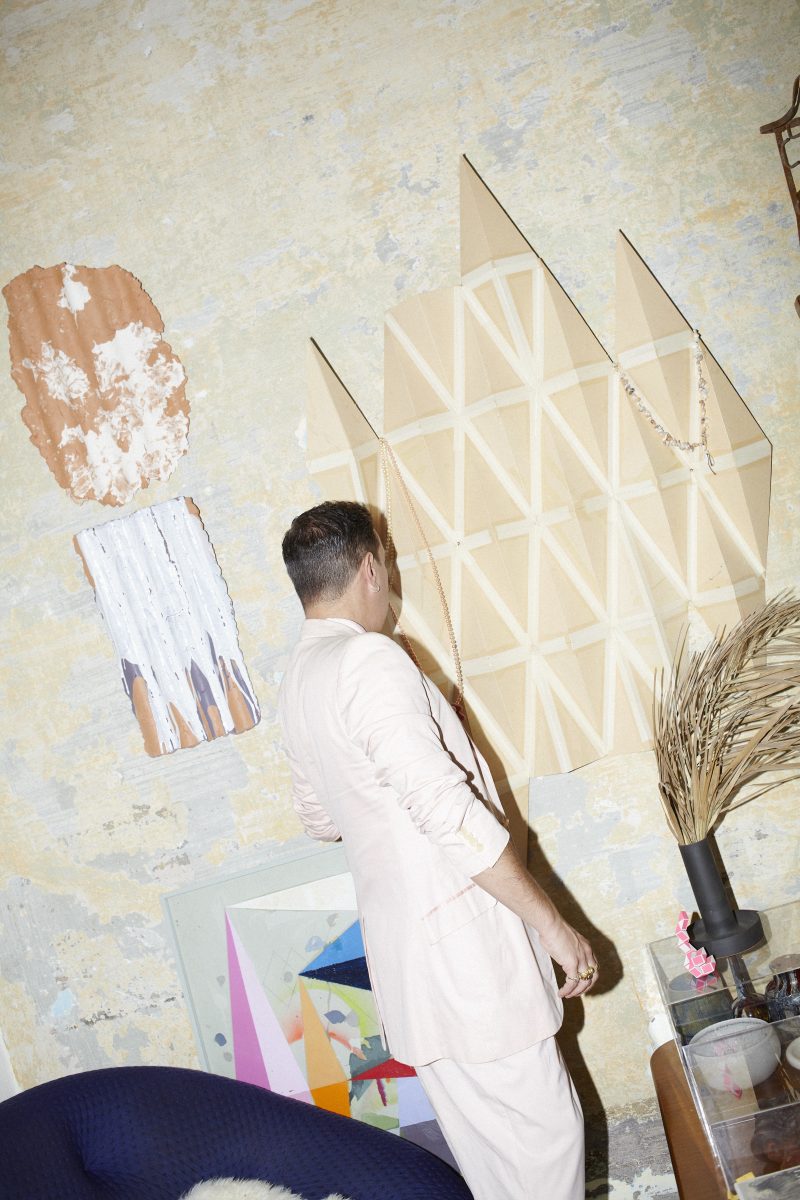
Paolo Gonzato doesn’t make works—he sets conditions.
For over two decades, the Milan-based artist has been constructing a visual language that resists resolution, where repetition becomes erosion, and form exists only to be undone. His practice moves restlessly across painting, ceramics, installation, and design, but refuses the safety of definition. Instead, it embraces instability as a method, failure as a structure, and time as its only real material.
At the center of this evolving system lies OUT OF STOCK, a project begun in 2003 that still refuses to conclude—an open archive of fragments, gestures, and interruptions. Gonzato dismantles as much as he builds, collapsing the distance between creation and destruction, between object and process. His works feel less like finished pieces and more like residues of something still in motion.
In a cultural moment obsessed with speed, clarity, and digital perfection, Gonzato moves in the opposite direction. His world is tactile, fractured, deliberately unresolved—an archaeology of the present where ceramic becomes evidence, ornament becomes structure, and error becomes truth.
This is not about making sense.
It’s about staying open long enough for meaning to fail—and something more honest to take its place.
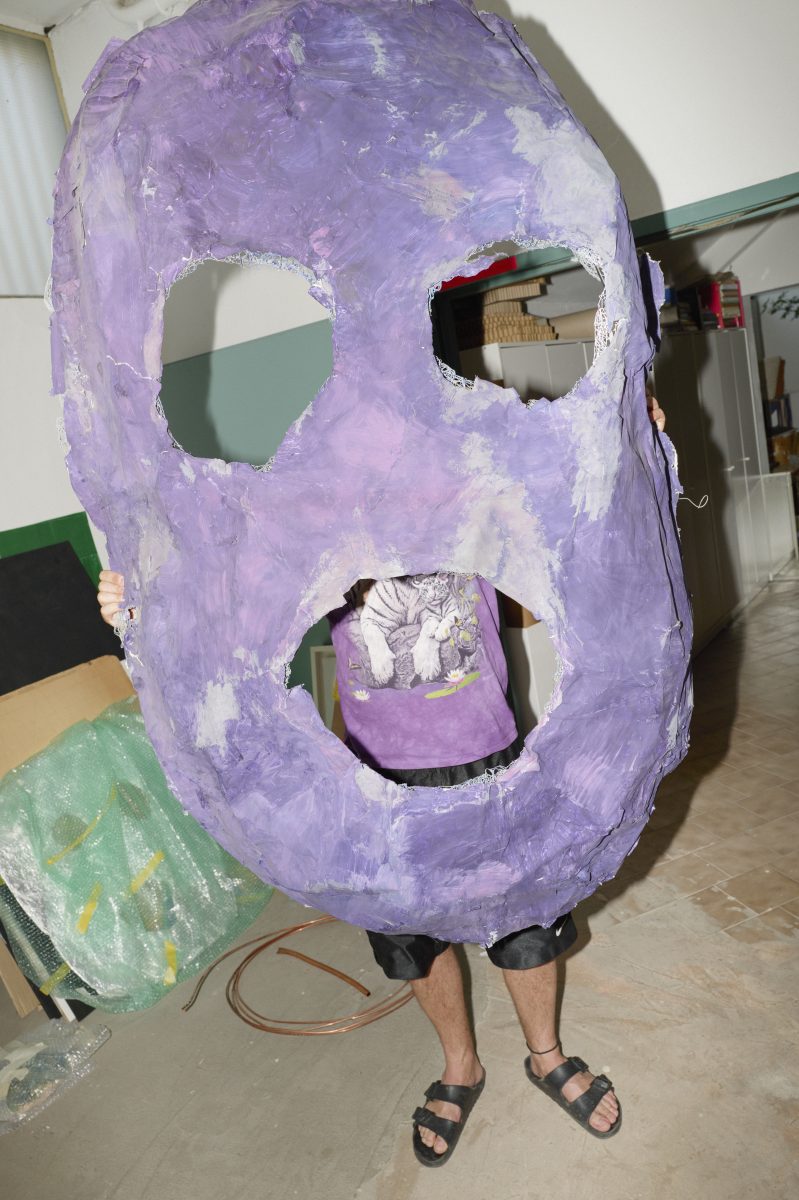
Your practice moves between painting, installation, ceramics, and design.
Do you reject categorization instinctively, or is hybridity your most precise form of control?
I don’t believe in categories within any kind of system. Disorder is the highest form of order—it’s the law of entropy.
Formalizing is important in the sense of giving physical form to a thought that unites all its expressions.
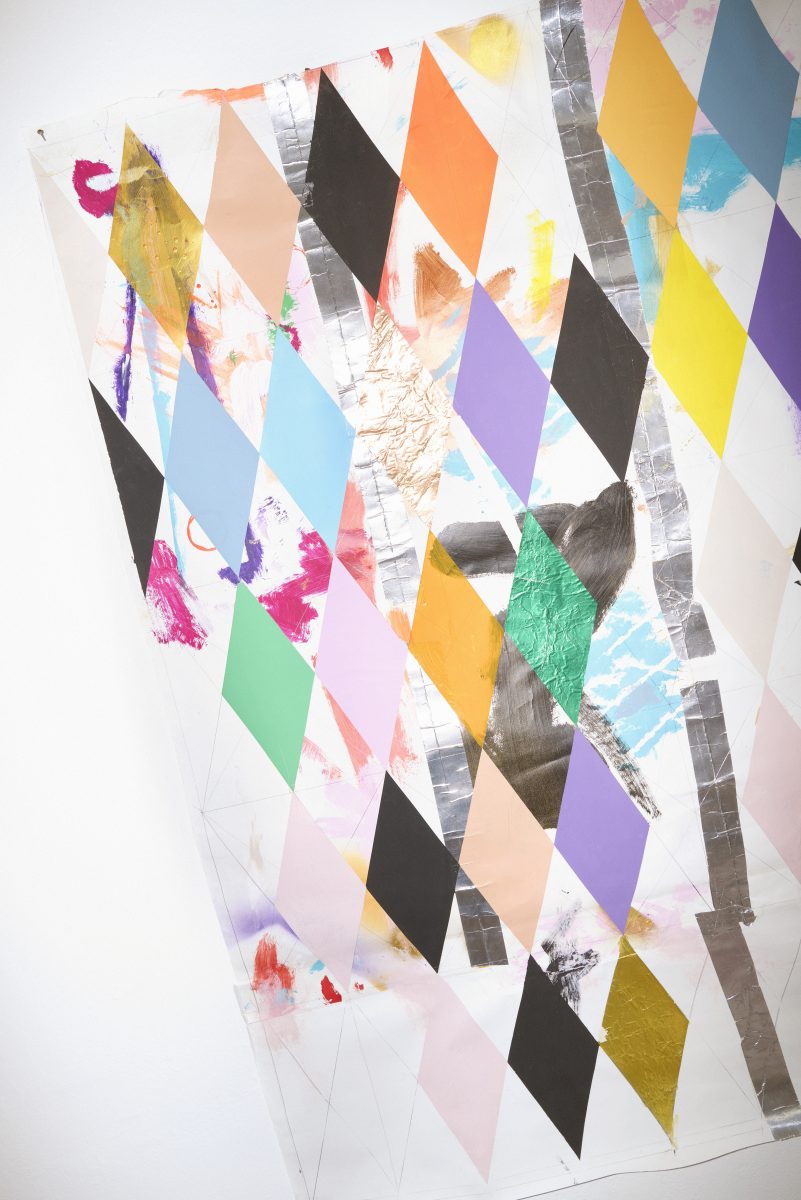
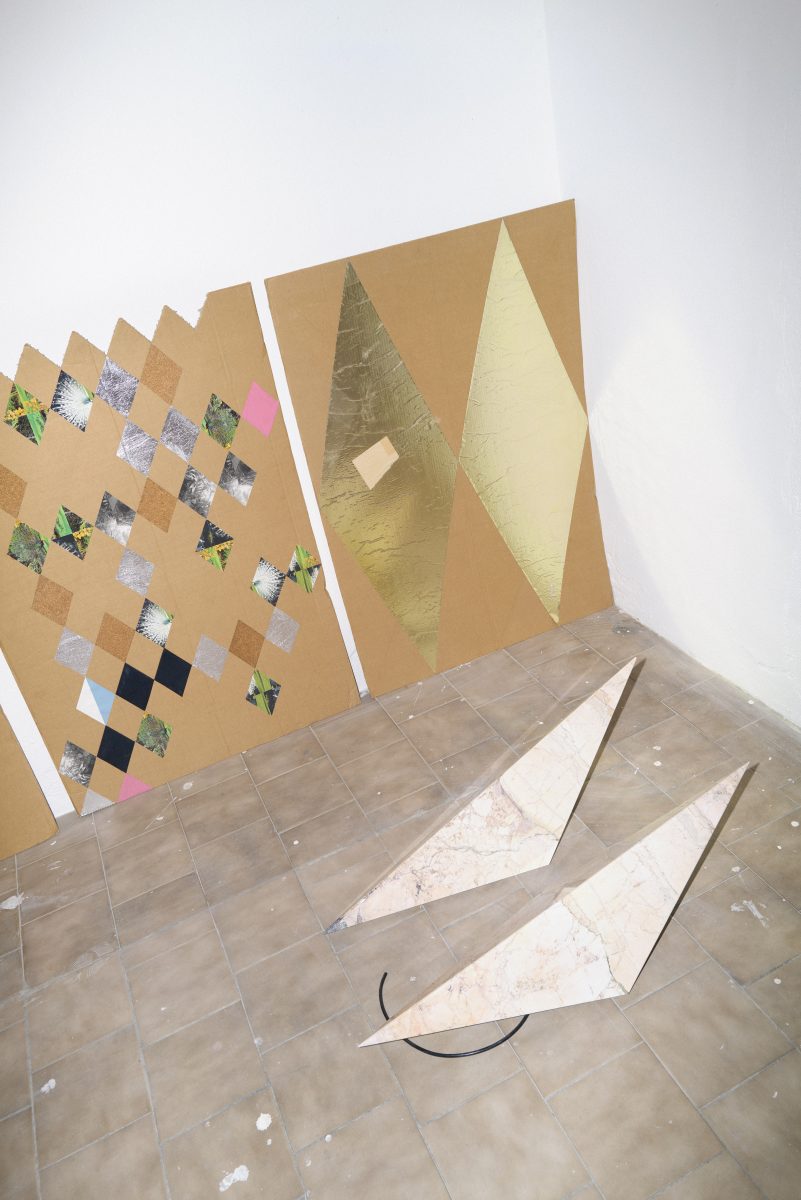
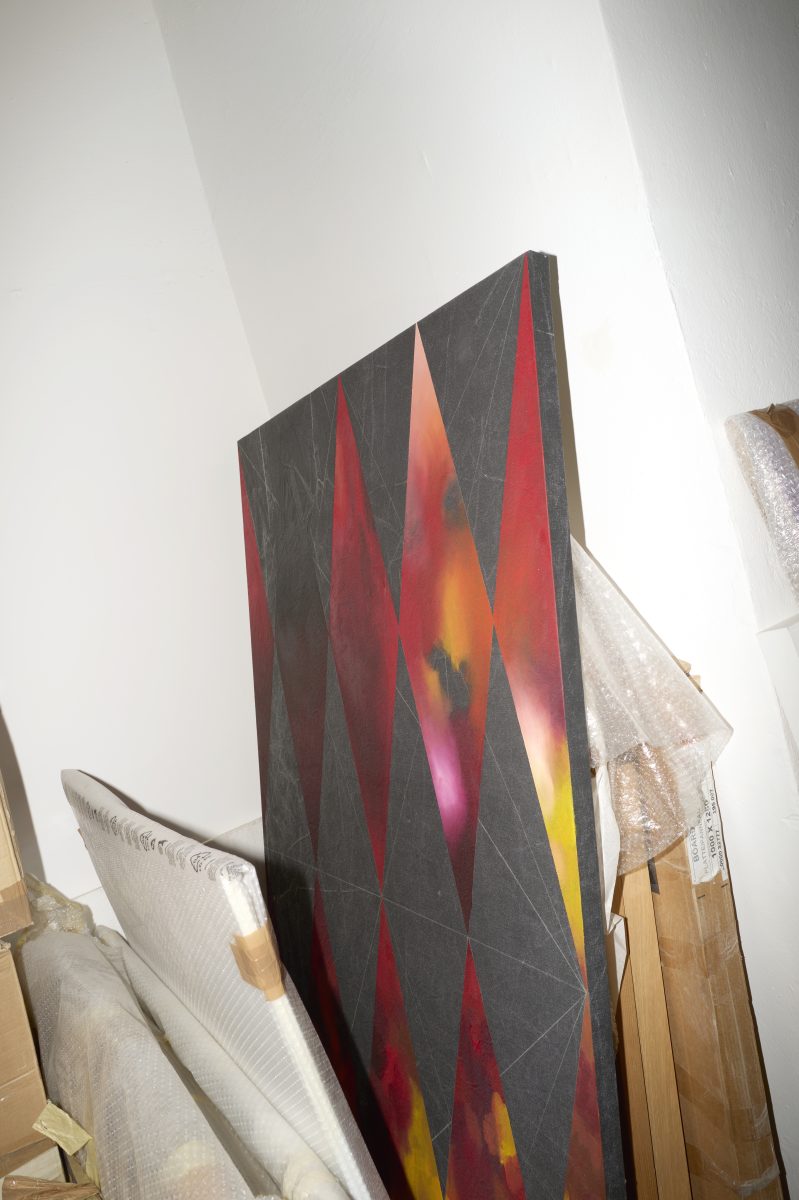
The rhombus—that diamond geometry—reappears obsessively in your work. Is it a symbol, a system, or a trap you’ve built for yourself?
I like your idea of it as a trap.
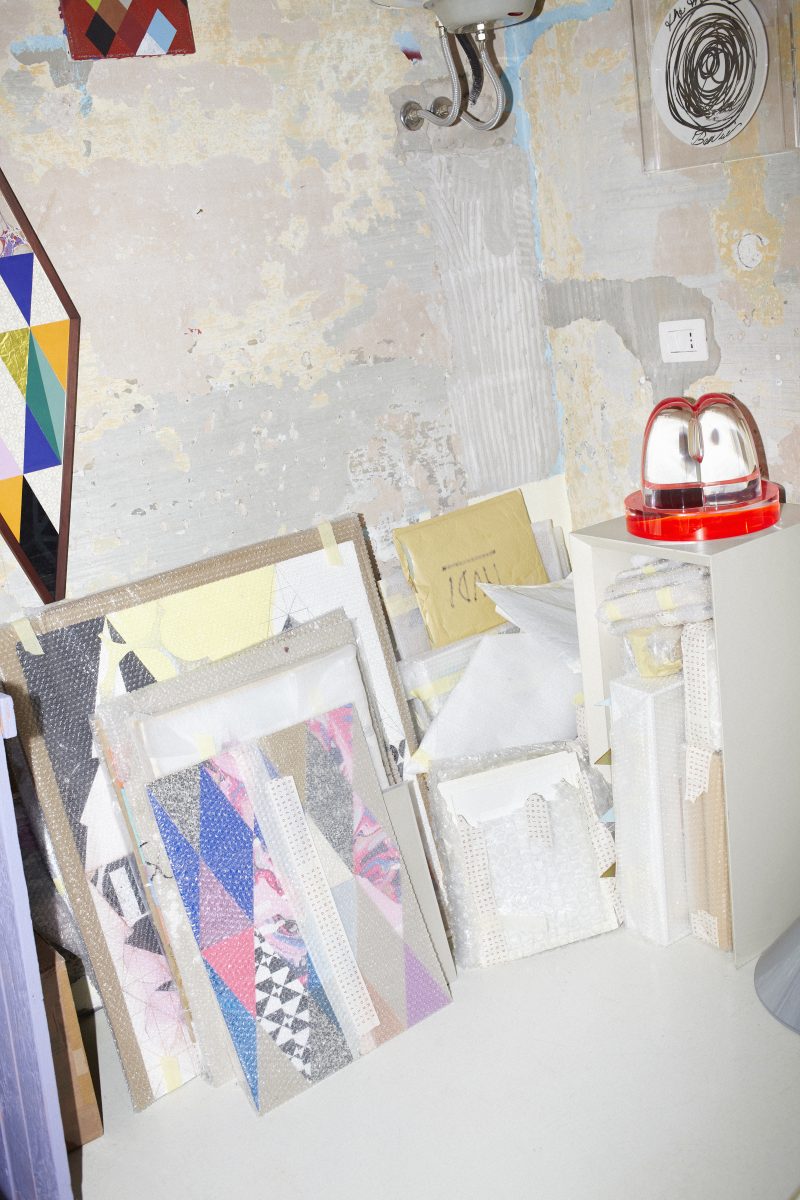
At times, when describing this series titled OUT OF STOCK, I’ve defined it as a conceptual cage—a container to be filled with personal suggestions, an archiving device, and a diary recording time shared with a network of people.
OUT OF STOCK began in 2003 and still echoes today.
What does repetition mean to you—evolution, resistance, or a refusal to finish something?
It is fundamentally a work about transformation, and for that reason it remains faithful to itself, making every change readable over time.
OUT OF STOCK is, for me, an open system—conceived from the very beginning to remain incomplete.
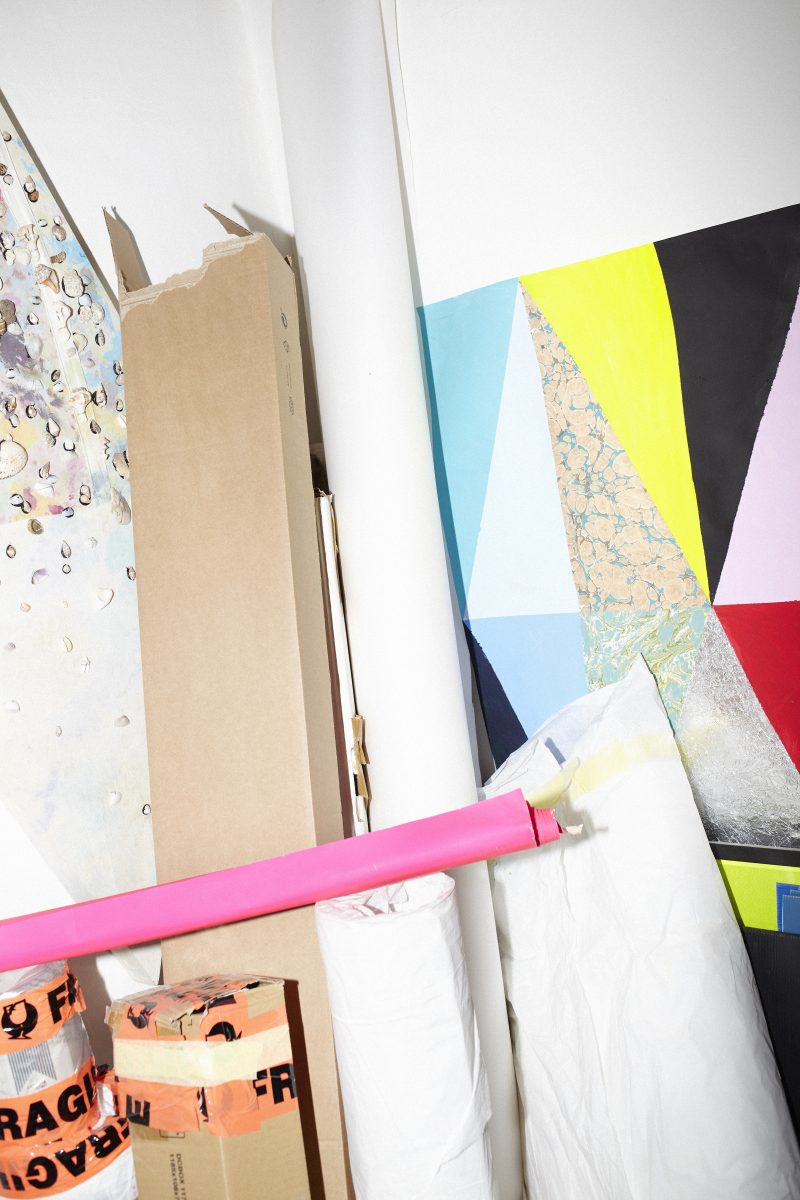
I often dismantle works in order to modify them or to reuse fragments in new ones.
They are accumulations of signs that embrace the possibility of failure, and the fact that there may be no definitive conclusion.
Time is a fundamental element—and it is a slow, horizontal time.
A few days ago, I had the great pleasure of meeting Alessandro Guerriero, the founder of Studio Alchimia in 1976, and I recognized myself—reflected—in both the form and content of many of his ideas.
A wordplay he expressed perfectly captures this joyful hypothesis of failure: “I founded Alchimia—and then I sank it.”
There’s a tension in your work between industrial materials and decorative heritage. Are you trying to reconcile ornament and structure, or expose their conflict?
It’s an archaeology of the present—a friction between contrasting systems that collide.
The signs of a recent architectural past (but also an atavistic one) are resolved through materials that are themselves contemporary artifacts.
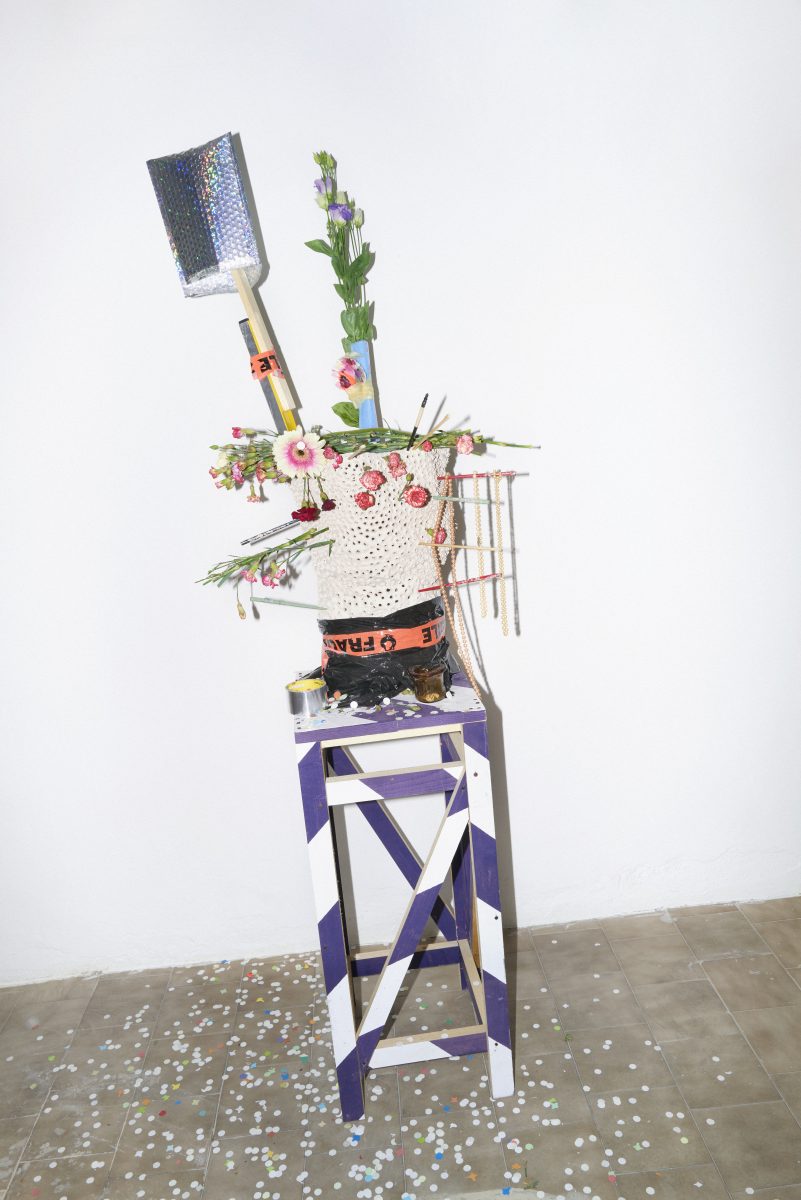
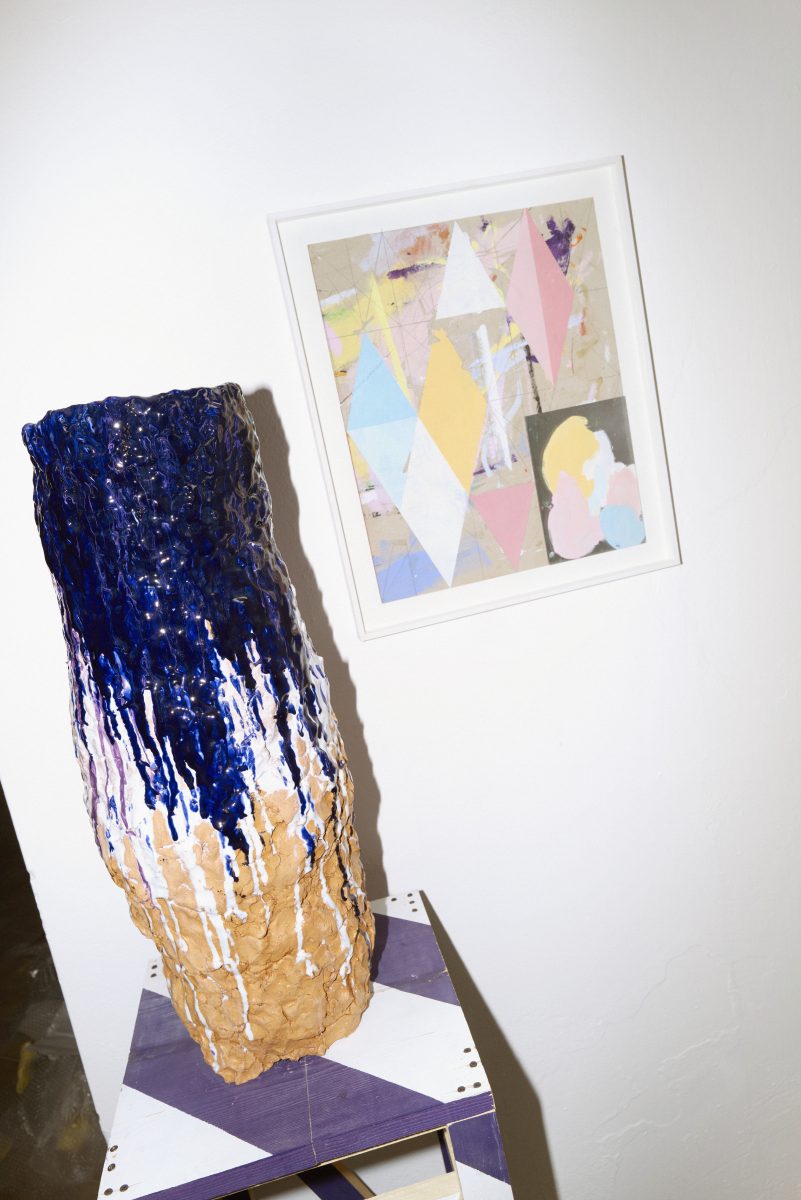
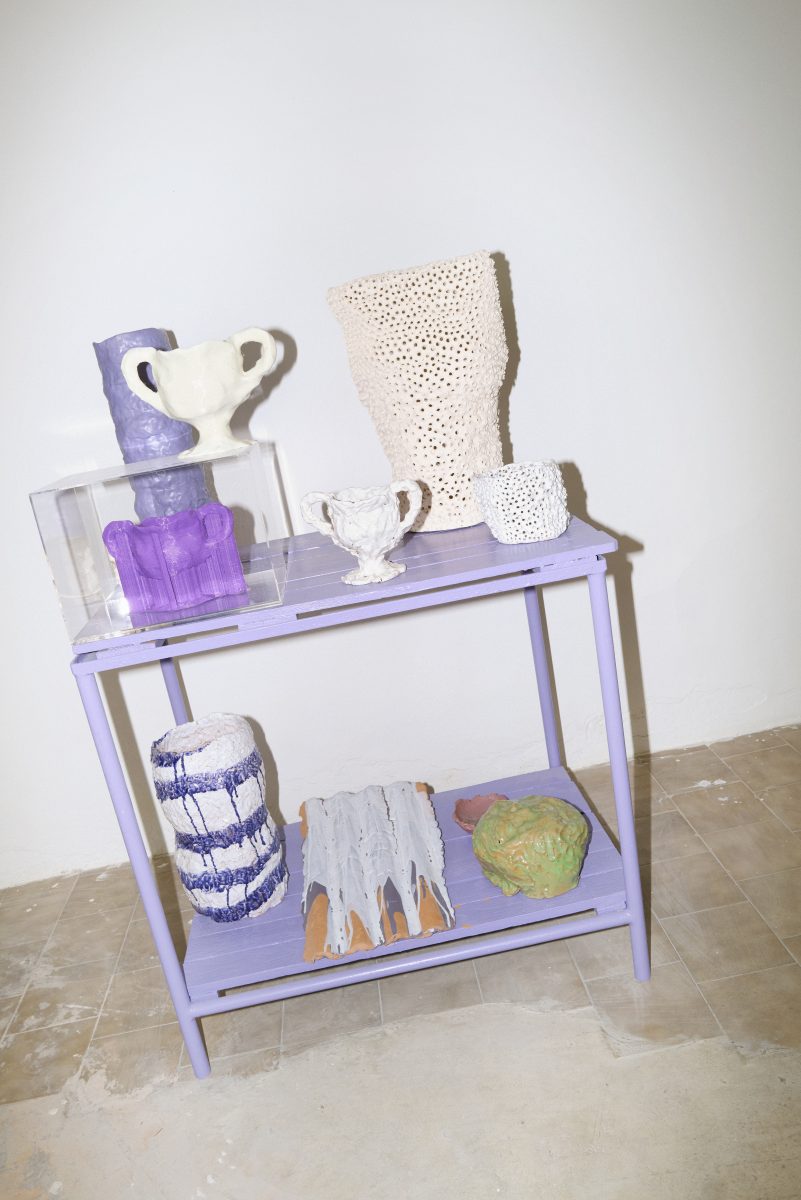
To create a ceramic piece, I used one of my own works as a cast, reproducing a part of it. Then I smashed it against a wall and entrusted the fragments to a restorer of ancient ceramics, who reassembled them like an archaeological find.
Your home, as seen in features like Milk Decoration, feels like an extension of your installations.
Where does living end and staging begin?
DISPLAY is an integral part of my work—sometimes through subtraction, other times through accumulation.
At home, as in the studio, a progressive saturation of space takes place, where work and private life overlap in a disordered way.
It’s an aesthetic choice. Having often collaborated on shoots and interior projects—by their nature artificial—I’ve come to appreciate the opposite kind of formalization, something less constructed.
The home and the studio remain privileged stages of autobiography. It’s no coincidence that a series of large-scale textile tapestries is titled SIPARIO (Curtain), as if presupposing the existence of a stage.
Italian art history carries enormous visual weight.
As a Milan-based artist, do you feel dialogue, pressure, or indifference toward that legacy?
I’m fascinated by architecture and by systems of construction and production, including craftsmanship.
These are elements that belong to Italian and European cultural heritage, blending with the provisional and provincial ugliness of contemporaneity, which ultimately defines a newer, fresher, more hybrid reality.
In Italy, there is an abundance of “bad taste”—and it’s not always a negative thing.
Granting absolute privilege to history inhibits openness to the future.
Your compositions often suggest order but allow for error—slight misalignments, fractures in pattern.
Is imperfection a strategy or an emotional necessity?
Defect is a description of reality.
In an era where visual culture is hyper-digital and frictionless, your work insists on material presence. What does tactility mean in 2026?
The analog is the future.
I’m answering this interview from an iPhone 6. I don’t own a laptop, I don’t have an email address, I don’t have a website, I don’t even have Wi-Fi—and I’ve never bought anything online.
Dematerialization has a greater environmental impact than the physical existence of reality.
With this premise, shaping ceramic into a vase becomes an act of faith in the tangible possibility of existing—and resisting.
If you could write a letter to yourself ten years from now, what would you ask that future Paolo to protect—and what would you urge him to abandon without regret?
I would leave the letter blank.
Maybe with a stain.

Images by Simon