It’s a simple yet true fact: how you eat in midlife may shape your health decades later. According to 2025 research from Harvard T.H. Chan School of Public Health, people who followed healthy eating patterns in their 40s were up to 84% more likely to be free of major chronic disease in their 70s—and with better physical, cognitive, and mental health, too. These findings come from data on more than 100,000 people tracked over 30 years.
But what exactly are healthy eating patterns as we enter our 40s, 50s, and beyond? “Midlife bodies change and so do our needs,” says Kim Blum, MS, RDN, LD, adjunct faculty instructor in nutrition at Purdue University Global.
Often the biggest mistake people make in midlife is sticking to eating habits that no longer serve their body in the same way. Blum says, “Small adjustments can make a significant impact on energy levels, strength, and long-term health.”
Ahead, we asked five expert dietitians for the most common nutrition pitfalls they see as people age—and what you can do to avoid them.
1. Eating like you’re still in your 20s
 Todd Taulman / 500px/Getty Images
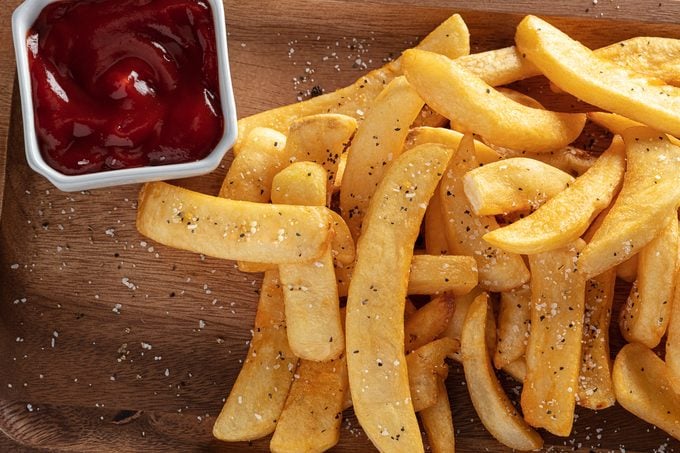
One of the biggest midlife nutrition mistakes is simply continuing to eat the same way you did decades earlier.
“As we age, along with a gradual loss of muscle mass, known as sarcopenia, [our] metabolism slows down,” says Lina Begdache, PhD, RDN, CDN, CNS-S, FAND, a registered dietitian nutritionist and associate professor at Binghamton University, State University of New York. “The body simply processes fuel differently than it did two decades earlier.”
Over time, eating the same foods in the same quantities can lead to gradual weight gain—particularly the buildup of fat around the midsection. Instead, speak with a doctor or a registered dietitian to learn how to best fuel your body as your health needs change.
2. Eating too little
When extra weight appears, many people respond by dramatically restricting food or ramping up exercise. “Cutting calories too drastically can backfire,” Blum says. “Your body needs adequate fuel to support metabolism, energy, and hormones.”
Under-fueling—especially when combined with excessive exercise—can also act as a physiological stressor, Dr. Begdache says. This leads to the release of stress hormones such as cortisol, elevated blood sugar, and further central fat storage and muscle loss.
3. Skimping on protein
 Bloomberg Creative Photos/Getty Images
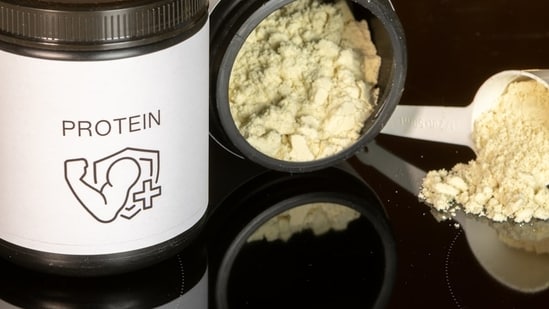
Because age-related muscle loss can begin as early as our 30s, prioritizing protein becomes even more important with age. In fact, 2024 research published in the American Journal of Clinical Nutrition found that higher protein intake in midlife was associated with significantly greater odds of healthy aging.
“Protein plays a crucial role in preserving muscle mass, boosting metabolism, promoting fullness, and stabilizing blood sugar levels,” Blum says.
Low protein intake is also often linked with under-eating, Dr. Begdache adds. Lack of food can accelerate muscle loss and metabolic decline, creating a vicious cycle of restriction, muscle loss, metabolic decline, weight gain, and further restriction.
Dr. Begdache recommends that protein be consumed “at every meal to sustain muscle maintenance.” She suggests about 25 to 40 grams per meal to preserve muscle mass as we age.
4. Skipping meals
 ANASTASIIA BID/GETTY IMAGES
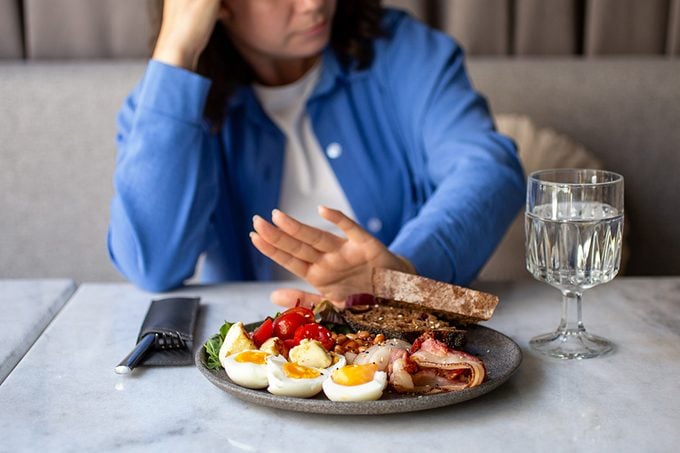
Thanks to hectic schedules and endless obligations, “middle-aged adults often skip breakfast, eat a meager lunch, and then bank and consume the majority of our daily calories later in the day,” says Joan Salge Blake, EdD, RDN, LDN, FAND, a clinical professor of nutrition at Boston University.
But this pattern can work against the body’s natural circadian rhythms, which help regulate metabolism. This series of cause and effect can ultimately make weight management more challenging.
Dr. Blake says, “Research also suggests that habitually eating sporadically day-to-day, with no consistent schedule, fouls up your metabolism.” She adds that inconsistency is also associated with chronic diseases and other issues such as type 2 diabetes, heart disease, obesity, GI issues, and worse quality of sleep.
5. Cutting out entire food groups
Dietary restrictions can lead to missing out on more than just calories. “Many believe they need to eat less or eliminate entire food groups like carbohydrates,” says dietitian Gisela Bouvier, MBA, RDN, LDN. “They do this in an attempt to better manage their weight, but they may actually do more harm than good because they may eat less of the necessities like fiber and protein.”
Eliminating foods like carbs, dairy, or fats can also mean missing important nutrients like calcium, vitamin D, and B vitamins. Blum offers a simple solution: “Balance matters more than restriction.”
6. Ignoring hunger signals
 CHAMPJA/GETTY IMAGES
Muscle mass is our metabolic “engine,” explains Kim Shapira, MS, RD, a registered dietician. “I like to think of it more as the image of a stovetop. If we all had eight burners, a well-working metabolism looks like all burners are heated and working, the fire is on.” As we age, some of those burners naturally turn down—slowing metabolism, lowering appetite, and increasing stress in the body.
As a result, “hunger signals get ignored, and this leads to the classic cycle of restriction and late-night eating or binging,” Shapira says. “This creates more stress, and our body responds to protect—so we gain weight, making movement and sleep even harder. And sadly, this will also increase emotional eating and food noise.”
7. Following social media diet trends
If you’re scrolling through an app on your phone and notice everyone posting about a new way to eat and lose weight (or other lofty promises), experts say to proceed with caution.
“Trendy diets or hacks often oversimplify complex issues related to metabolism, aging, and hormones,” Blum says. You’ll save time and frustration—and get much better results—by working with either your doctor or a registered dietitian to get personalized recommendations based on your individual needs.
8. Passing on sleep
Though it may not automatically seem like sleep habits have a direct tie to nutrition, they do have a surprising impact. In fact, poor sleep can disrupt hormones that regulate appetite.
“When you are chronically sleep deprived, your hormones will misfire,” Dr. Blake explains. “For example, when you are tired, the hormone ghrelin increases and leptin decreases.”
This matters because ghrelin, which is known as the “hunger hormone,” “increases hunger whereas leptin helps increase satiety,” according to Dr. Blake. “This misalignment can cause you to mindlessly overeat.”
9. Avoiding weight training
 DIMENSIONS/GETTY IMAGES
Exercise strategy in midlife matters for nutrition, too. “Shifting from excessive cardio to consistent strength training is the most effective way to rebuild metabolic rate and protect lean tissue,” Dr. Begdache says. “Ultimately, the target in midlife is body recomposition: losing fat while preserving muscle.” That requires adequate, well-timed nutrition—not restriction.
It also means looking at food as fuel for recovery. She adds, “Under-fueling around exercise prolongs the cortisol response and blocks any anabolic response we need to build muscle.”
About the experts
Kim Blum, MS, RDN, LD, is an adjunct faculty instructor in nutrition at Purdue University Global and the owner of KB Nutrition Consulting in Illinois.
Lina Begdache, PhD, RDN, CDN, CNS-S, FAND, is a registered dietitian nutritionist and an associate professor at Binghamton University, State University of New York. She’s a certified nutrition specialist-scholar and a fellow of the Academy of Nutrition and Dietetics.
Joan Salge Blake, EdD, RDN, LDN, FAND, is a clinical professor of nutrition at Boston University, author of Nutrition & You, and the host of the nutrition & health podcast, “Spot On!“
Gisela Bouvier, MBA, RDN, LDN, is a registered dietitian nutritionist and certified mindful & instinctive eating practitioner with a private practice in Southwest Florida.
Kim Shapira, MS, RD, is a registered dietitian with 29 years of experience, author of This Is What You’re Really Hungry For, and founder of the Kim Shapira Method.
Feel better every day when you subscribe to The Healthy newsletter and follow The Healthy on Facebook and Instagram. Keep reading: