Cleared cancer in two weeks
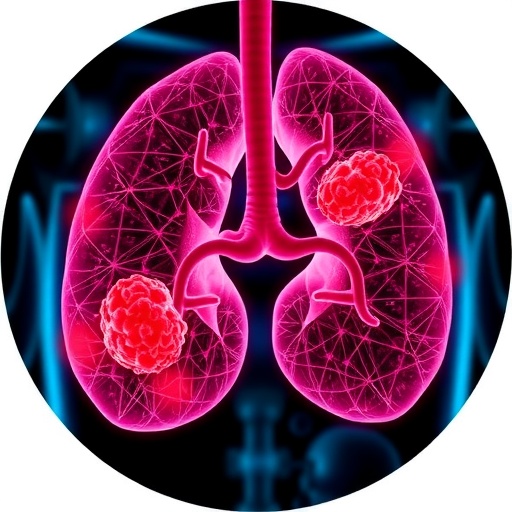
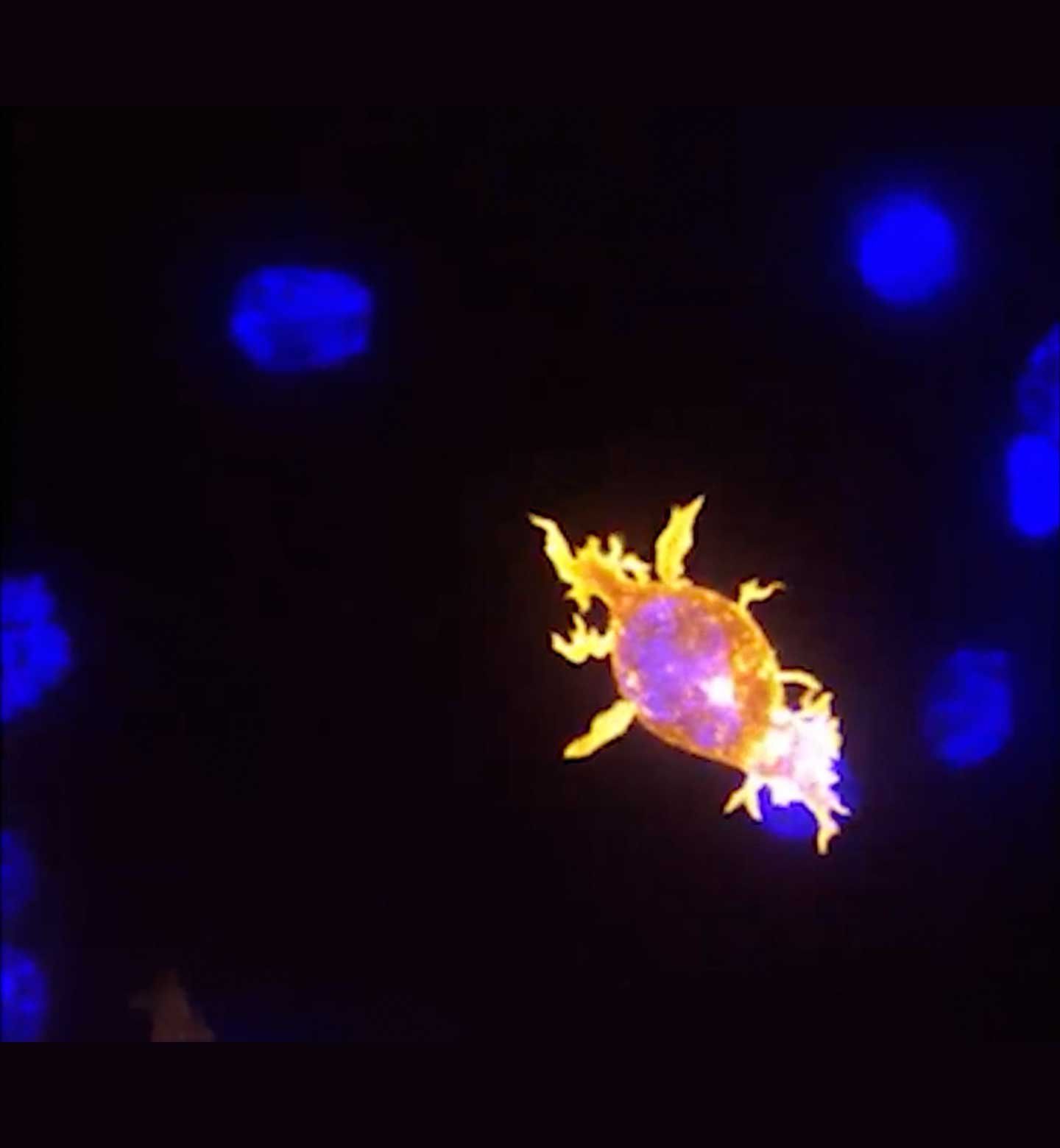
The team, led by two postdocs — the co-first authors William Nyberg, PhD, and Pierre-Louis Bernard, PhD — tested their approach in mice with aggressive leukemia. A single injection of the two-particle system cleared all detectable cancer in nearly all the mice within two weeks. The engineered CAR-T cells made up as much as 40% of immune cells in some organs and successfully eliminated cancer from both the bone marrow and spleen.
The approach also worked against multiple myeloma and, strikingly, against a solid sarcoma tumor. Solid tumors have historically resisted CAR-T therapy, making this result particularly significant.
The T cells engineered inside the body also unexpectedly appeared to outperform those manufactured in the lab.
“What was especially remarkable was that the cells we’re generating in vivo actually look better than what we make in the lab,” Eyquem said. “We think that when cells are taken out of the body and grown in the lab, they lose some of their ‘stemness’ and proliferative capacity and that doesn’t happen here.”
Clinical trials will be needed to assess safety and efficacy. Eyquem and his collaborators have founded a company called Azalea Therapeutics to take the platform through clinical development.
“If we can translate this to humans, we could dramatically reduce costs, eliminate waiting times, and potentially allow community hospitals — not just major cancer centers — to offer these life-saving therapies,” he said. “That would truly democratize access to CAR-T cell therapy.”
Authors: Other UCSF authors include, Charlotte H. Wang, Allison Rothrock, Gina M. Borgo, Ph.D., Gabriella Kimmerly, Jae Hyung Jung, Ph.D., Vincent Allain, Ph.D., Sarah Wyman, Safwaan H. Khan, Yasaman Mortazavi, Ph.D., Mahmoud Abd Elwakil, Ph.D., Simon N. Chu, Hyuncheol Jung, Ph.D., Chang Liu, Devesh Sharma, Ph.D., Travis McCreary, Ansuman Satpath, M.D., Ph.D., Julia Carnevale, M.D., Rachel L. Rutishauser, M.D., Ph.D., M. Kyle Cromer, Ph.D., and Kole Roybal, Ph.D.; Wayne Ngo, Ph.D., Alisha Baldwin, Robert Stickels, Ph.D., Shanshan Lang, Ph.D., Donna Marsh, Niran Almudhfar, Catherine Novick, Shimin Zhang, Sidney Hwang, Zhongmei Li, Stacie E. Dodgson, Ph.D. of the Gladstone-UCSF Institute of Genomic Immunology; Jennifer A. Doudna, Ph.D., and Jennifer R. Hamilton, Ph.D., of the Innovative Genomics Institute; and Jon Ark, Ph.D. and Aravind Asokan, Ph.D., of Duke University.
Funding: The Parker Institute for Cancer Immunotherapy, the Pew Charitable Trust, the Grand Multiple Myeloma Translational Initiative, CRISPR Cures for Cancer, the Weill Cancer Hub West, James B. Pendleton Charitable Trust, the Swedish Research Council, European Research Council, and the Swedish Society for Medical Research.
Disclosures: Multiple authors of the study are inventors on patent applications filed on the subject matters of this study. Eyquem is a compensated co-founder at Mnemo Therapeutics and Azalea Therapeutics and a compensated scientific advisor to Enterome, Treefrog Therapeutics. Hamilton is a co-founder of Azalea Therapeutics. Doudna is a scientific advisory board member at Isomorphic Labs, BEVC Management, Evercrisp, Caribou Biosciences, Scribe Therapeutics, Mammoth Biosciences, The Column Group and Inari. She is also an advisor for Aditum Bio, a Chief Science Advisor to Sixth Street, a Director at Johnson & Johnson, Altos and Tempus, and has a research project sponsored by Apple Tree Partners.