PARIS — K-beauty now has an entire exhibition devoted to it at the Musée Guimet in Paris.
Just opened and running through July 6, the show is titled “K-Beauty: Korean Beauty, story of a phenomenon.” It centers on the question: What does it mean to be beautiful in South Korea in the past and present? Curators analyzed the cultural history and evolution of perception and appearance.
The exhibit traces K-beauty from the late Joseon period, which ran from the end of the 18th century to the early 20th century, through until today. Old works are juxtaposed next to modern oeuvres culled from other museums and the Guimet’s own collection.
“K-beauty is a term used to describe the universe linked to cosmetics, ritual and the philosophy of South Korean beauty,” explained Claire Trinquet-Soléry, a co-curator of the exhibit.
Its first part centers on the beauties of Joseon and includes a key work by Shin Yun-bok depicting scenes of everyday life.

“Woman Doing Her Hair,” attributed to Kim Hongdo.
Courtesy of Musée Guimet
“In the second section of the exhibition, we explore a more intimate universe and the link between beauty, care and health from the beginning of the 18th century to the beginning of the 20th century,” Trinquet-Soléry said.
That includes the beauty kit of Princess Hwahyeop, who lived from 1733 to 1752; lacquered and porcelain powder boxes, and a portrait attributed to Kim Hongdo of a woman doing her hair.
A powder box from the Musée Guimet’s exhibition “K-Beauty.”
Courtesy of the Musée Guimet
The next part of the exhibition explores the profound changes experienced during the 20th century, as South Korea saw occupation, wars and a rapid reconstruction, which in turn impacted the representation of beauty.
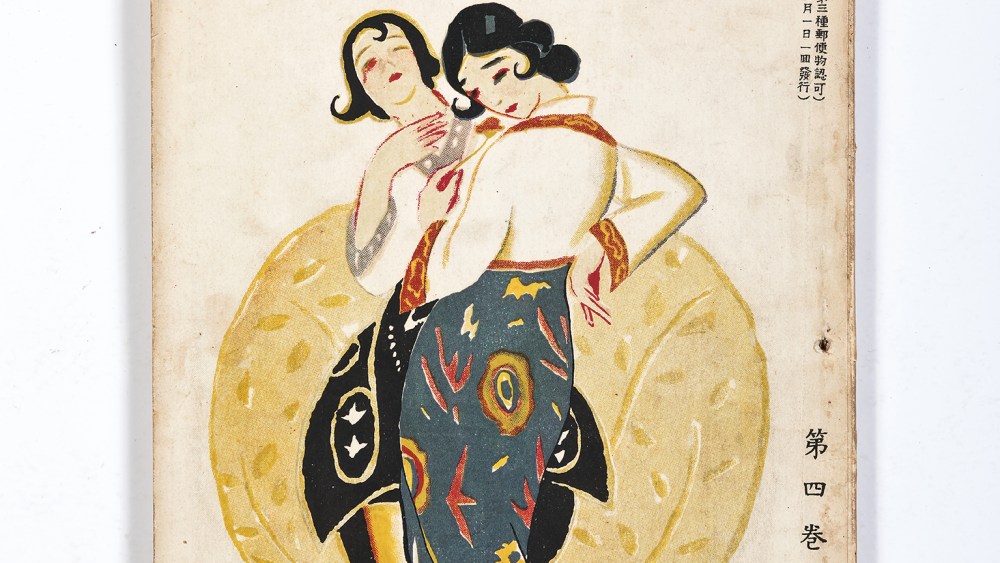
Korean women cut their traditionally long hair, and the classic hanbok was modernized. Western fashion and beauty became influential, coexisting in art and life.
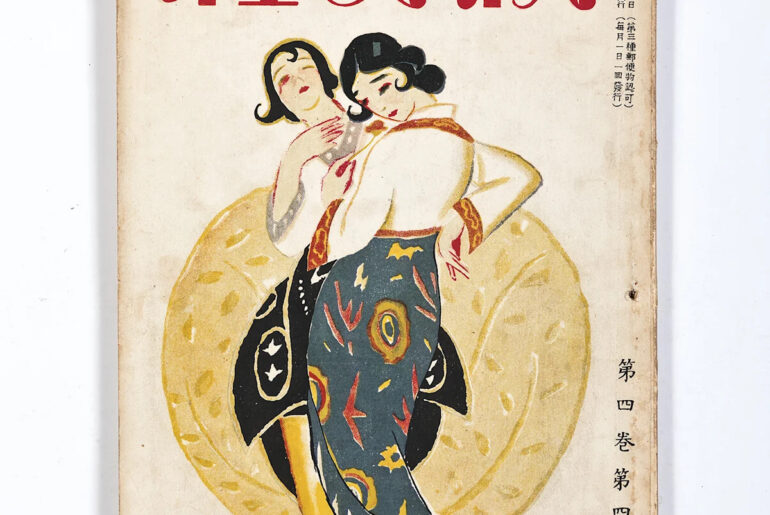
Copies of a woman’s magazine at the time are seen here, as are paintings by Kim Eun-ho and Kim In-soong, for instance.
The final section of the exhibit explores the evolution of Korean beauty into contemporary K-beauty, now a worldwide phenomenon and a visual culture. “It shows how Korean beauty is presented within a global visual ecosystem through fashion, music, advertising and film,” Trinquet-Soléry said.
Objects linked to K-pop from the 1990s through the present are on show, as are some beauty products from the likes of Erborian and a Chanel dress from the house’s 2015 cruise collection presented in Seoul.