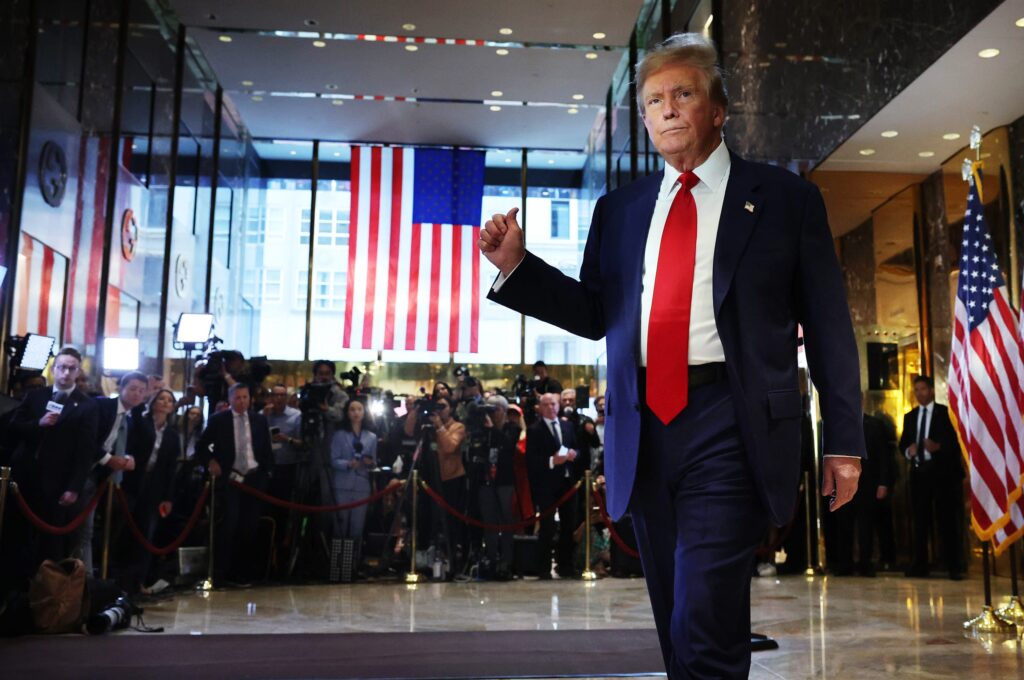
“When Donald Trump is out of office, and although the Supreme Court ruling gave him presidential immunity for his official acts, will he be held accountable for his 34 felony counts?” – T.
Hi T.,
Trump was already sentenced in the New York hush money case, right before he returned to office.
The judge gave him an “unconditional discharge,” which is basically a non-penalty. The judge said he gave that sentence because Trump was about to be president again, concluding that “the only lawful sentence that permits entry of a judgment of conviction without encroaching upon the highest office in the land is an unconditional discharge.”
Reasonable people can disagree about what accountability means in this situation.
It’s true that, in his sentencing, Trump received favorable treatment because he won the 2024 election (though he didn’t face mandatory imprisonment in any event).
But the fact he was sentenced at all represented something unique about this case, because it was the only one of his four prosecutions that went to trial before the election. After he won that election, his two federal cases went away, due to the Justice Department’s policy against prosecuting sitting presidents, and the Georgia election case went away due to the Fani Willis disqualification saga.
The hush money case isn’t over yet.
Trump is actively appealing his jury trial conviction on those 34 counts of falsifying business records to cover up a hush money scheme in connection with the 2016 presidential race. He’s trying to move his appeal from state court to federal court.
Whichever route it takes, the Supreme Court can have the last word on how its immunity ruling applies to the state case.
Recommended

Jordan Rubin is the Deadline: Legal Blog writer. He was a prosecutor for the New York County District Attorney’s Office in Manhattan and is the author of “Bizarro,” a book about the secret war on synthetic drugs. Before he joined MS NOW, he was a legal reporter for Bloomberg Law.
Latest Post