D: Sound also plays a very important role. How did you approach that dimension?
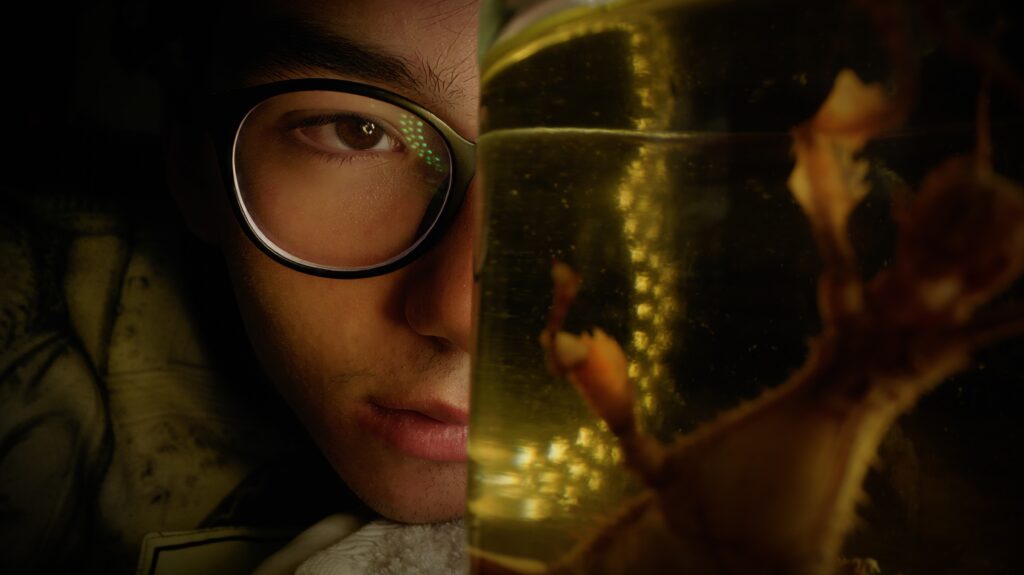
LP: We were very lucky. George is incredibly comfortable handling insects. He can get very close to them, which allowed us to record sounds that are normally very difficult to capture. For example, we recorded the mating calls of the crickets and other subtle sounds that bring the insect world to life. Those recordings became an important narrative element. They help the audience experience the insects not just visually but sonically as well. Of course, we also enhanced some elements during postproduction, but a lot of the sounds come directly from what we captured during filming.
D: You mentioned that editing took about a year. How much footage did you end up working with?
LP: In total, we shot around 70 hours of footage. That gave us a lot of material to work with and many possible directions. However, this wasn’t the kind of documentary where you completely discover the story during editing. At the very beginning, the process is more abstract because you’re still figuring out where the story might go.
But when George decided to undergo surgery to correct his vision and when the new cricket—Ferdinand—entered the story, we understood that the film was really about transformation. George’s life was changing, and we needed to follow that evolution. So even though we had many possibilities in the editing room, we remained very focused on that arc.
D: The film is a coproduction between Greece, Denmark, and France. How did that international collaboration influence the project?
LP: From the beginning, we were very interested in finding a Nordic co-producer. Danish editors in particular have a strong tradition of working on films for younger audiences, and we wanted to explore that. Our goal was to find a balance between creating a film that younger viewers could connect with and making something that would resonate with adults as well. The story deals with family relationships, identity, and personal growth—topics that are universal.
The coproduction structure helped us enormously. It allowed us to collaborate with fantastic professionals and receive valuable feedback at different stages. For example, we worked with composer Florencia Di Concilio and editor Estephan Wagner, both of whom brought a lot of experience to the project. In practical terms, it also helped us financially, making it possible to work with well-established collaborators.
D: Finally, how do you imagine the life of Bugboy beyond festivals? Are you planning any educational or impact initiatives?
LP: Yes, definitely. Our Greek production company [Anemon Productions] has a lot of experience organizing screenings in schools, and we’re very interested in reaching young audiences. We hope that students will see themselves in George—or recognize someone like him in their own lives. The film can spark conversations about difference, empathy, and how people cope with loneliness.
At the same time, the film also has an environmental dimension. It encourages audiences to rediscover their connection with nature and to look more closely at the small creatures that share our world. Sometimes we live at such a fast pace that we forget to pay attention to these details. George reminds us to slow down and notice the invisible friends around us. If the film can inspire even a small shift in perspective, then I think it will have achieved something meaningful.