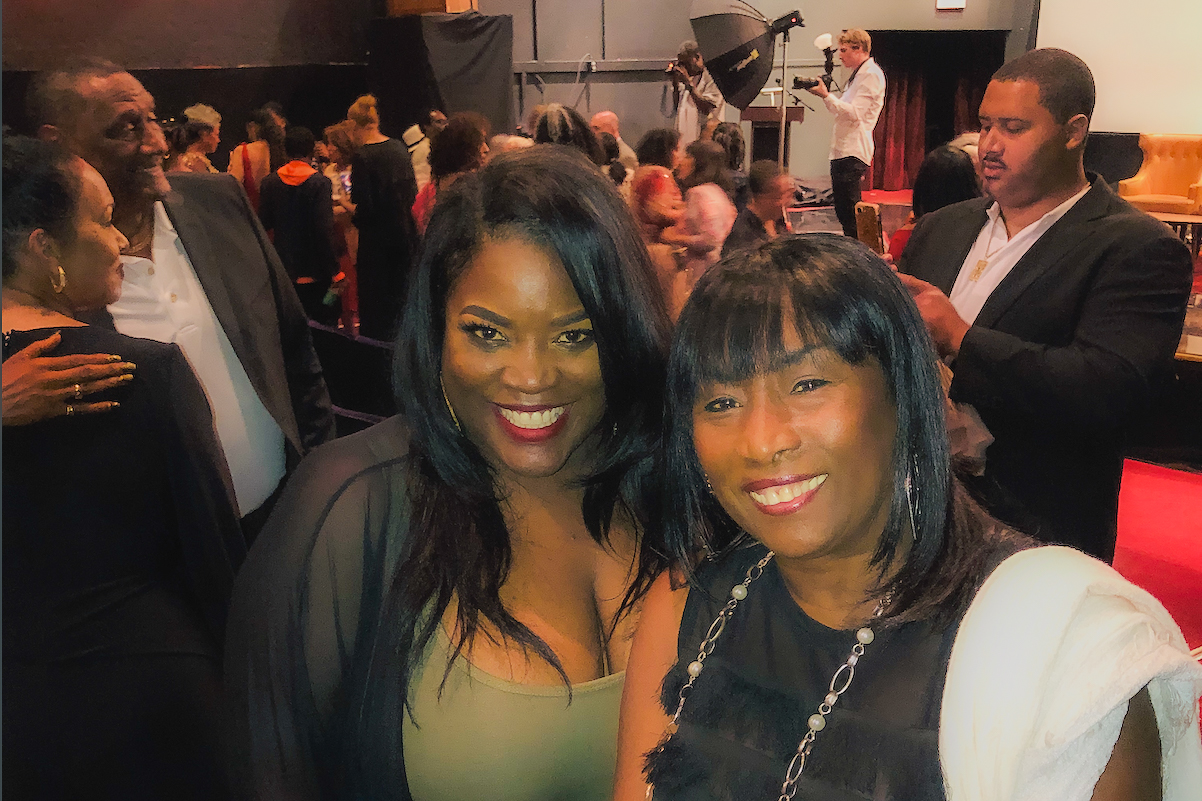
She was bold. She was Black. She was beautiful.
And for countless women watching, Kiki Shepard was something even greater — she was confirmation.
With every graceful step across the Apollo stage, she embodied a standard of beauty that had long been overlooked. In an industry shaped by colorism and narrow Hollywood ideals, Shepard’s presence felt expansive, affirming, and necessary.
Her passing on March 16 at 74 marks the loss of a television icon — but her legacy endures in every “chocolate” girl — and woman — who saw themselves reflected in her light.
From Tyler to the Apollo Stage
Born Chiquita Renee Shepard in Tyler, Texas, she was raised in a family steeped in performance. Her parents were dancers, and that early exposure to the stage shaped a presence that would later make her a household name.
A graduate of Howard University, Shepard began her career as a professional dancer in the early 1970s, performing internationally and appearing in major productions, including the 1977 Academy Awards broadcast.
Her work extended into theater, where she performed in several Broadway productions, including Bubbling Brown Sugar, Your Arms Too Short to Box With God, and Porgy and Bess, while also appearing in multiple television series.
She took center stage at Showtime at the Apollo in 1987, beginning a 15-year run that made her one of the most recognizable figures in Black entertainment—and earned her a reputation as the “Apollo Queen of Fashion.”
Across those years, Shepard worked alongside a range of hosts who each brought their own rhythm to the stage:
Sinbad
Steve Harvey
Mark Curry
Rudy Rush
Mo’Nique
Through each transition, Shepard remained the constant — measured, composed, and unmistakably in command of her space.
The Image That Stayed With Us
There was something unforgettable about Kiki Shepard.
Her signature walk — smooth and deliberate.
Her signature twirl — effortless.
Her signature smile — radiant and assured.
For many, especially young Black girls, she represented a kind of beauty that was rarely centered. Dark skin, carried with elegance and confidence, presented not as an alternative — but as complete.
Former Ebony Fashion Fair model Rebecca Briscoe described that impact:
“She was the epitome of beauty, style and grace, and a role model I followed every weekend on Showtime at the Apollo,” Briscoe shared. “I was honored to meet her in person at a FLAIR reunion in Los Angeles in 2019 — it was a moment I will never forget.”
Tributes poured in across social media, reflecting both the breadth of Shepard’s influence and her commitment to advocacy.
“Kiki was a fierce advocate for those with sickle cell,” talk show host Sherri Shepherd wrote. “I am devastated that you are gone, but I am rejoicing because you lived — and you lived boldly and joyfully.”
“Her smile will be deeply missed, but her legacy lives on,” said comedian Loni Love.
Defying Colorism
Colorism — the privileging of lighter skin over darker skin — has shaped perceptions of beauty across generations in the Black community. Its roots trace back to slavery, where proximity to whiteness often determined access, status, and opportunity. That hierarchy did not disappear; it evolved.
From early Hollywood casting to the rise of hip-hop videos and mainstream media, lighter-skinned women and those with more European features were more frequently elevated, reinforcing a narrow and repeated image of desirability.
Kiki Shepard’s career stood in contrast to that pattern.
Her presence offered a vision of beauty that did not require adjustment, dilution, or explanation.
In his 2011 documentary Dark Girls, filmmaker Bill Duke examined the emotional and cultural weight of colorism in the African American community, giving language to what many had already lived and understood.
For many who grew up watching Shepard at the Apollo, that understanding began to shift — visibly.
“Her presence helped shape a generation that grew up watching that stage and celebrating Black excellence in entertainment,” host Brandon Holt said. “For those of us who grew up watching her… if you know, you know.”
One Final Walk
Kiki Shepard leaves behind more than a television legacy. She leaves behind a standard — one shaped by grace, discipline, and an unwavering sense of self.
In memory, it is easy to picture her the way so many remember: stepping onto that stage, shoulders back, head high, moving with intention.
And for the women who saw themselves more clearly because she was there, her message remains:
You are Black.
You are beautiful.
You are seen.