Introduction: A Market Illuminated by Lifestyle Shifts
The Europe candle market is undergoing a remarkable transformation, evolving from a traditional household staple into a symbol of lifestyle, wellness, and aesthetic sophistication. Once used primarily for lighting and rituals, candles today are deeply embedded in modern home décor, emotional well-being, and luxury gifting.
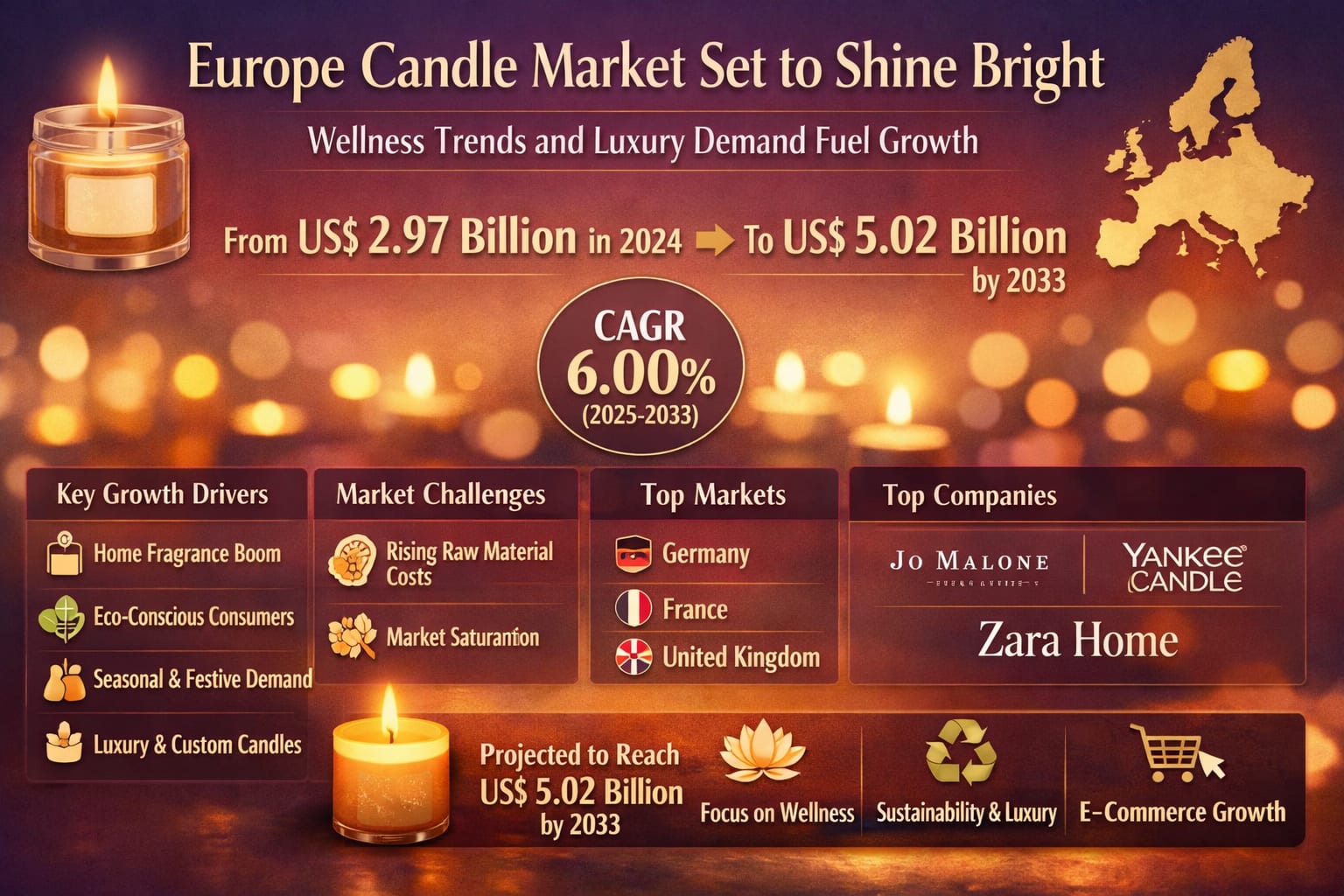
According to Renub Research, the Europe candle market is projected to grow from US$ 2.97 billion in 2024 to US$ 5.02 billion by 2033, expanding at a compound annual growth rate (CAGR) of 6.00% between 2025 and 2033.
Candles in the Modern Era: Beyond Utility
Candles are no longer just functional items; they are now central to creating ambiance and enhancing living spaces. European consumers increasingly view candles as essential elements of interior design, used to add warmth, personality, and sensory richness to homes.
Influencers, home décor magazines, and social media platforms have played a significant role in elevating candles to “must-have” lifestyle products. This cultural shift has encouraged manufacturers to innovate—introducing exotic fragrances, artistic designs, and premium packaging that appeal to design-conscious buyers.
Luxury candles, in particular, have gained traction. These products often feature unique scent profiles, artisanal craftsmanship, and visually appealing containers, making them desirable both for personal use and gifting.
Key Growth Drivers Shaping the Market
1. Surge in Home Fragrance Demand
The growth of the broader home fragrance industry has been a major catalyst for the candle market. Consumers are increasingly investing in products that enhance their living environments, especially as homes double as workplaces and relaxation spaces.
A survey by the European Home Fragrance Association indicates a 20% increase in the home fragrance market over the past five years, highlighting the growing importance of sensory experiences in daily life.
Candles, with their dual function of lighting and fragrance, are uniquely positioned to benefit from this trend.
2. Wellness and Self-Care Movement
The rise of wellness culture has significantly boosted demand for candles, particularly those associated with aromatherapy. Scents such as lavender, eucalyptus, and sandalwood are marketed for their calming and stress-relieving properties.
Consumers are increasingly using candles during meditation, yoga, and relaxation routines, positioning them as tools for mental well-being rather than mere decorative items. This shift aligns with a broader societal focus on mindfulness and self-care.
3. Eco-Conscious Consumer Behavior
Sustainability has become a defining factor in purchasing decisions across Europe. Consumers are actively seeking products that are environmentally friendly, ethically produced, and free from harmful chemicals.
As a result, there is a growing preference for candles made from natural and renewable materials such as:
Soy wax
Beeswax
Palm wax
In addition, eco-friendly packaging and transparent supply chains are gaining importance. Brands that align with these values are more likely to build trust and long-term customer loyalty.
4. Seasonal and Festive Demand
Candles play a central role in European celebrations and traditions, driving strong seasonal demand. Holidays such as Christmas, Easter, and Valentine’s Day significantly boost sales, as candles are widely used for decoration and gifting.
Limited-edition collections and themed products further enhance this demand. For instance, unique collaborations and festive packaging not only increase short-term sales but also strengthen brand engagement and customer retention.
5. Rise of Premium and Customized Products
The trend toward premiumization is reshaping the candle market. Consumers are willing to pay higher prices for products that offer superior quality, exclusivity, and aesthetic appeal.
Customized and handmade candles are particularly popular, as they provide a sense of individuality and craftsmanship. This trend is especially strong among younger consumers who value authenticity and unique experiences.
Challenges Facing the Industry
Despite its promising growth trajectory, the European candle market faces several challenges that could impact profitability and expansion.
1. Volatility in Raw Material Costs
The cost of essential raw materials—such as wax, essential oils, and wicks—has been subject to fluctuations due to supply chain disruptions and environmental factors.
These cost variations can significantly impact manufacturers, especially those focusing on natural and sustainable products. Smaller companies, in particular, may struggle to absorb rising costs without increasing prices, which could affect demand.
2. Increasing Market Saturation
The market is becoming increasingly crowded, with new entrants and artisanal brands competing for attention. This saturation intensifies competition, leading to:
Price wars
Reduced profit margins
Higher marketing expenses
For consumers, the abundance of choices can dilute brand loyalty, making it more challenging for companies to differentiate themselves.
Country-Level Insights: Key European Markets
Germany: A Hub of Innovation and Craftsmanship
Germany remains one of the most significant contributors to the European candle market. The country’s strong emphasis on quality, craftsmanship, and innovation has positioned it as a leader in both traditional and modern candle production.
Consumers in Germany are increasingly drawn to sustainable and design-oriented products, with high demand during festive seasons such as Christmas. The presence of a robust retail infrastructure, including supermarkets and e-commerce platforms, further supports market growth.
France: Where Style Meets Sustainability
France’s candle market is driven by a blend of aesthetic appreciation and environmental consciousness. French consumers favor high-quality, artisanal candles that align with their lifestyle and values.
The popularity of natural wax candles and the country’s strong gifting culture contribute to consistent demand, particularly during seasonal celebrations. The growth of online retail has also expanded access to a wide variety of products.
United Kingdom: Rapid Growth in Eco-Friendly Products
The UK market is experiencing rapid expansion, fueled by increasing demand for eco-friendly and wellness-oriented products. Consumers are shifting toward natural wax candles and premium offerings that reflect their preferences for sustainability and quality.
Seasonal demand, combined with the rise of artisanal brands, is driving strong market performance. E-commerce platforms have further accelerated growth by making diverse products easily accessible.
Market Segmentation Overview
The Europe candle market is diverse, catering to various consumer needs and preferences. Key segments include:
By Wax Type
Palm Wax
Soy Wax
Beeswax
Paraffin
Others
By Category
Economical
Luxury
By Product Type
Votive Candles
Container Candles
Pillars
Tapers
Others
By Distribution Channel
Online Retail
Specialty Stores
Supermarkets & Hypermarkets
Departmental Stores
Institutional Sales
This segmentation highlights the market’s adaptability, offering products across different price points, styles, and purchasing channels.
Competitive Landscape: Key Players Driving Innovation
The European candle market features a mix of established global brands and emerging artisanal players. Leading companies are focusing on innovation, sustainability, and branding to maintain their competitive edge.
Some of the prominent players include:
Portmeirion Group PLC
Newell Brands Inc.
Estée Lauder Companies Inc.
Lalique Group SA
Bath & Body Works, Inc.
Candeo Candles
Jo Malone
Yankee Candle
Zara Home
These companies are investing in product development, strategic collaborations, and digital marketing to capture a larger share of the market.
The Role of E-Commerce in Market Expansion
The rise of e-commerce has significantly transformed the candle market in Europe. Online platforms provide consumers with access to a wider range of products, including niche and artisanal offerings that may not be available in physical stores.
Key advantages of e-commerce include:
Convenience and accessibility
Competitive pricing
Personalized recommendations
Direct-to-consumer brand engagement
As digital adoption continues to grow, online retail is expected to play an increasingly important role in market expansion.
Future Outlook: A Bright and Fragrant Path Ahead
The future of the Europe candle market looks promising, driven by evolving consumer preferences and ongoing innovation. Key trends expected to shape the market include:
Increased focus on sustainability and eco-friendly materials
Growth of luxury and personalized products
Expansion of aromatherapy and wellness applications
Greater integration of technology in product design and marketing
With a projected market value of US$ 5.02 billion by 2033, the industry is poised for steady and sustainable growth.
Final Thoughts
The Europe candle market is a compelling example of how traditional products can evolve to meet modern consumer demands. What was once a simple utility item has become a symbol of comfort, style, and self-expression.
As consumers continue to prioritize wellness, sustainability, and personalization, candles are set to remain a central element of European lifestyles. For businesses, this presents a unique opportunity to innovate and connect with customers on a deeper, more emotional level.