Stretching is the part of fitness most people treat like washing up after a dinner party: necessary, useful, and quietly avoided if there is any chance of getting away with it. We will run, cycle, squat, lunge and fling kettlebells about with noble intent, then skip the calm bit at the end as though mobility, recovery and muscle health are somebody else’s problem.
That is a mistake.
For all the attention paid to workouts, heart-rate zones and calorie burn, stretching remains one of the simplest ways to improve movement quality, reduce stiffness and help the body recover. It is also, according to the experts, just as useful for the mind as it is for the hamstrings.
The habit people forget
There is a curious flaw in modern exercise culture. People are often more committed to the workout than to the rest of the day around it. A fierce 25 minutes of effort can be followed by hours of sitting still, shoulders curled, hips locked, back grumbling like an old caddie in bad weather.
Personal trainer Julia Buckley has seen exactly that.
“From what I see, people are working out more, but I fear many of us are moving around less throughout the day.
“I’ve had lots of messages and comments from people doing my live workouts saying they don’t normally have time for a workout and that they’re using the lockdown as an opportunity to get fit.
“This is great, but I’m a little worried that people are sweating it out in short workouts and then being very sedentary the rest of the day.”
That tension between intense exercise and long periods of inactivity is where stretching earns its keep. It is not glamorous. It will not make a noise on social media. But it can help keep the machinery from seizing up.
Why stretching matters for muscles and movement
the post stretch after a workout is what I liveeee for
— Nat (@Naatduque) April 8, 2020
Anyone who has trained hard knows the feeling: tight calves, heavy legs, hips like rusty hinges. Exercise is good for the body, but it also places demand on muscles and joints. Without proper recovery and regular flexibility work, that demand can linger as soreness, restricted range of motion and poor movement patterns.
Buckley puts it plainly:
“We’ve all experienced how tight muscles can get after doing exercises that challenge us,” says Buckley, who runs a daily 8am (GMT) workout. “Stretching helps alleviate this, but also brings many long-term benefits.
“It keeps our muscles healthy so we can stay strong and get the most out of our workouts, it ensures we move correctly, which helps reduce injury risk, and maintains our mobility and range of movement.
“The more range we have, the ‘bigger’ the movements we can make, which means we perform better in exercise and burn more calories.”
That is the practical case for stretching in three neat parts: better mobility, better movement, better performance.
If muscles are tight, the body compensates. When the body compensates, technique suffers. And when technique suffers, things start to creak, wobble or complain. For runners, cyclists, gym regulars and everyday walkers alike, that matters.
Mindful breathing gives stretching another gear
Stretching does more than lengthen a muscle and tick a recovery box. Done properly, especially with controlled breathing, it can slow the body down and settle the head.
Mel Enright, who teaches yoga and works with Surf Sistas, sees stretching as a bridge between physical care and mental reset.
“Stretching improves circulation and blood flow in the body, so it keeps everything ‘moving’ and the blood oxygenated. Stretching combined with mindful breathing – using the breath to marry and match with the stretching – can help decrease anxiety.”
That is where stretching begins to look less like an afterthought and more like a useful daily ritual. Better circulation, improved posture, joint mobility, reduced tension and a calmer nervous system is a rather handsome return for a few minutes on the floor.
Enright adds: “Stretching can help prevent injury. If joints are attached to stiff muscles, that’s not great. Stretching helps release the fascia (connective tissue) which covers the muscles and can make them feel tight.”
And the advice is not to rush it. The body usually responds better to patience than force.
“It makes you feel good, connecting you back with your body – like massage, in a way.
Especially at this time, where we are all worrying about things. Simple stretching really connects the energy and focus back on the body, which can release stress from your mind.”
There is wisdom in that. Stretching asks for stillness, and stillness is in short supply.
Why post-workout stretching makes sense
The best time to stretch is not the only time to stretch, but it is certainly one of the smartest. After exercise, muscles are warm, pliable and more receptive. The body has done the hard charging; stretching is the quiet walk back to the clubhouse.
Buckley explains it well:
“I like to stretch right after a workout because the muscles are warm and supple, which makes stretching easier, and it’s sort of a yin and yang thing,” says Buckley.
“In our workouts we get the adrenaline pumping and feel high, for many it’s a time of escapism where the focus is on moving our bodies in the moment, rather than thinking about things outside of ourselves or whatever is going on in our lives.”
That contrast matters. Training fires you up. Stretching smooths the edges.
“We can use the post-workout stretch to bring ourselves gently back into our lives with a clearer and calmer mind, having released physical tension and worked off pent up nervous energy,” she adds.
For many people, that may be the most overlooked benefit of all. Not just physical recovery, but a proper transition. A gear change. A chance to stop rattling.
Stretching is not only for after exercise
One of the more useful truths here is that stretching does not need a workout attached to it to be worthwhile. You do not have to earn it with burpees.
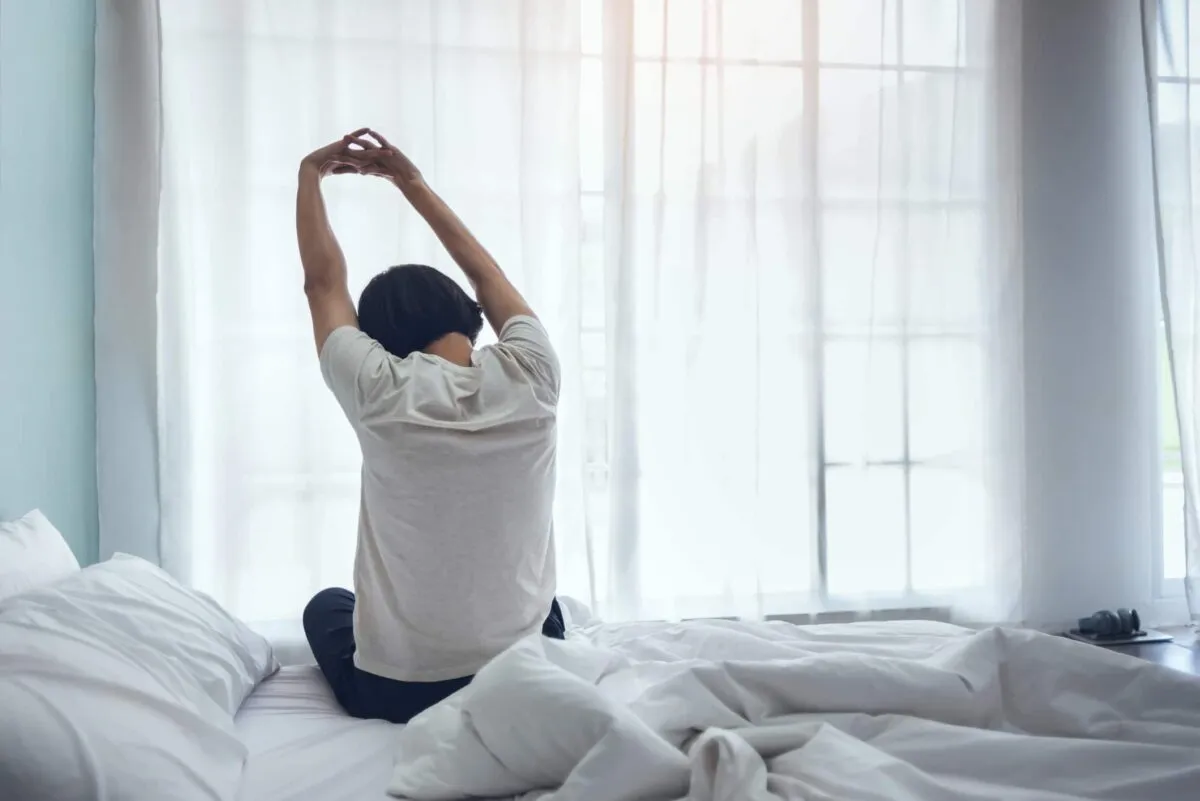
A few minutes in the morning can loosen the back and hips before a deskbound day. A short mobility session in the evening can reduce stiffness and nudge the body out of its seated slump. For people new to exercise, stretching can also be an easier doorway into routine and self-care than a punishing training plan.
Buckley makes that point clearly:
“All the same benefits apply whether we’re working out or not. This will optimise all the physical benefits, like reducing soreness and keeping us moving well, and helps us release tension and reset the mind.
“Our muscles still need to be kept in good condition for simply moving around in daily life. Also, simply taking a few minutes to stretch can be a great first step towards building the habit of taking time to care for our bodies with exercise.”
That last point is worth lingering on. Stretching is accessible. No gym required. No expensive kit. No heroic fitness level. Just a little consistency and the sense not to yank at your hamstrings like you are trying to start a stubborn lawnmower.
The real value of stretching
The fitness world is fond of complexity. It loves data, gadgets, acronyms and fashionable suffering. Stretching, by contrast, is simple, unfussy and tremendously useful.
It supports flexibility, mobility, posture, circulation and recovery. It helps reduce injury risk. It can ease muscle tightness and improve body awareness. It also gives the mind a chance to unclench, which may be every bit as valuable as touching your toes.
That is why stretching deserves better than being treated as the bit you skip when you are in a hurry. Done regularly, it is not filler. It is maintenance. It is insurance. It is common sense.
And in a world where people are always trying to do more, faster and harder, common sense is still a very good training partner.