Leading multivitamin brands have been accused of using misleading labels that allow parents to believe their supplements will provide all the vitamin D children need.
Six out of eight leading brands on sale in Britain contain well below the NHS-recommended daily levels for children, according to Sunday Times research.
Experts said some popular brands were able to advertise that their gummy vitamins, many of which are also high in sugar, contained “100 per cent” of recommended daily vitamin D when the suggested dosage did not achieve that.
The £110 million children’s multivitamin market in the UK is growing by about 8 per cent a year as parents spend more on supplements for their families. Multivitamin gummies are popular because many children can be more easily persuaded to take vitamins that look and taste like jelly sweets.
“The labelling is really confusing for parents who are trying to follow NHS advice and do the best for their children,” said Dr Vicky Sibson, director of the First Steps Nutrition Trust. “When you pick up a packet of vitamins and it says ‘100 per cent’ on it next to ‘vitamin D’, you would expect that it would contain all the vitamin D your child needs — but this is not the case.”
She added: “It does feel like loopholes are being exploited here and parents are being misled into thinking some products are better for their child than they really are.”
Parenting newsletter
Join our community receiving professional advice and sharing personal stories.
Sign up with one click
Humans mainly get vitamin D from sunlight, and smaller amounts from foods like oily fish and eggs. As sunlight is limited in the UK, especially in winter, the NHS says everyone aged one and above should take 10 micrograms of vitamin D daily to keep their bones, teeth and muscles healthy. This is particularly important for growing children.
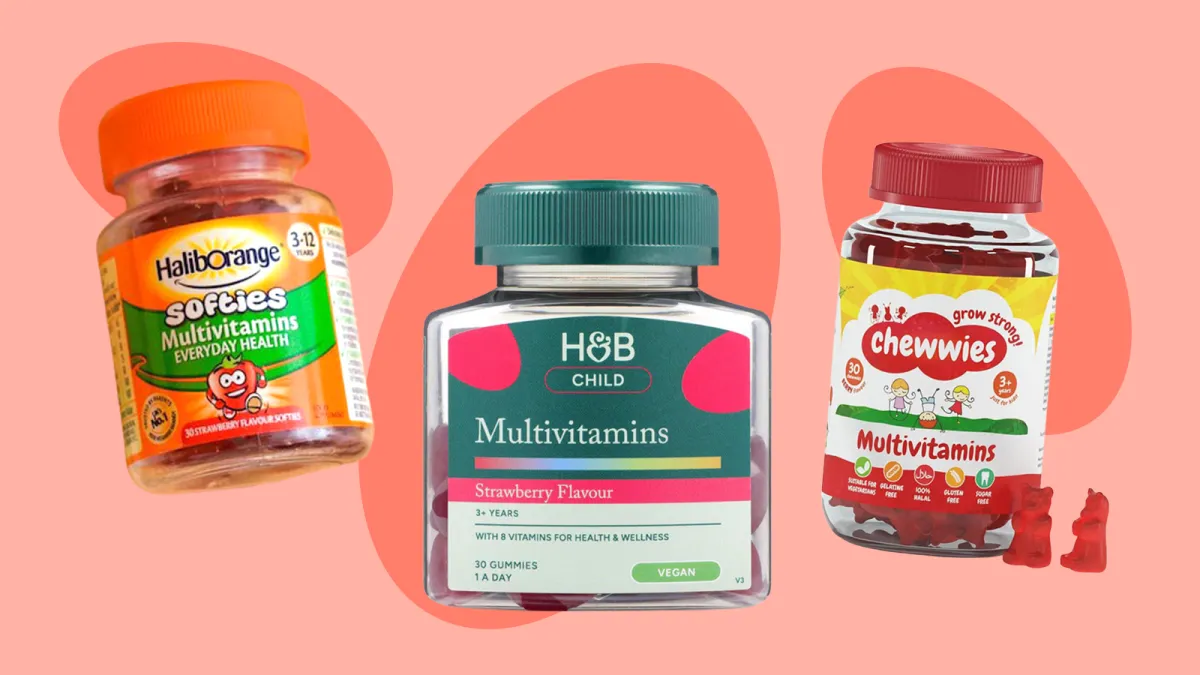
Yet most of the leading children’s vitamin products we looked at contain much less than this. Haliborange and Holland & Barrett’s supplements contain 2.5mcg per gummy. Bassetts, Chewwies, Wellkid and Tonic Health have 5mcg.
Only Boots and Superdrug own-brand products contain the 10mcg vitamin D recommended in each gummy.
Labelling laws mean supplement makers must state whether their product meets the European “nutrient reference value” (NRV) for vitamin D, which is 5mcg. This figure was set two decades ago based on the average adult. As a result, products containing only 5mcg are labelled as providing “100 per cent” of daily vitamin requirements, when this is actually half of what the NHS says children and adults need.
Most labels reviewed by The Sunday Times only use the old European nutrient reference values (NRVs).
Superdrug and Boots each list the Department of Health’s current advice of 10mcg per day in bold lettering, alongside the NRV listing.
Holland & Barrett, on its Kids Multivitamins Strawberry Gummies, says a child should take one a day, which would give 2.5mcg of vitamin D2. The label says this would provide 50 per cent of “NRV”. In small type below, it says the Department of Health recommends a daily supplement of 10mcg.
Haliborange Softies, for ages 3 to 12, advises that children take “1-2 fruit Softies daily” and says one Softie will provide 50 per cent of NRV. Nowhere on the label does it say this is less than the NHS recommendation.
The number of gummies each company recommends children take each day also varies. Tonic Health, for example, recommends its customers take two gummies a day. This would give children the NHS-recommended level of 10mcg, but the Tonic Health label does not mention this. Other brands say one a day or “one or two a day”, even if that means children would not receive the recommended amount.
Dr Megan Rossi, a registered dietician and health researcher at King’s College London, said there was nothing stopping brands including NHS-recommended levels of vitamin D in children’s products. “The [labelling law] is outdated but companies should be including enough vitamin D in their products,” she added.
Carrie Ruxton of the Health and Food Supplements Information Service, an industry-funded communications outlet, said labelling law was “decades behind the science” and that the industry had been calling for the UK government to update rules since Brexit. “The regulation is really slow to catch up and consumers are paying the price,” she said.
D2 versus D3
The detail about which type of vitamin D is used in the products also varied on labels.
Vitamin D supplements can contain either vitamin D2 or D3. Vitamin D3 (also called cholecalciferol) is derived from lanolin, an oil in sheep’s wool, while vitamin D2 (ergocalciferol), is made of mushrooms. A vegan version of D3 derived from lichen has recently been developed. Some companies said their products contained “vitamin D”, while others specified whether it was vitamin D2 or D3.
A growing body of evidence shows vitamin D3 is more effective. Some research suggests it may have other benefits, such as boosting immune function.
A recent meta-analysis of existing research by the University of Surrey suggested D2 may lower levels of D3 in the body.
Dr Eamon Laird, an independent public health specialist at Atlantic Technological University in Ireland, said brands were likely to use D2 rather than D3 because it is “way cheaper”. Last month one British supplier was selling wholesale powdered D2 for £66 per gram and D3 for £81 per gram.
More sugar than a Haribo
Vitamin gummies can also be high in sugar, sometimes higher than a Haribo gummy bear sweet. Many have almost identical ingredients to jelly sweets, including sugar or artificial sweeteners, gums and waxes.
To get the recommended 10mcg of vitamin D, a child would need to eat four of Holland & Barrett’s H&B Child Multivitamin gummies a day, which is not recommended on the label. That would involve 7.2g of sugar, or nearly two teaspoons.
The NHS provides Healthy Start sugar-free drops which contain recommended levels of vitamin D for low cost, or free to families receiving some benefits.
The Department of Health and Social Care said: “All food supplements sold in the UK must comply with labelling rules, meaning information provided to consumers must be accurate, must not mislead, and must enable the safe use of the product.” It added that “many vitamin D food supplements on the market” provide a daily dose of 10mcg “in line with” NHS recommendations.
Mondelez, which owns the Bassetts brand, said it had “proactively increased” the vitamin D content in its multivitamin chews to 10mcg and would replace the old version in the coming weeks.
Holland & Barrett said it had reformulated its gummies to include 10mcg of vitamin D3 from next month.
A spokesman for Wellkid said its Peppa Pig Multi-Vits product “provides more ingredients than major competitors”. He said: “While this provides broader nutritional support than vitamin D alone, for those seeking vitamin D specifically, a single Wellkid Peppa Pig Vitamin D gummy provides 10mcg.”
Sunna van Kampen, founder of Tonic Health, said: “Kids Multi Gummies contain 14 essential vitamins, minerals and plants, and are formulated to ensure the recommended daily serving of two gummies provides 10mcg of vitamin D, in line with NHS recommendation for kids aged 1+.”
Chewwies and Haliborange did not respond to requests for comment.