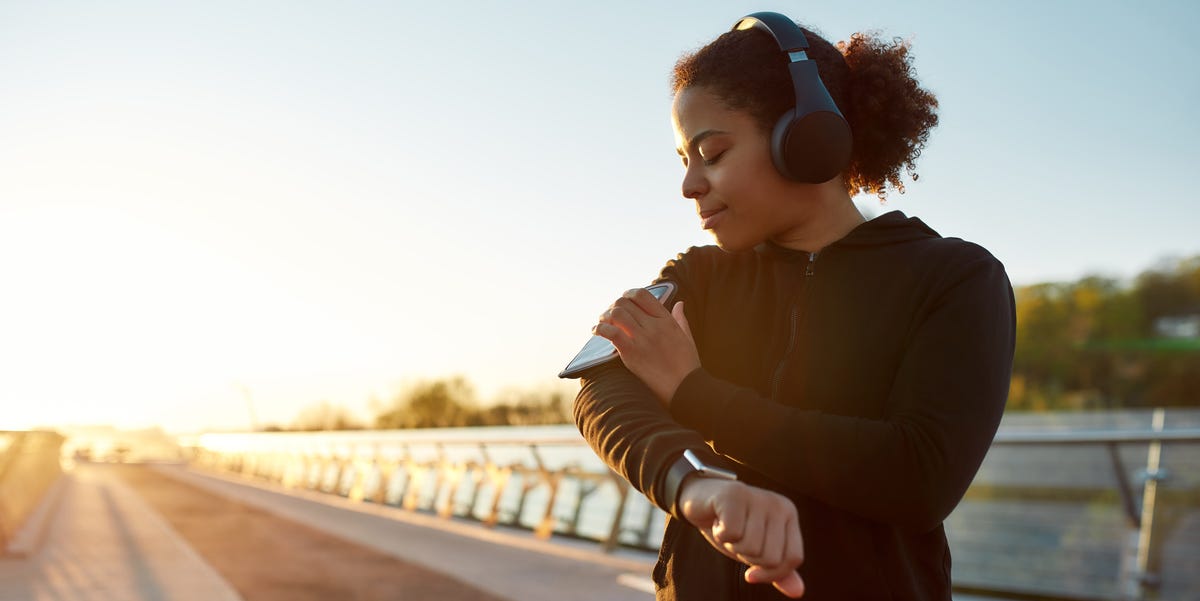
The third running boom has seen millions lacing up their trainers – and looking to generative AI for incremental gains. But can a machine really understand human training needs – or are you risking your health?
Everyone seems to be training right now…
You’re not wrong. Running has boomed in recent years – and women are leading the charge. Last year, Sport England identified an increase of 349,000 more runners in England in 2024 compared with 2023, almost entirely fuelled by women. The same period also fired the starting gun on AI-powered training apps, offering runners ‘adaptive, personalised’ training plans. In fact, the running app market, currently valued at $562m, is projected to grow to $1.47bn by 2030. But, while many report success with these apps, not everyone is convinced, with some experts suggesting usage is leading to overtraining and injury in some cases.
The AI apocalypse is nigh, knew it!
Not so fast – there’s a discussion to be had here; one which husband and wife Anthony and Laura Fletcher are pushing. Anthony, a sports scientist and the former head of running at Equinox UK and Laura, a runner and brand strategist, co-founded OneTrack Club – a running coaching service and community – after leading live workouts during the pandemic.
‘We felt something bubbling in 2021/22,’ Laura says, of AI training taking off. ‘One of the biggest areas of demand for running was for training plans, and the only thing that existed were static PDFs. It’s not the road we chose, but it wasn’t a surprise that others saw an opportunity to capitalise on something so scalable.’ Anthony adds, ‘AI training plans give the perception of personalisation, a trait that PDFs lack.’
So these training plans aren’t actually… personalised?
They are and they aren’t. Anthony explains that while these plans are tailored to inputs such as experience level and availability, they operate within a set of rules, so they can’t interpret context in real time like human coaches can.
It’s one reason why, this year, OneTrack has launched the world’s first human-coached running app, alongside a campaign to ‘Keep it Real’; the latter calls for transparency in the fitness industry and regulation around the use of words like ‘coach’ and ‘personalised’.
I could use AI to make my own plan for free then?
Technically, yes – but it’s not an effective human stand-in. AI tools often come with a positive bias. ‘The models are people pleasers: they’ll give you exactly what you want, otherwise no one would use them,’ says Anthony. Even if someone has never run before, they’ll get a sub-3:00 plan if that’s what they ask for. That they fail to account for everything from your injury history to your menstrual cycle is why Anthony and Laura are seeing more injuries caused by overtraining.
Any more advice for using AI to assist my running goals?
‘These apps can provide someone structure, but that’s as far as they go,’ says Anthony. ‘When using an AI app, you have to be very in tune with your body and use it more like a personal assistant than a coach.’
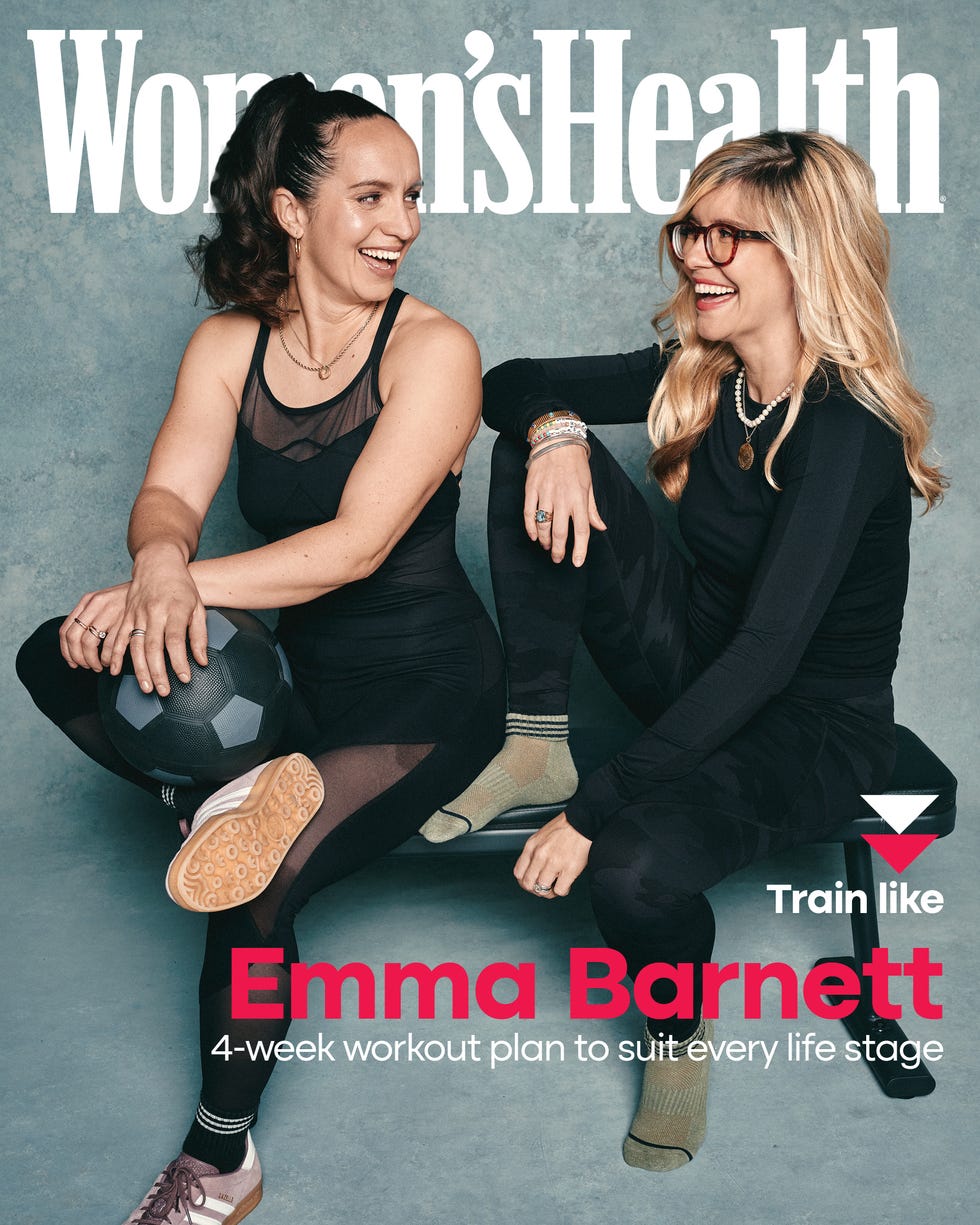
After years living with endometriosis and undergoing seven rounds of IVF, Radio 4 presenter Emma Barnett turned to training with PT Frankie Holah to rebuild strength and a more positive relationship with her body. Download the Women’s Health UK app to access Frankie’s full training plan.
 Related Stories
Hannah Bradfield is a Senior Health and Fitness Writer for Women’s Health UK. An NCTJ-accredited journalist, Hannah graduated from Loughborough University with a BA in English and Sport Science and an MA in Media and Cultural Analysis. She has been covering sports, health and fitness for the last five years and has created content for outlets including BBC Sport, BBC Sounds, Runner’s World and Stylist. She especially enjoys interviewing those working within the community to improve access to sport, exercise and wellness. Hannah is a 2024 John Schofield Trust Fellow and was also named a 2022 Rising Star in Journalism by The Printing Charity. A keen runner, Hannah was firmly a sprinter growing up (also dabbling in long jump) but has since transitioned to longer-distance running. While 10K is her favoured race distance, she loves running or volunteering at parkrun every Saturday, followed, of course, by pastries. She’s always looking for fun new runs and races to do and brunch spots to try.