6 min readNew DelhiMar 24, 2026 06:26 PM IST
Punjab and Haryana High Court news: Reviving a 25-year-old case involving the death of a three-year-old boy in an accident with an Army vehicle, the Punjab and Haryana High Court recently observed that the rights of citizens cannot be sacrificed at the altar of the state.
Justice Virinder Aggarwal observed that the “sovereign will of the people” is the supreme law.

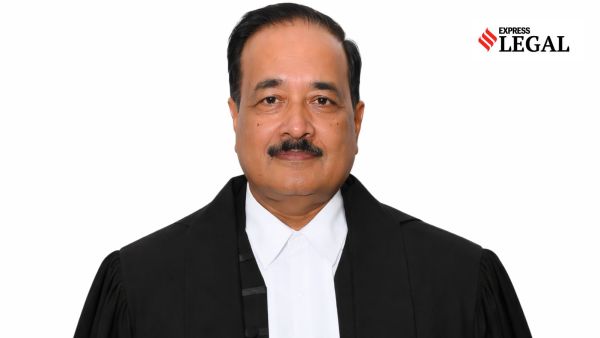 Justice Virinder Aggarwal said the state can’t be absolved of its tortious liability while taking the life of one of its citizens by the wrongful act of one of its officials.
“In the present constitutional framework, no individual organ of the state…can claim supremacy. The ultimate authority rests in the Constitution itself, which derives its legitimacy and power from the sovereign will of the people, as solemnly enshrined in the opening words of the Preamble: ‘We, the People of India’,” the high court said in its March 20 order.
The high court was hearing the appeal challenging the Motor Accidents Claims Tribunal’s (MACT) order, which had dismissed the claim petition by treating the alleged act of the Army driver as a sovereign function.
‘We the people of India…’
In the Preamble of the Constitution, sovereignty ultimately rests with the people, and the state exists to serve the welfare of its citizens, therefore, the welfare of the people is the supreme law.
Following India’s independence, the high court pointed out that the people of the country adopted and enacted the Constitution and established India as a sovereign, socialist, secular, and democratic republic.
The Preamble is the soul of the Constitution and affirms that sovereignty flows from the people, and it is they who are the ultimate repository of power.
Therefore, the rights, liberties, and entitlements of the citizenry occupy paramount importance and cannot be subordinated or sacrificed at the altar of the state, even under the guise of sovereign immunity.
The state, while exercising its powers, is bound to act in consonance with the Constitution and the will of the people.
The state cannot arrogate to itself supremacy that overrides the fundamental rights and freedoms guaranteed to its citizens.
Sovereignty in India is inalienably vested in the people and all organs of the state are constitutionally obligated to exercise their authority within this framework.
The state cannot be absolved of its tortious liability while taking the life of one of its citizens by the wrongful act of one of its officials.
‘Decide matter afresh’
It is held that if the negligence of the Army driver in driving the offending vehicle is proved, the Centre, being the owner of the offending vehicle and employer of the driver, should be vicariously liable to satisfy the award.
The case is remanded to the tribunal to decide the issue of negligence afresh and determine the quantum of compensation payable to the claimants.
The tribunal should decide the matter expeditiously and preferably within a period of two months after affording due opportunity of hearing to the parties.
The high court found the tribunal’s act of invoking the doctrine of sovereign immunity to exonerate the Centre for the alleged act of the driver legally unsustainable.
The traditional doctrine that acts of the state or its officials are beyond judicial scrutiny cannot be sustained in India, especially in matters involving tortious or negligent acts causing harm to individuals.
The tribunal concluded that the act complained of arose in the course of performance of sovereign functions of the state, and therefore, the Union of India could not be held vicariously liable for the alleged negligent act of its employee.
Market visit, accident and claim
On October 15, 2000, the child, Rakesh Kumar, aged about 3 years, was seated on a bicycle being ridden by his brother Ramesh.
It was claimed that both of them were returning from the market after purchasing household articles and were hit by a military truck in a rash and negligent manner.
It was alleged that the driver ignored the red traffic signal meant for his side and struck the bicycle of the child.
Due to the forceful impact, the minor child sustained multiple injuries, including a serious head injury.
He was allegedly immediately taken to the hospital, where, despite medical treatment, he succumbed to the injuries suffered in the accident.
The claimants filed a claim petition before the tribunal seeking compensation on account of the untimely death of the minor child, Rakesh Kumar.
‘Rash driving on road not sovereign function’
Appearing for the claimant, advocate Rishav Jain argued that once evidence placed on record established the rash and negligent driving of an Army driver, the tribunal could not have dismissed the claim petition on the ground of sovereign immunity without deciding the merits.
Jain argued that negligent driving of a vehicle on a public road is not a sovereign function, and therefore, the Centre cannot be exonerated on that ground.
The tribunal’s refusal to quantify compensation solely on the strength of sovereign immunity amounts to a misapplication of law and a failure to exercise jurisdiction.
‘Centre can’t be held liable’
On the contrary, representing the insurance company, advocate H S Oberoi submitted that the tribunal’s order has been passed after proper appreciation of the evidence placed on record.
Oberoi claimed that the tribunal has rightly concluded that the Centre could not be held liable, as the Army driver was discharging sovereign functions at the time of the accident.
The counsel argued that the tribunal correctly applied the doctrine of sovereign immunity, and no fault can be found with the dismissal of the claim petition.
Expand

© IE Online Media Services Pvt Ltd