Published March 24, 2026
The Summer Electronic Benefit Transfer (Summer EBT) Program is a proven method for decreasing food insecurity and increasing nutrition for children during the summer months. The program provides $120 per summer period per eligible child for households to use for groceries while school is out of session.
The program relies on the infrastructure of the Supplemental Nutrition Assistance Program (SNAP), which means that changes to SNAP policy could directly affect how Summer EBT operates.
Summer EBT benefits are loaded onto EBT cards and used at SNAP-authorized retailers. In some states, Summer EBT benefits for SNAP recipients are co-loaded onto existing SNAP cards. In others, all Summer EBT recipients receive separate Summer EBT cards. Regardless of which card benefits are on, Summer EBT dollars function the same way as SNAP dollars at the point of sale, which would make it challenging for states and retailers to set different standards for program purchases. The interconnection between these programs will matter even more as states adopt new restrictions on what items can be purchased with SNAP benefits.
As of March 2026, 22 states have approved SNAP waivers that restrict certain items from being purchased with benefits. These restrictions vary, but can include limiting the purchase of sugar-sweetened beverages and candy, to more sweeping restrictions such as those in Iowa where participants will only be able to purchase foods and beverages that are not subject to the state’s sales tax.
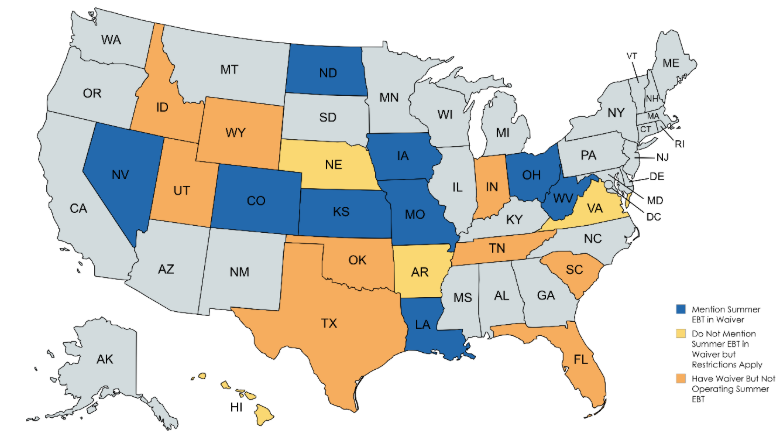
As their SNAP food choice restrictions go into effect, many states are applying the restriction rules to Summer EBT, meaning the SNAP waiver requirements also determine what families can buy with Summer EBT benefits. The map above illustrates which states are rolling Summer EBT into their SNAP waivers.
Food choice restrictions will increase stigma for both Summer EBT and SNAP households. Families may also experience confusion about the new restrictions, resulting in delays at the register, which may cause embarrassment and an inability to purchase intended groceries. Restricting food choices for families with low incomes can also reinforce the inaccurate and harmful narrative that they inherently make unhealthy dietary decisions. This narrative persists despite a 2016 report by the U.S. Department of Agriculture that found there is little difference between the foods that SNAP and non-SNAP households purchase. And because Summer EBT is the newest federal nutrition program, permanently established nationwide in 2024, and does not reach all eligible families yet, the stigma caused by these waivers could discourage even more families from participating.
Because Summer EBT eligibility is tied to free and reduced-price school meals rather than SNAP participation, many families who receive Summer EBT will not be included in SNAP-focused outreach about new purchase restrictions. States will therefore need to conduct additional outreach to Summer EBT–only households, increasing administrative complexity and costs. Summer EBT users will also need to be included in any evaluation of the impact of SNAP restriction waivers at the state level, which will also increase a state’s administrative costs.
Summer EBT is particularly helpful in rural communities where there are few summer meals program sites available. Many rural communities also only have a limited number of grocery stores available to them. To comply with new food choice restrictions, retailers must upgrade their point-of-sale systems and train staff, which can be expensive. If retailers stop accepting SNAP and Summer EBT benefits because of the cost of implementing the changes or concerns about mistakenly selling ineligible items, families in rural areas will be left with even fewer places to use their benefits.
The adoption of SNAP food restriction waivers has consequences that stretch far beyond the SNAP program itself. As states extend these limitations to Summer EBT, families face new barriers, retailers face new burdens, and these vital nutrition programs risk becoming less accessible nationwide. For Summer EBT to reach its full potential to ensure every eligible child can access needed food during the summer months, policymakers must reverse SNAP food restriction waivers.