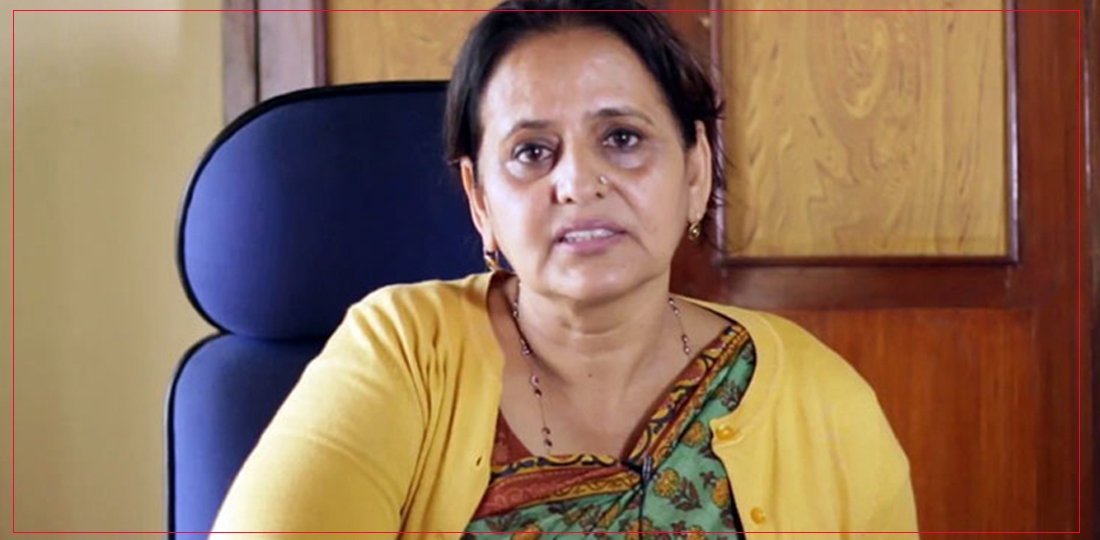
Kathmandu. The Attorney General under the leadership of Sushila Karki, Sabita Bhandari, spent her tenure making controversial decisions.
From her appointment as Attorney General until the final moments of her term, she could not remain free from controversy.
Decisions ranging from granting immunity to a clinic linked to her own daughter in an egg trafficking case to withdrawing the case against internet service provider WorldLink dragged Bhandari into controversy.
In the final phase of her tenure, just last Sunday, Attorney General Bhandari decided not to let a government-initiated case related to tax evasion reach the court. This was despite the fact that the District Government Attorney’s Office in Lalitpur, in coordination with the Attorney General’s Office, had initially decided to proceed with the case against the internet service provider WorldLink for alleged tax evasion.
The Inland Revenue Department had submitted an investigation report to the District Government Attorney’s Office in Lalitpur with the opinion that a case should be filed against WorldLink and its directors/officials for misappropriation of Telecommunication Service Charge (TSC) and tax evasion. The decision not to file a case was made by the District Government Attorney’s Office, passed through the Office of the High Government Attorney, and reached Attorney General Bhandari, whose endorsement on Sunday means the government can no longer pursue a legal claim for the revenue.
Attorney General Bhandari’s decision means that the case concerning tax evasion of approximately 7 billion rupees against the internet service provider WorldLink Communications will no longer proceed.
The Revenue Investigation Department had concluded that WorldLink evaded 2 billion 94 crore 37 lakh rupees in revenue by showing the Telecommunication Service Charge (TSC) collected from fiscal years 2077/78 to 081/82 as maintenance fees instead of depositing it into the government treasury.
Furthermore, the department stated that the company evaded 73 crore 8 lakh rupees in income tax by illegally deducting expenses in its income statement for the fiscal year 080/081. Accordingly, the Inland Revenue Department had concluded that a case should be filed with a total claim exceeding 7 billion 36 crore rupees, including fines.
Decision to Withdraw Cases of Money Laundering and Organized Crime Involving Rabi Lamichhane
On Poush 30, Attorney General Bhandari decided to revise and withdraw the cases related to ‘Organized Crime’ and ‘Money Laundering’ involving Rabi Lamichhane, Chairman of the Rastriya Swatantra Party and former Home Minister, in various cooperative fraud cases.
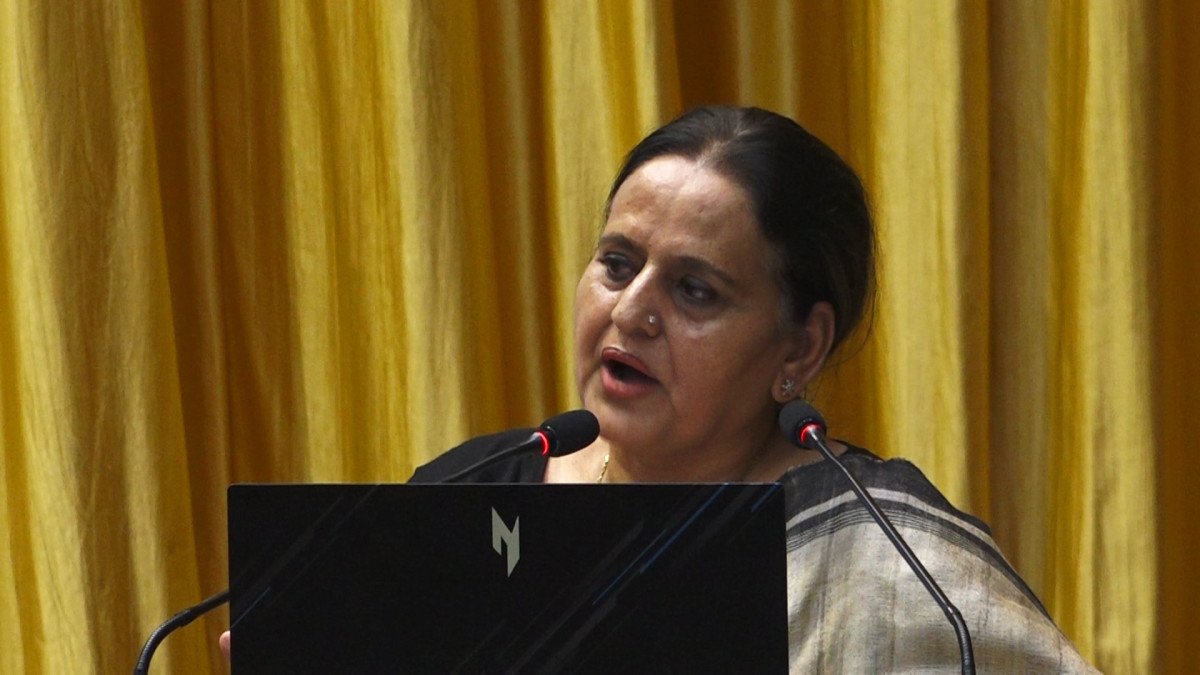
In the seven-page ‘Comment and Order’ from the Attorney General’s Office, District Government Attorney’s Offices were directed to proceed with the case against Lamichhane only for cooperative fraud and drop the other two serious charges.
Following the filing of a writ petition in the Supreme Court against this decision by the Attorney General, the applications to withdraw the claims of ‘Organized Crime’ and ‘Money Laundering’ against Rabi Lamichhane in the cases pending in the District Courts of Kaski, Kathmandu, Rupandehi, Chitwan, and Parsa have currently been stayed.
‘Clean Chit’ to Her Own Daughter’s Clinic in Egg Trafficking Case
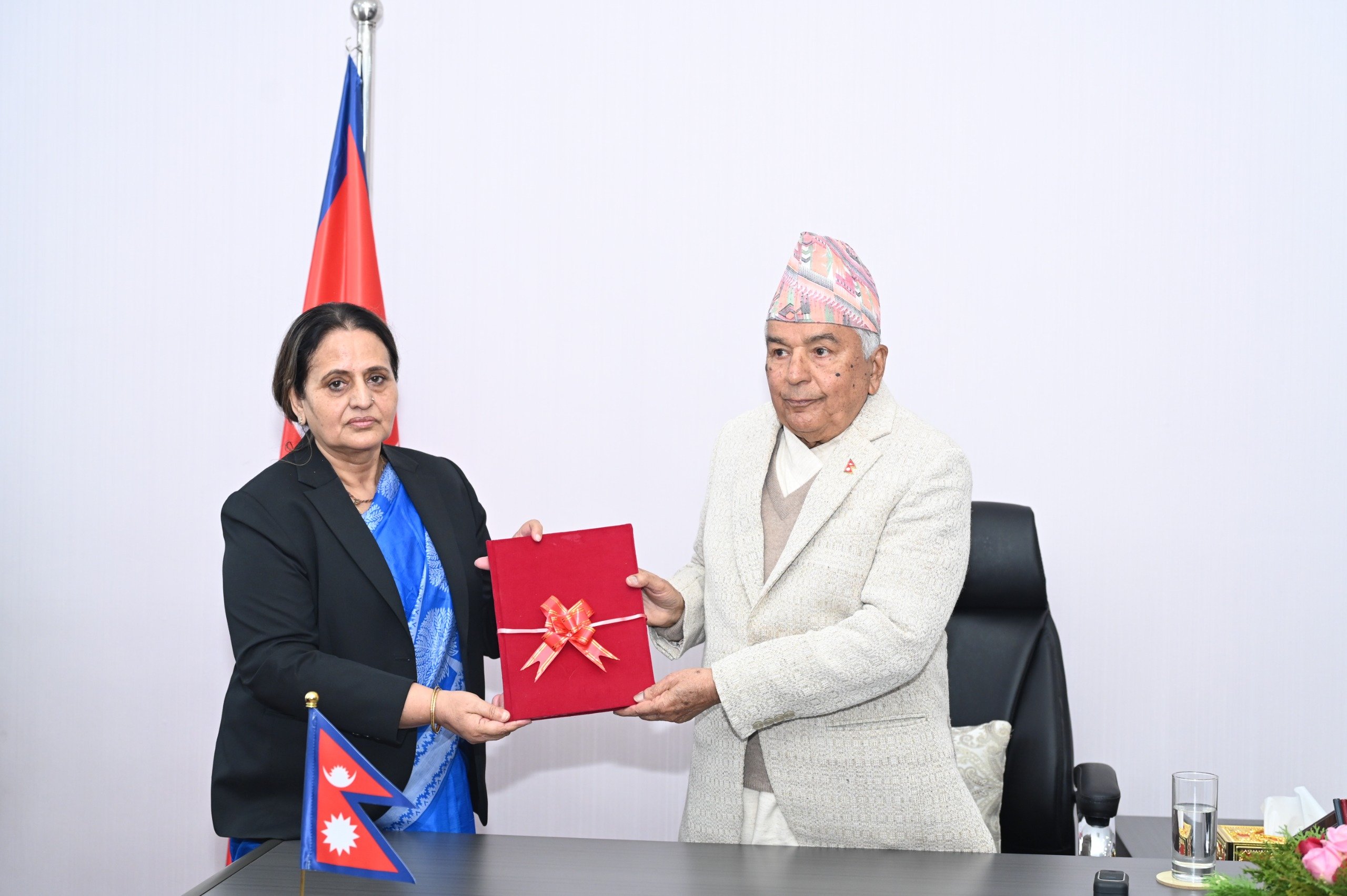
Bhandari, who assumed the responsibility of Attorney General on Bhadra 29 following the formation of the interim government driven by the Janji movement, made a decision at the very beginning to grant a ‘clean chit’ in the egg trafficking case involving a clinic connected to her own daughter.
Although her first decision as Attorney General faced widespread opposition, Prime Minister Sushila Karki remained silent. Widespread criticism arose after the legal advisor of the government formed by the Janji movement decided not to prosecute those involved in the case of trafficking eggs from minor girls at the clinic ‘Hope Fertility and Diagnostic Pvt. Ltd.’ in which she was involved.
Deputy Attorney General Sanjeev Raj Regmi of the Attorney General’s Office signed the decision not to prosecute the doctors at the said clinic. Although Attorney General Bhandari claimed she was not involved in the decision, she must take responsibility since a Deputy Attorney General under her authority signed it.
The police had initiated an investigation against two clinics in Kathmandu on charges of illegally collecting eggs from young girls and selling them to infertile couples for the purpose of childbirth.
While the government lawyer’s office was preparing to proceed with the case after completing the investigation against Hope Fertility and Diagnostic Pvt. Ltd. in Babar Mahal and Angel Fertility Clinic in Maharajgunj, the file was closed after the Attorney General’s Office decided not to proceed with the case.
The Bureau had arrested five individuals, including three doctors from Hope Fertility and Diagnostic Pvt. Ltd. Those arrested were Dr. Asim Adhikari, Dr. Swasti Sharma, Dr. Malina Chaudhary, Justina Pradhan, and Alisa Oli. Among those arrested, Dr. Swasti Sharma is the daughter of Attorney General Bhandari’s maternal aunt (a cousin/sister by relation). After the Kathmandu District Court ordered the investigation to proceed while keeping the accused out of custody, the accused were released on personal bail.
The Constitution grants very significant authority to the Attorney General. Article 158 (2) of the Constitution states, ‘The Attorney General or government attorneys under his or her authority shall represent the Government of Nepal in cases in which the Government of Nepal has an interest or concern. Unless otherwise provided in this Constitution, the Attorney General shall have the final authority to institute or not to institute proceedings on behalf of the Government of Nepal before any court or judicial body or authority.’
It has been commented that the Attorney General’s Office has been making decisions according to its self-interest by relying on this provision mentioned in the Constitution. In particular, the Attorney General is responsible and accountable to the Prime Minister. Article 157 (2) of the Constitution states, ‘The President shall appoint the Attorney General on the recommendation of the Prime Minister.’
Decision Not to Appeal in Minor Rape Case
Another controversial decision made by Attorney General Bhandari was not to appeal in a sensitive case concerning the rape of a minor.
This was Bhandari’s second controversial decision after becoming Attorney General. On Kartik 16, she decided not to appeal in the Supreme Court against the accused Sushil Chataut in the case of the rape of a 13-year-old minor.
The Attorney General’s Office provided two grounds for not appealing in the minor rape case. The first ground was that the victim girl requested not to proceed with the case, and the second was that the victim gave a deposition in court contrary to her statement during the investigation. Based on these two grounds, the Attorney General’s Office decided not to appeal.
The Lalitpur District Court had sentenced businessman Chataut to 18 years and one month in prison and ordered him to pay 8 lakh rupees in compensation for the charge of raping the minor girl. However, the Patan High Court overturned that decision and acquitted Chataut in Jestha 2081. Chataut was accused of raping a minor girl under his own care.
Article 158 (2) of the Constitution mentions that the Attorney General has the final authority to institute or not to institute proceedings on behalf of the Government of Nepal. However, the Supreme Court has clarified that such authority cannot be exercised arbitrarily.
In a writ petition filed after the decision was made to prosecute some accused and not others in the case of the rape of police constable Suntali Dhami, the Supreme Court interpreted this matter. The bench of then-Justices Balram KC and Bharat Raj Upreti ruled in 2067 that the fundamental right to justice guaranteed by the Constitution was violated by the decision of the government attorney’s office, leading to the case being reopened. The Supreme Court mentioned in the verdict of that case that the government cannot evade this responsibility as the government provides legal defense and other services on behalf of the victim until the final stage.
This verdict is published as a precedent in the Nepal Law Gazette. Precedents are enforced like law.