by JENN WOOD
***
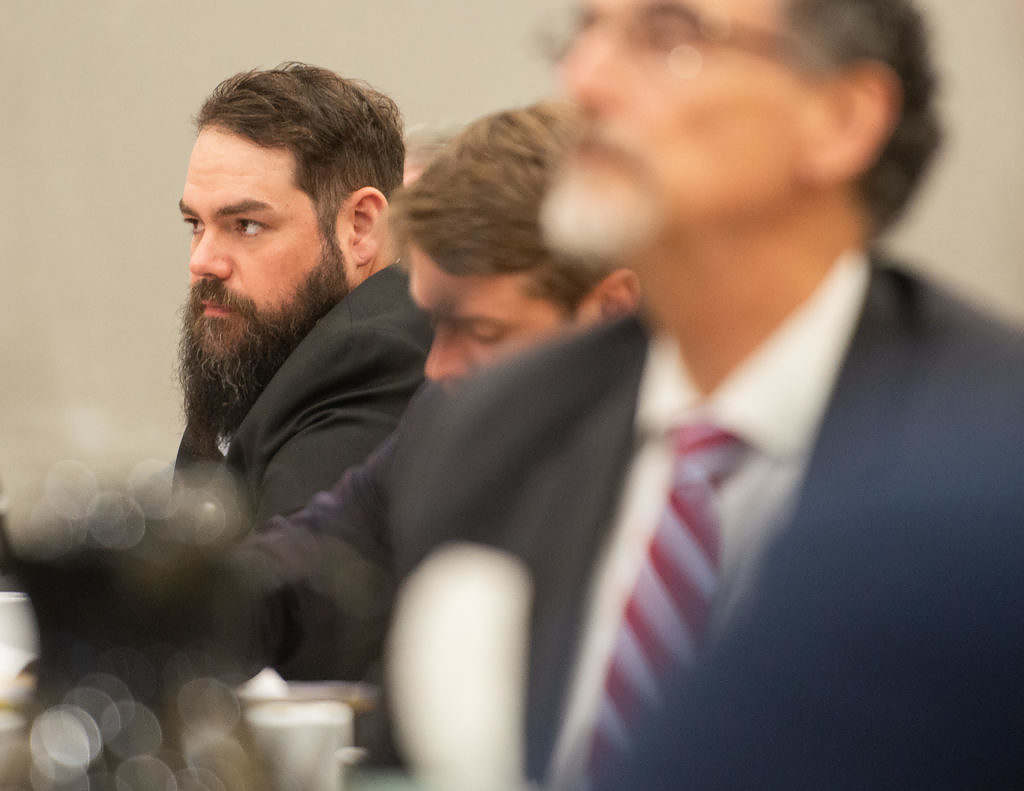
Less than three weeks after a South Carolina judge denied ‘Stand Your Ground’ immunity to both defendants in the fatal September 2023 shooting of a North Carolina insurance adjuster, attorneys for one of the admitted shooters is asking the court to take another look.
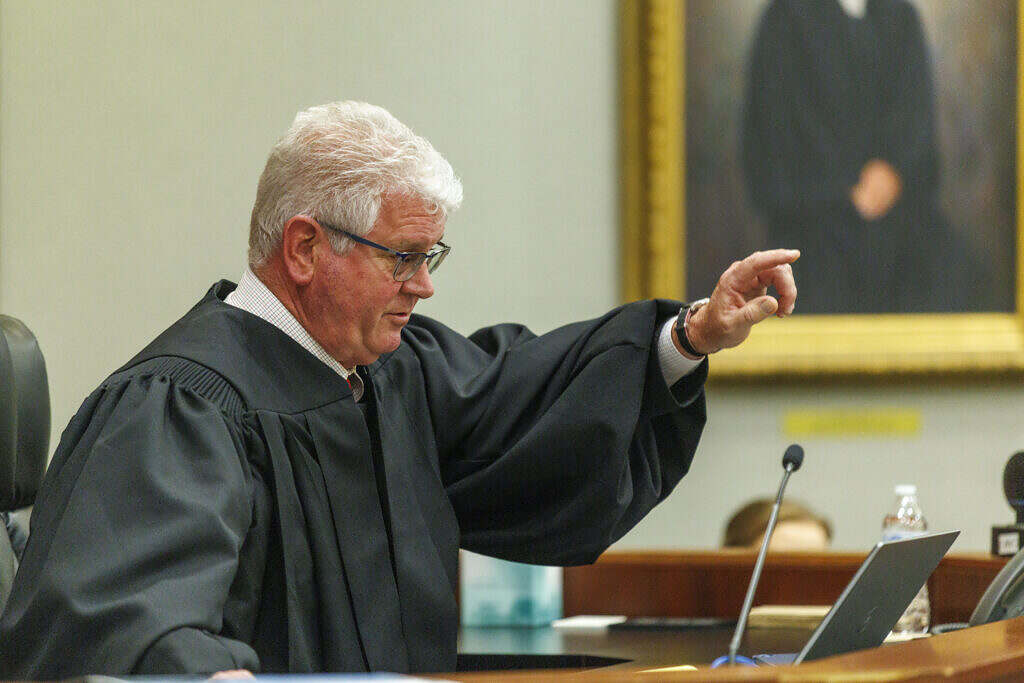
In a newly filed motion to reconsider (.pdf), attorneys for Kenneth Bradley Williams argued S.C. circuit court judge Eugene C. Griffith, Jr.‘s order denying immunity contained critical legal and factual errors — particularly related to Williams’ role as a passenger in the vehicle.
The filing marks the latest development in a case that has drawn statewide attention — not only for the fatal roadside encounter itself, but for the broader questions it has raised about self-defense law, investigative integrity and the limits of criminal and civil accountability.
The case stems from a September 2023 confrontation along S.C. Highway 9 that ended on Camp Swamp Road in rural Horry County, just two miles south of the North Carolina border. There, 33-year-old Scott Spivey was fatally shot after a chaotic series of roadway encounters.
***
The admitted shooters — Williams and Charles Weldon Boyd — were never criminally charged. Prosecutors concluded at the time that both men were protected under South Carolina’s Protection of Persons and Property Act, commonly known as the state’s ‘Stand Your Ground’ law.
Spivey’s family challenged that determination in civil court, arguing the shooting was not lawful self-defense but the result of a sustained and aggressive pursuit.
Because immunity under South Carolina law applies to both criminal prosecution and civil liability, the February 2026 hearing before judge Griffith functioned as a gatekeeping proceeding. If immunity had been granted, the wrongful death lawsuit would have ended without a jury trial. Instead, Griffith denied immunity to both men – finding they failed to prove they were without fault in bringing about the fatal encounter.
Now, Williams is asking the court to reconsider its decision insofar as it applied to him.
***
RELATED | JUDGE DENIES ‘STAND YOUR GROUND’ IMMUNITY
***
DEFENSE ARGUMENT: NO “UNLAWFUL ACT” BY WILLIAMS
At the core of the motion is a narrow but critical legal argument: even if Boyd’s conduct as the driver of one of the two trucks engaged in the Highway 9 vehicular encounter escalated the situation, Williams — as a passenger — did not commit any unlawful act that would strip him of self-defense protections.
“The court’s order fails to identify any wrongful or unlawful act committed by Williams,” the motion states.
Under South Carolina law, a defendant loses the right to claim self-defense only if he is “at fault in bringing on the difficulty” — meaning he engaged in unlawful conduct that contributed to the confrontation. Williams’ attorneys argued the court improperly blurred that standard by attributing Boyd’s actions to Williams without identifying any independent wrongdoing on his part.
According to the filing, at most the evidence shows Williams failed to more forcefully intervene as Boyd continued following Spivey — but that, they contend, reflects “lack of judgment,” not unlawful conduct. The motion emphasized that no South Carolina law imposes an affirmative duty on a passenger to demand a driver stop a vehicle or to exit a moving car.
Instead, the defense drew a clear line between the conduct of the two men.
Boyd — not Williams — controlled the vehicle, its speed and the decision to continue the pursuit. Citing case law, Williams’ attorneys argued a driver’s conduct cannot automatically be imputed to a passenger, particularly where the passenger neither owns nor controls the vehicle.
The motion further asserted that Williams attempted to de-escalate the situation by urging Boyd to slow down and avoid further confrontation. If accepted, the defense argued, those facts preclude any finding that Williams was the aggressor — and preserve his claim to statutory immunity.
***
DEFENSE SAYS COURT MISREAD LAW — AND THE TIMELINE
 Kenneth Williams (Pool)
***
Williams’ motion also challenged the legal framework underlying judge Griffith’s order — arguing the court misapplied controlling law while overlooking core principles of self-defense.
According to the filing, the court relied on inapplicable case law — specifically a civil negligence decision addressing a passenger’s duty to a driver — to impose a standard that does not exist in criminal self-defense doctrine. Williams’ attorneys contend this effectively created a new obligation for passengers: to actively intervene in a driver’s conduct or risk forfeiting the right to claim self-defense.
The motion further arguesdthe court failed to conduct a proper proximate cause analysis, asserting that the order does not identify any specific action by Williams that directly caused or escalated the fatal encounter.
Layered onto that argument was the fundamental principle of self-defense law: a person is permitted to act on appearances. Williams’ attorneys maintained the court did not adequately consider that once Williams saw Spivey armed — after previously observing him display a firearm — he was entitled to respond to what reasonably appeared to be an imminent deadly threat. Under South Carolina law, the motion emphasized, a defendant “does not have to wait” to be fired upon before acting in self-defense.
The filing also pointed to what it described as a critical factual distinction between the two defendants — the timing of the gunfire. According to the motion, the plaintiff’s own pretrial briefing acknowledged that Williams did not fire until after Boyd and Spivey had already exchanged shots.
“That fact … is an important factual distinction between Williams and Boyd that the court did not consider,” the motion argued.
If accepted, that sequence could support a narrower claim of defensive action — rather than a finding that Williams participated in initiating a confrontation.
***

RELATED | SCOTT SPIVEY’S DEATH AND THE PROSECUTORIAL BURDEN
***
WHAT HAPPENS NEXT
The motion to reconsider was filed under Rule 54(b) of the South Carolina Rules of Civil Procedure, which allow courts to revisit interlocutory (non-final) orders prior to issuing a final judgment.
That means judge Griffith has the discretion to revisit — and potentially revise — his earlier ruling, if he so chooses.
Such motions are rarely granted outright, particularly after a detailed written order. But they can serve to preserve legal arguments for appeal – or clarify the record for higher courts.
For now, the broader trajectory of the case remains unchanged: unless the court reverses itself, the wrongful death lawsuit filed by Spivey’s estate will move forward toward trial — where a jury, not a judge, will ultimately deermine what happened on Camp Swamp Road.
And who is responsible…
***
ABOUT THE AUTHOR …
 Jenn Wood (Provided)
As a private investigator turned journalist, Jenn Wood brings a unique skill set to FITSNews as its research director. Known for her meticulous sourcing and victim-centered approach, she helps shape the newsroom’s most complex investigative stories while producing the FITSFiles and Cheer Incorporated podcasts. Jenn lives in South Carolina with her family, where her work continues to spotlight truth, accountability, and justice.
***
WANNA SOUND OFF?
Got something you’d like to say in response to one of our articles? Or an issue you’d like to address proactively? We have an open microphone policy! Submit your letter to the editor (or guest column) via email HERE. Got a tip for a story? CLICK HERE. Got a technical question or a glitch to report? CLICK HERE.