Timoney, N. & Miller, B. Injury to the Developing Nervous System. In:The Encyclopedia of Child and Adolescent Development 1–11. https://doi.org/10.1002/9781119171492.wecad014 (2020).
Grandjean, P. & Landrigan, P. J. Neurobehavioural effects of developmental toxicity. Lancet Neurol. 13, 330–338. https://doi.org/10.1016/S1474-4422(13)70278-3 (2014).
Davidson, T. L. & Stevenson, R. J. Vulnerability of the Hippocampus to insults: links to Blood-Brain barrier dysfunction. Int. J. Mol. Sci. 25 https://doi.org/10.3390/ijms25041991 (2024).
Appaiah, K. M. in In Ensuring Global Food Safety. (eds Christine, E., Boisrobert, A. & Stjepanovic) Academic, 217–226. (2010).
Hajihasani, M. M., Soheili, V., Zirak, M. R., Sahebkar, A. & Shakeri, A. Natural products as safeguards against monosodium glutamate-induced toxicity. Iran. J. Basic. Med. Sci. 23, 416–430. https://doi.org/10.22038/IJBMS.2020.43060.10123 (2020).
Magdaleno Roman, J. Y. & Chapa González, C. Glutamate and excitotoxicity in central nervous system disorders: ionotropic glutamate receptors as a target for neuroprotection. 2, 137–150. https://doi.org/10.1002/nep3.46 (2024).
Zhu, S. & Gouaux, E. Structure and symmetry inform gating principles of ionotropic glutamate receptors. Neuropharmacology 112, 11–15. https://doi.org/10.1016/j.neuropharm.2016.08.034 (2017).
Ribeiro, F. M., Vieira, L. B., Pires, R. G., Olmo, R. P. & Ferguson, S. S. Metabotropic glutamate receptors and neurodegenerative diseases. Pharmacol. Res. 115, 179–191. https://doi.org/10.1016/j.phrs.2016.11.013 (2017).
Graham, T. E., Sgro, V., Friars, D. & Gibala, M. J. Glutamate ingestion: the plasma and muscle free amino acid pools of resting humans. Am. J. Physiol. Endocrinol. Metab. 278, E83–89. https://doi.org/10.1152/ajpendo.2000.278.1.E83 (2000).
Kumar, M., Kumar, A., Sindhu, R. K. & Kushwah, A. S. Arbutin attenuates monosodium L-glutamate induced neurotoxicity and cognitive dysfunction in rats. Neurochem. Int. 151, 105217. https://doi.org/10.1016/j.neuint.2021.105217 (2021).
Fuchsberger, T. et al. Oral monosodium glutamate administration causes early onset of alzheimer’s Disease-Like pathophysiology in APP/PS1 mice. J. Alzheimer’s Dis. JAD. 72, 957–975. https://doi.org/10.3233/JAD-190274 (2019).
Wang, J., Wang, F., Mai, D. & Qu, S. Molecular mechanisms of glutamate toxicity in parkinson’s disease. Front. Neurosci. 14, 585584. https://doi.org/10.3389/fnins.2020.585584 (2020).
Yang, J. et al. Overexpression of alpha-synuclein simultaneously increases glutamate NMDA receptor phosphorylation and reduces glucocerebrosidase activity. Neurosci. Lett. 611, 51–58. https://doi.org/10.1016/j.neulet.2015.11.023 (2016).
Sarafian, T. A. et al. Stimulation of synaptoneurosome glutamate release by monomeric and fibrillated alpha-synuclein. J. Neurosci. Res. 95, 1871–1887. https://doi.org/10.1002/jnr.24024 (2017).
Jin, L. et al. Monosodium glutamate exposure during the neonatal period leads to cognitive deficits in adult Sprague-Dawley rats. Neurosci. Lett. 682, 39–44. https://doi.org/10.1016/j.neulet.2018.06.008 (2018).
Reddy, A. K., Ghoshal, J. A. K., Pk, S., Trivedi, G. N. & Ambareesha, K. Histomorphometric study on effects of monosodium glutamate in liver tissue of Wistar rats. J. Basic. Clin. Physiol. Pharmacol. 32, 1007–1012. https://doi.org/10.1515/jbcpp-2020-0264 (2021).
Celestino, M., Balmaceda Valdez, V., Brun, P., Castagliuolo, I. & Mucignat-Caretta, C. Differential effects of sodium chloride and monosodium glutamate on kidney of adult and aging mice. Sci. Rep. 11, 481. https://doi.org/10.1038/s41598-020-80048-z (2021).
Abd-Elkareem, M., Abd El-Rahman, M. A. M., Khalil, N. S. A. & Amer, A. S. Antioxidant and cytoprotective effects of Nigella sativa L. seeds on the testis of monosodium glutamate challenged rats. Sci. Rep. 11, 13519. https://doi.org/10.1038/s41598-021-92977-4 (2021).
Nathanael, J. et al. The genetic basis of high-carbohydrate and high-monosodium glutamate diet related to the increase of likelihood of type 2 diabetes mellitus: a review. Endocrine 69, 18–29. https://doi.org/10.1007/s12020-020-02256-x (2020).
Rahayu, S. et al. Marsilea crenata ethanol extract prevents monosodium glutamate adverse effects on the serum levels of reproductive hormones, sperm quality, and testis histology in male rats. Vet. World. 14, 1529–1536. https://doi.org/10.14202/vetworld.2021.1529-1536 (2021).
Wang, W., Li, Y. & Meng, X. Vitamin D and neurodegenerative diseases. Heliyon 9, e12877. https://doi.org/10.1016/j.heliyon.2023.e12877 (2023).
Alves, B. D. S., Schimith, L. E., da Cunha, A. B., Dora, C. L. & Hort, M. A. Omega-3 polyunsaturated fatty acids and parkinson’s disease: A systematic review of animal studies. J. Neurochem. 168, 1655–1683. https://doi.org/10.1111/jnc.16154 (2024).
Sailike, B., Onzhanova, Z., Akbay, B., Tokay, T. & Molnar, F. Vitamin D in central nervous system: implications for neurological disorders. Int. J. Mol. Sci. 25 https://doi.org/10.3390/ijms25147809 (2024).
Lasoń, W., Jantas, D., Leśkiewicz, M., Regulska, M. & Basta-Kaim, A. The Vitamin D Receptor as a Potential Target for the Treatment of Age-Related Neurodegenerative Diseases Such as Alzheimer’s and Parkinson’s Diseases: A Narrative Review. Cells 12 https://doi.org/10.3390/cells12040660 (2023).
Gooch, H. et al. 1,25-Dihydroxyvitamin D modulates L-type voltage-gated calcium channels in a subset of neurons in the developing mouse prefrontal cortex. Transl. Psychiatry. 9, 281. https://doi.org/10.1038/s41398-019-0626-z (2019).
Olufunmilayo, E. O., Gerke-Duncan, M. B. & Holsinger, R. M. D. Oxidative stress and antioxidants in neurodegenerative disorders. Antioxid. (Basel). 12 https://doi.org/10.3390/antiox12020517 (2023).
Fenercioglu, A. K. The Anti-Inflammatory roles of vitamin D for improving human health. Curr. Issues. Mol. Biol. 46, 13514–13525. https://doi.org/10.3390/cimb46120807 (2024).
Żmijewski, M. A. Nongenomic activities of vitamin D. Nutrients 14 https://doi.org/10.3390/nu14235104 (2022).
Plantone, D. et al. Vitamin D in neurological diseases. Int. J. Mol. Sci. 24 https://doi.org/10.3390/ijms24010087 (2022).
Avallone, R., Vitale, G. & Bertolotti, M. Omega-3 fatty acids and neurodegenerative diseases: new evidence in clinical trials. Int. J. Mol. Sci. 20 https://doi.org/10.3390/ijms20174256 (2019).
Tian, J., Zhang, Y. & Zhao, X. The effects and mechanisms of n-3 and n-6 polyunsaturated fatty acids in the central nervous system. Cell. Mol. Neurobiol. 45, 25. https://doi.org/10.1007/s10571-025-01543-3 (2025).
Tanaka, K., Farooqui, A. A., Siddiqi, N. J., Alhomida, A. S. & Ong, W. Y. Effects of docosahexaenoic acid on neurotransmission. Biomolecules Ther. 20, 152–157. https://doi.org/10.4062/biomolther.2012.20.2.152 (2012).
Kerdiles, O., Layé, S. & Calon, F. Omega-3 polyunsaturated fatty acids and brain health: preclinical evidence for the prevention of neurodegenerative diseases. Trends Food Sci. Technol. 69, 203–213. https://doi.org/10.1016/j.tifs.2017.09.003 (2017).
Wang, X. et al. Effects of n-3 FA supplementation on the release of proresolving lipid mediators by blood mononuclear cells: the OmegAD study. J. Lipid Res. 56, 674–681. https://doi.org/10.1194/jlr.P055418 (2015).
Rangel-Huerta, O. D., Aguilera, C. M., Mesa, M. D. & Gil, A. Omega-3 long-chain polyunsaturated fatty acids supplementation on inflammatory biomakers: a systematic review of randomised clinical trials. Br. J. Nutr. 107 (Suppl 2), S159–170. https://doi.org/10.1017/S0007114512001559 (2012).
Calder, P. C. Omega-3 polyunsaturated fatty acids and inflammatory processes: nutrition or pharmacology? Br. J. Clin. Pharmacol. 75, 645–662. https://doi.org/10.1111/j.1365-2125.2012.04374.x (2013).
Slayo, M., Rummel, C., Singhaarachchi, P. H., Feldotto, M. & Spencer, S. J. The role of n-3-derived specialised pro-resolving mediators (SPMs) in microglial mitochondrial respiration and inflammation resolution in alzheimer’s disease. Mol. Neurodegeneration. 20, 35. https://doi.org/10.1186/s13024-025-00824-1 (2025).
Oppedisano, F. et al. The Anti-Inflammatory and antioxidant properties of n-3 pufas: their role in cardiovascular protection. Biomedicines 8 https://doi.org/10.3390/biomedicines8090306 (2020).
Martins, M., Silva, R., Sousa, E. & M, M. M. P. & Marine Natural Products, Multitarget Therapy and Repurposed Agents in Alzheimer’s Disease. Pharmaceuticals (Basel). 13. https://doi.org/10.3390/ph13090242 (2020).
Brass, V. H., Astuto-Gribble, L. & Finley, M. R. Biosafety and biosecurity in veterinary laboratories. Rev. Sci. Tech. 36, 701–709. https://doi.org/10.20506/rst.36.2.2687 (2017).
Ankul, S. S. et al. A systematic review of the neuropathology and memory decline induced by monosodium glutamate in the alzheimer’s disease-like animal model. Front. Pharmacol. 14, 1283440. https://doi.org/10.3389/fphar.2023.1283440 (2023).
Nandan, P. et al. Protective role of Co-administration of vitamin D in monosodium glutamate induced obesity in female rats. J. Natl Med. Assoc. 110, 98–102. https://doi.org/10.1016/j.jnma.2017.03.006 (2018).
Magdy, A. et al. Neuroprotective and therapeutic effects of calcitriol in rotenone-induced parkinson’s disease rat model. Front. Cell. Neurosci. 16, 967813. https://doi.org/10.3389/fncel.2022.967813 (2022).
Onobrudu, D. & Nwiloh, B. Monosodium glutamate alter hepatic functions, redox potential and lipid metabolism: Omega 3 fatty acids ameliorative intervention. GSC Biol. Pharm. Sci. 3, 101–110. https://doi.org/10.30574/gscbps.2020.13.1.0324 (2020).
Deacon, R. M., Croucher, A. & Rawlins, J. N. Hippocampal cytotoxic lesion effects on species-typical behaviours in mice. Behav. Brain Res. 132, 203–213. https://doi.org/10.1016/s0166-4328(01)00401-6 (2002).
Gholipour, P., Komaki, A., Parsa, H. & Ramezani, M. Therapeutic effects of High-Intensity interval training exercise alone and its combination with ecdysterone against amyloid Beta-Induced rat model of alzheimer’s disease: A behavioral, biochemical, and histological study. Neurochem. Res. 47, 2090–2108. https://doi.org/10.1007/s11064-022-03603-2 (2022).
Deacon, R. M. & Rawlins, J. N. T-maze alternation in the rodent. Nat. Protoc. 1, 7–12. https://doi.org/10.1038/nprot.2006.2 (2006).
d’Isa, R., Comi, G. & Leocani, L. Apparatus design and behavioural testing protocol for the evaluation of Spatial working memory in mice through the spontaneous alternation T-maze. Sci. Rep. 11, 21177. https://doi.org/10.1038/s41598-021-00402-7 (2021).
Morris, R. Developments of a water-maze procedure for studying Spatial learning in the rat. J. Neurosci. Methods. 11, 47–60. https://doi.org/10.1016/0165-0270(84)90007-4 (1984).
Nunez, J. Morris water maze experiment. J. Vis. Exp. https://doi.org/10.3791/897 (2008).
Arrant, A. E., Schramm-Sapyta, N. L. & Kuhn, C. M. Use of the light/dark test for anxiety in adult and adolescent male rats. Behav. Brain Res. 256, 119–127. https://doi.org/10.1016/j.bbr.2013.05.035 (2013).
Narayanan, S. N. & Kumar, R. S. An improved light dark box test by using a real-time video tracking system. Acta Biol. Hung. 69, 371–384. https://doi.org/10.1556/018.69.2018.4.1 (2018).
(AVMA), A. V. M. A. VMA Guidelines for the Euthanasia of Animals: 2020 Edition. (2020).
Flecknell, P. et al. Laboratory Animal Medicine (Third Edition) (eds James G et al.) Academic Press,1135–1200. (2015).
Asejeje, F. O., Abiola, M. A., Adeyemo, O. A., Ogunro, O. B. & Ajayi, A. M. Exogenous monosodium glutamate exacerbates lipopolysaccharide-induced neurobehavioral deficits, oxidative damage, neuroinflammation, and cholinergic dysfunction in rat brain. Neurosci. Lett. 825, 137710. https://doi.org/10.1016/j.neulet.2024.137710 (2024).
Kesherwani, R., Bhoumik, S., Kumar, R. & Rizvi, S. I. Monosodium glutamate even at low dose May affect oxidative stress, inflammation and neurodegeneration in rats. Indian J. Clin. Biochem. 39, 101–109. https://doi.org/10.1007/s12291-022-01077-1 (2024).
information, E. E. r. i. f. b. Primer3web version 4.1.0. https://primer3.ut.ee/ (2023).
Information, T. N. C. B. NCBI Primer-BLAST https://www.ncbi.nlm.nih.gov/tools/primer-blast/ (2023).
Livak, K. J. & Schmittgen, T. D. Analysis of relative gene expression data using real-time quantitative PCR and the 2(-Delta Delta C(T)) Method. Methods 25, 402–408. https://doi.org/10.1006/meth.2001.1262 (2001).
Mohamed, A. S. et al. Impairment of Nrf2 signaling in the hippocampus of P301S tauopathy mice model aligns with the cognitive impairment and the associated neuroinflammation. J. Inflamm. (Lond). 21, 29. https://doi.org/10.1186/s12950-024-00396-9 (2024).
Bai, S. et al. Elevated vitamin D receptor levels in genetic hypercalciuric stone-forming rats are associated with downregulation of snail. J. Bone Min. Res. 25, 830–840. https://doi.org/10.1359/jbmr.091010 (2010).
Kasongo, D. et al. Chronic alpha-Synuclein accumulation in rat Hippocampus induces lewy bodies formation and specific cognitive impairments. eNeuro 7 https://doi.org/10.1523/ENEURO.0009-20.2020 (2020).
Gamble, M. & Wilson, I. J. T. The hematoxylins and eosin. 6, 121–134 (2008).
Farage, A. E. et al. Betulin prevents high fat diet-induced non-alcoholic fatty liver disease by mitigating oxidative stress and upregulating Nrf2 and SIRT1 in rats. Life Sci. 322, 121688. https://doi.org/10.1016/j.lfs.2023.121688 (2023).
Doonan, F. & Cotter, T. G. Morphological assessment of apoptosis. Methods 44, 200–204. https://doi.org/10.1016/j.ymeth.2007.11.006 (2008).
Koert, A. et al. The social instability stress paradigm in rat and mouse: A systematic review of protocols, limitations, and recommendations. Neurobiol. Stress. 15, 100410. https://doi.org/10.1016/j.ynstr.2021.100410 (2021).
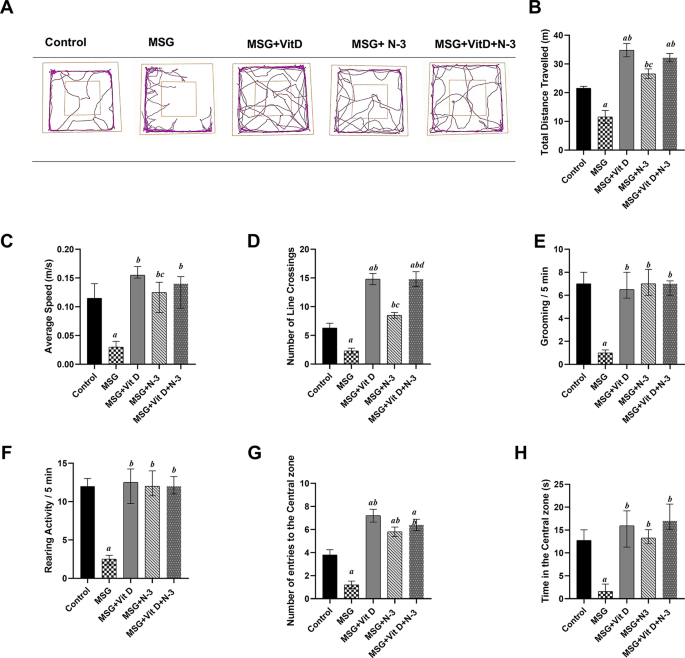
Onaolapo, O. J., Aremu, O. S. & Onaolapo, A. Y. Monosodium glutamate-associated alterations in open field, anxiety-related and conditioned place preference behaviours in mice. Naunyn. Schmiedebergs Arch. Pharmacol. 390, 677–689. https://doi.org/10.1007/s00210-017-1371-6 (2017).
Hassaan, P. S. et al. Cortical Tau burden and behavioural dysfunctions in mice exposed to monosodium glutamate in early life. PLoS One. 14, e0220720. https://doi.org/10.1371/journal.pone.0220720 (2019).
Hazzaa, S. M., Abdelaziz, S. A. M., Abd Eldaim, M. A., Abdel-Daim, M. M. & Elgarawany, G. E. Neuroprotective Potential of Allium sativum against Monosodium Glutamate-Induced Excitotoxicity: Impact on Short-Term Memory, Gliosis, and Oxidative Stress. Nutrients 12. https://doi.org/10.3390/nu12041028 (2020).
Zhou, L. et al. Possible antidepressant mechanisms of omega-3 polyunsaturated fatty acids acting on the central nervous system. Front. Psychiatry. 13, 933704. https://doi.org/10.3389/fpsyt.2022.933704 (2022).
Kouba, B. R., Camargo, A., Gil-Mohapel, J. & Rodrigues, A. L. S. Molecular basis underlying the therapeutic potential of vitamin D for the treatment of depression and anxiety. Int. J. Mol. Sci. 23 https://doi.org/10.3390/ijms23137077 (2022).
Gbadamosi, I. et al. Vitamin D attenuates monosodium glutamate-induced behavioural anomalies, metabolic dysregulation, cholinergic impairment, oxidative stress, and astrogliosis in rats. Neurotoxicology 103, 297–309. https://doi.org/10.1016/j.neuro.2024.06.015 (2024).
Sasaki-Hamada, S. et al. Cognitive and hippocampal synaptic profiles in monosodium glutamate-induced obese mice. Neurosci. Res. 170, 201–207. https://doi.org/10.1016/j.neures.2020.08.005 (2021).
Cutuli, D. et al. Behavioral, neuromorphological, and neurobiochemical effects induced by omega-3 fatty acids following basal forebrain cholinergic depletion in aged mice. Alzheimers Res. Ther. 12, 150. https://doi.org/10.1186/s13195-020-00705-3 (2020).
Doncheva, N. et al. Vitamin D(3) exerts Immunomodulatory and memory improving properties in rats with lipopolysaccharide-induced inflammation. Folia Med. (Plovdiv). 64, 770–781. https://doi.org/10.3897/folmed.64.e67739 (2022).
Taoro-Gonzalez, L. et al. Effects of dietary n-3 LCPUFA supplementation on the Hippocampus of aging female mice: impact on memory, lipid Raft-Associated glutamatergic receptors and neuroinflammation. Int. J. Mol. Sci. 23 https://doi.org/10.3390/ijms23137430 (2022).
Rezagholizadeh, A. et al. Vitamin D injection into the dorsal-CA1 hippocampus improves short-term sleep deprivation induced cognitive impairment in male rats. Heliyon 10, e34853. https://doi.org/10.1016/j.heliyon.2024.e34853 (2024).
Samudra, N., Lane-Donovan, C., VandeVrede, L. & Boxer, A. L. Tau pathology in neurodegenerative disease: disease mechanisms and therapeutic avenues. J. Clin. Invest. 133 https://doi.org/10.1172/JCI168553 (2023).
Goyal, R. et al. Insights on aspects of apoptosis in neurodegenerative disorders: a comprehensive review. Explor. Med. 5, 89–100. https://doi.org/10.37349/emed.2024.00208 (2024).
Demirel, O. F. et al. Total Tau and phosphorylated Tau protein serum levels in patients with schizophrenia compared with controls. Psychiatr. Q. 88, 921–928. https://doi.org/10.1007/s11126-017-9507-x (2017).
Visser, P. J. et al. Cerebrospinal fluid tau levels are associated with abnormal neuronal plasticity markers in Alzheimer’s disease. Mol. Neurodegener. 17 https://doi.org/10.1186/s13024-022-00521-3 (2022).
Pillai, J. A. et al. Highly elevated cerebrospinal fluid total Tau level reflects higher likelihood of Non-Amnestic subtype of alzheimer’s disease. J. Alzheimer’s Dis. JAD. 70, 1051–1058. https://doi.org/10.3233/JAD-190519 (2019).
Opland, C. K. et al. Activity-dependent tau cleavage by caspase-3 promotes neuronal dysfunction and synaptotoxicity. iScience 26, 106905. https://doi.org/10.1016/j.isci.2023.106905 (2023).
Sahin, S. et al. Vitamin D protects against hippocampal apoptosis related with seizures induced by Kainic acid and Pentylenetetrazol in rats. Epilepsy Res. 149, 107–116. https://doi.org/10.1016/j.eplepsyres.2018.12.005 (2019).
Bao, Z., Wang, X., Li, Y., Feng, F. & Vitamin D alleviates cognitive dysfunction by activating the VDR/ERK1/2 signaling pathway in an alzheimer’s disease mouse model. Neuroimmunomodulation 27, 178–185. https://doi.org/10.1159/000510400 (2020).
Kelly, L. et al. The polyunsaturated fatty acids, EPA and DPA exert a protective effect in the hippocampus of the aged rat. Neurobiol Aging 32, e2311-2315. https://doi.org/10.1016/j.neurobiolaging.2010.04.001 (2011).
Green, K. N. et al. Dietary docosahexaenoic acid and docosapentaenoic acid ameliorate amyloid-beta and Tau pathology via a mechanism involving presenilin 1 levels. J. Neurosci. 27, 4385–4395. https://doi.org/10.1523/JNEUROSCI.0055-07.2007 (2007).
Freund Levi, Y. et al. Transfer of omega-3 fatty acids across the blood-brain barrier after dietary supplementation with a docosahexaenoic acid-rich omega-3 fatty acid Preparation in patients with alzheimer’s disease: the OmegAD study. J. Intern. Med. 275, 428–436. https://doi.org/10.1111/joim.12166 (2014).
Tofiq, A. et al. Effects of peroral Omega-3 fatty acid supplementation on cerebrospinal fluid biomarkers in patients with alzheimer’s disease: A randomized controlled Trial-The OmegAD study. J. Alzheimer’s Dis. JAD. 83, 1291–1301. https://doi.org/10.3233/JAD-210007 (2021).
Hooijmans, C. R., Pasker-de Jong, P. C. M., de Vries, R. B. M. & Ritskes-Hoitinga, M. The effects of Long-Term Omega-3 fatty acid supplementation on cognition and alzheimer’s pathology in animal models of alzheimer’s disease: A systematic review and Meta-Analysis. J. Alzheimer’s Dis. 28, 191–209. https://doi.org/10.3233/JAD-2011-111217 (2012).
Zheng, Z. et al. VDR and deubiquitination control neuronal oxidative stress and microglial inflammation in parkinson’s disease. Cell. Death Discov. 10, 150. https://doi.org/10.1038/s41420-024-01912-9 (2024).
Choe, Y. H. et al. The autoimmune response induced by alpha-synuclein peptides drives neuronal cell death and glial cell activation. J. Autoimmun. 147, 103256. https://doi.org/10.1016/j.jaut.2024.103256 (2024).
Stefanis, L. α-Synuclein in parkinson’s disease. Cold Spring Harb Perspect. Med. 2, a009399. https://doi.org/10.1101/cshperspect.a009399 (2012).
Weston, L. J. et al. Aggregated Alpha-Synuclein inclusions within the nucleus predict impending neuronal cell death in a mouse model of parkinsonism. Int. J. Mol. Sci. 23 https://doi.org/10.3390/ijms232315294 (2022).
Rcom-H’cheo-Gauthier, A., Goodwin, J. & Pountney, D. L. Interactions between calcium and alpha-synuclein in neurodegeneration. Biomolecules 4, 795–811. https://doi.org/10.3390/biom4030795 (2014).
Rcom-H’cheo-Gauthier, A. N., Meedeniya, A. C. & Pountney, D. L. Calcipotriol inhibits alpha-synuclein aggregation in SH-SY5Y neuroblastoma cells by a Calbindin-D28k-dependent mechanism. J. Neurochem. 141, 263–274. https://doi.org/10.1111/jnc.13971 (2017).
Yakunin, E. et al. Α-synuclein neuropathology is controlled by nuclear hormone receptors and enhanced by docosahexaenoic acid in a mouse model for parkinson’s disease. Brain Pathol. 22, 280–294. https://doi.org/10.1111/j.1750-3639.2011.00530.x (2012).
Coulombe, K. et al. Impact of DHA intake in a mouse model of synucleinopathy. Exp. Neurol. 301, 39–49. https://doi.org/10.1016/j.expneurol.2017.12.002 (2018).
Martins, J. G. EPA but not DHA appears to be responsible for the efficacy of omega-3 long chain polyunsaturated fatty acid supplementation in depression: evidence from a meta-analysis of randomized controlled trials. J. Am. Coll. Nutr. 28, 525–542. https://doi.org/10.1080/07315724.2009.10719785 (2009).
Luchtman, D. W., Meng, Q. & Song, C. Ethyl-eicosapentaenoate (E-EPA) attenuates motor impairments and inflammation in the MPTP-probenecid mouse model of parkinson’s disease. Behav. Brain Res. 226, 386–396. https://doi.org/10.1016/j.bbr.2011.09.033 (2012).
Li, J., Wang, Y., Xiong, K., Gao, C. & Editorial Neuroinflammation and cognitive impairment. Front. Aging Neurosci. 16, 1453772. https://doi.org/10.3389/fnagi.2024.1453772 (2024).
Chen, J. et al. Oroxin A alleviates early brain injury after subarachnoid hemorrhage by regulating ferroptosis and neuroinflammation. J. Neuroinflammation. 21, 116. https://doi.org/10.1186/s12974-024-03099-3 (2024).
Mokhtari-Zaer, A. et al. D(3) attenuates lipopolysaccharide-induced cognitive impairment in rats by inhibiting inflammation and oxidative stress. Life Sci. 253, 117703. https://doi.org/10.1016/j.lfs.2020.117703 (2020).
Sangha, A., Quon, M., Pfeffer, G. & Orton, S. M. The role of vitamin D in neuroprotection in multiple sclerosis: an update. Nutrients 15 https://doi.org/10.3390/nu15132978 (2023).
Borsini, A. et al. Omega-3 polyunsaturated fatty acids protect against inflammation through production of LOX and CYP450 lipid mediators: relevance for major depression and for human hippocampal neurogenesis. Mol. Psychiatry. 26, 6773–6788. https://doi.org/10.1038/s41380-021-01160-8 (2021).
Giacobbe, J., Benoiton, B., Zunszain, P., Pariante, C. M. & Borsini, A. The Anti-Inflammatory role of Omega-3 polyunsaturated fatty acids metabolites in Pre-Clinical models of psychiatric, neurodegenerative, and neurological disorders. Front. Psychiatry. 11, 122. https://doi.org/10.3389/fpsyt.2020.00122 (2020).
Wu, T. Y., Zhao, L. X., Zhang, Y. H. & Fan, Y. G. Activation of vitamin D receptor inhibits Tau phosphorylation is associated with reduction of iron accumulation in APP/PS1 Transgenic mice. Neurochem. Int. 153, 105260. https://doi.org/10.1016/j.neuint.2021.105260 (2022).
Saad El-Din, S. et al. Active form of vitamin D analogue mitigates neurodegenerative changes in alzheimer’s disease in rats by targeting Keap1/Nrf2 and MAPK-38p/ERK signaling pathways. Steroids 156, 108586. https://doi.org/10.1016/j.steroids.2020.108586 (2020).
Lason, W., Jantas, D., Leskiewicz, M., Regulska, M. & Basta-Kaim, A. The Vitamin D Receptor as a Potential Target for the Treatment of Age-Related Neurodegenerative Diseases Such as Alzheimer’s and Parkinson’s Diseases: A Narrative Review. Cells 12. https://doi.org/10.3390/cells12040660 (2023).
Sun, J. et al. Vitamin D receptor expression in peripheral blood mononuclear cells is inversely associated with disease activity and inflammation in lupus patients. Clin. Rheumatol. 38, 2509–2518. https://doi.org/10.1007/s10067-019-04594-2 (2019).
Bikle, D. D. & Vitamin, D. Regulation of immune function. Curr. Osteoporos. Rep. 20, 186–193. https://doi.org/10.1007/s11914-022-00732-z (2022).
Sandberg, M., Patil, J., D’Angelo, B., Weber, S. G. & Mallard, C. NRF2-regulation in brain health and disease: implication of cerebral inflammation. Neuropharmacology 79, 298–306 (2014).
Zgórzyńska, E. et al. Omega-3 polyunsaturated fatty acids improve the antioxidative defense in rat astrocytes via an Nrf2-dependent mechanism. Pharmacol. Rep. 69, 935–942. https://doi.org/10.1016/j.pharep.2017.04.009 (2017).
Alsulami, E., Alokail, M., Alghamedi, A., Alamro, A. & Haq, S. Effect of vitamin D treatment on VDR expression in primary cerebral cortical cells in induced oxidative stress. 6, 81-90 https://doi.org/10.3233/jcb-200020 (2020).
Ahmadi, A. R. et al. Impact of omega-3 fatty acids supplementation on the gene expression of peroxisome proliferator activated receptors-γ, α and fibroblast growth factor-21 serum levels in patients with various presentation of metabolic conditions: a GRADE assessed systematic review and dose-response meta-analysis of clinical trials. Front. Nutr. 10, 1202688. https://doi.org/10.3389/fnut.2023.1202688 (2023).
Wang, J. et al. PGC-1α reduces Amyloid-β deposition in alzheimer’s disease: effect of increased VDR expression. Neurosci. Lett. 744, 135598. https://doi.org/10.1016/j.neulet.2020.135598 (2021).
Oguro, A., Fujita, K., Ishihara, Y., Yamamoto, M. & Yamazaki, T. DHA and its metabolites have a protective role against Methylmercury-Induced neurotoxicity in mouse primary neuron and SH-SY5Y cells. Int. J. Mol. Sci. 22 https://doi.org/10.3390/ijms22063213 (2021).
Zella, L. A. et al. Multifunctional Enhancers Regulate Mouse and Human Vitamin D Receptor Gene Transcription. Molecular Endocrinology 24, 128–147 (2010).
Medeiros, J. F. P. et al. The impact of vitamin D supplementation on VDR gene expression and body composition in monozygotic twins: randomized controlled trial. Sci. Rep. 10, 11943. https://doi.org/10.1038/s41598-020-69128-2 (2020).
Lee, S. M., Lee, M. H., Son, Y. K., Kim, S. E. & An, W. S. Combined Treatment with Omega-3 Fatty Acid and Cholecalciferol Increases 1,25-Dihydroxyvitamin D Levels by Modulating Dysregulation of Vitamin D Metabolism in 5/6 Nephrectomy Rats. Nutrients 11 https://doi.org/10.3390/nu11122903 (2019).