Credit: Grandbrothers / Getty Images
Key Points
A banana’s color reflects its ripeness and nutrient profile: green bananas are firmer and higher in resistant starch, while yellow and brown ones are softer and sweeter as starch converts to sugar.
Less ripe bananas may better support gut health and blood sugar control, while riper bananas provide quicker energy and are easier to digest.
There’s no single “best” stage—choosing green, yellow, or brown depends on your taste preference and health goals, and all offer valuable nutrients.
Bananas are one of the most affordable and delicious fruits at the grocery store—and they offer plenty of nutrition. In fact, these tropical fruits boast impressive amounts of potassium, phosphorus, magnesium, vitamin C, vitamin B6, and plant compounds, which combine to support heart, immune, bone, and metabolic health.
However, if you frequently buy bananas, then you know how fickle they can be when it comes to ripeness. You’re either waiting days for green bananas to ripen, or constantly making banana bread with all the brown bananas you somehow always end up with.
But what exactly is the color of your banana telling you in terms of nutrition and health benefits? We spoke to two registered dietitians and a food scientist to learn all about it!
Meet Our ExpertThe Three Stages of Ripeness in Bananas
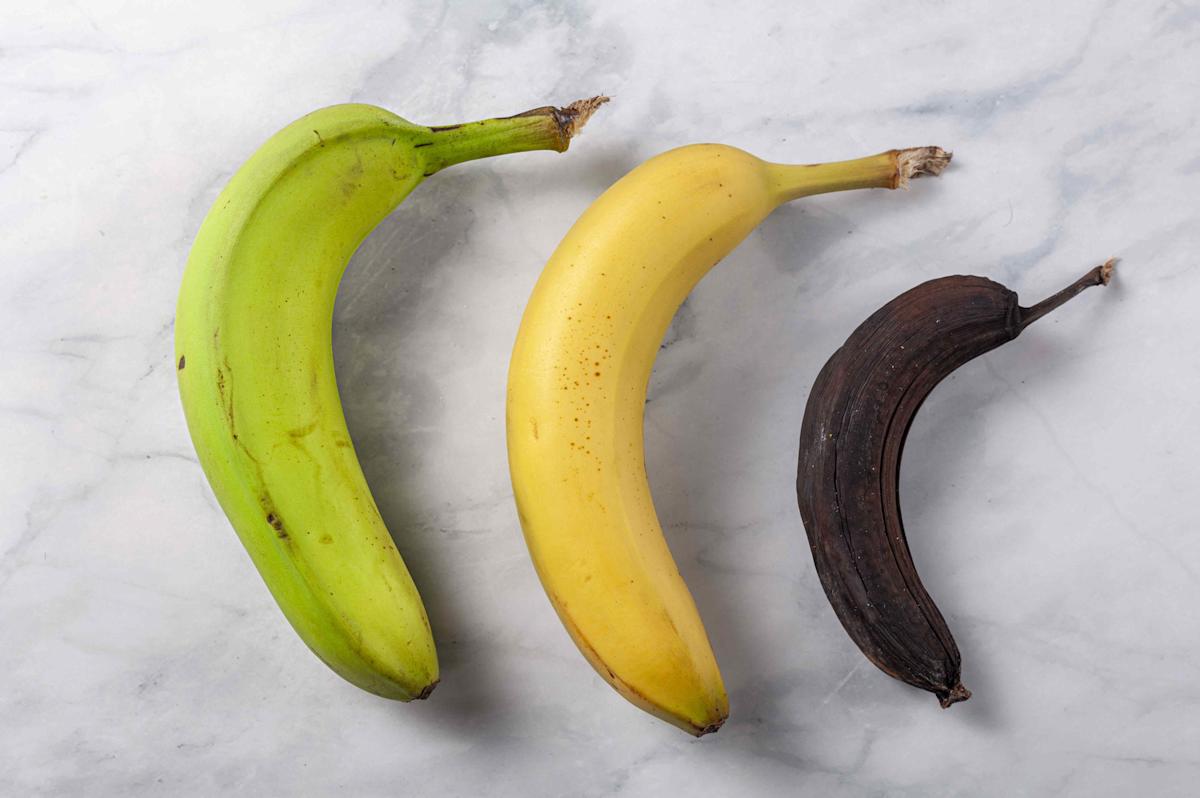
Though there are actually seven stages of ripeness in bananas, let’s dive into the three primary—and most recognizable—ripeness phases:
Green of Underripe Stage: The first stage is (unsurprisingly) the green stage. “This is when the banana is unripe. The peel is green due to chlorophyll, and the banana is mostly starch and very low in sugars. These starch molecules give bananas a very firm and hard texture,” says food scientist Abbey Thiel, PhD. While the bananas in this stage aren’t necessarily the tastiest, they do offer some unique health perks compared to bananas in other stages. “A 2021 study found that fiber is higher in green bananas and decreases as they ripen, while sugar content does the opposite—increasing as the banana yellows. Green or unripe bananas contain more resistant starch, a type of fiber that supports gut microbiome health and blood sugar management,” says Melissa Jaeger, RD, LD, registered dietitian and head of nutrition at MyFitnessPal.
Yellow or Ripe Stage: The yellow or ripe stage is the phase most people think of when they picture bananas—perfectly yellow with no green or brown spots in sight. “Enzymes in the peel have started to degrade chlorophyll (the green color) which is why the peel changes color. Different enzymes start to cut up starch into tiny sugar molecules. This not only makes the banana taste sweeter, but also softens the structure since the long starch molecules are converted into smaller sugars including glucose, fructose, and sucrose,” says Thiel. This carbohydrate conversion may result in a more pronounced blood sugar response after eating bananas in this stage—while also offering all the other alluring nutrition of bananas. “Yellow bananas are a rich source of fiber, along with potassium, vitamin B6, and vitamin C (to name a few),” adds Wan Na Chun, MPH, RD, CPT, CDCES, dietitian and owner of One Pot Wellness in Indianapolis, IN.
Brown and Spotted or Overripe Stage: And finally, we have the overripe stage where the bananas start to turn brown, spotted, and eventually black if not eaten or disposed of. “These bananas are very ripe. Almost all starch has been converted to sugar, which means the banana is soft and has lost a lot of its structure. They’re very soft, very sweet,” explains Thiel. These visual changes also mean the nutrition of the banana has changed slightly. “They are lower in resistant starch, and their natural sweetness is especially great when used in baking,” adds Chun. This increased sweetness may cause a faster or larger blood sugar spike compared with green bananas—or even regular ripe ones.
The Best Time to Eat a Banana
Taking this information into account, which stage of ripeness is best for eating bananas? Well, according to our experts, it depends on your health goals.
“If you’re looking for a lower glycemic impact, you want to eat the banana when it has more starch in it than sugars—slightly green bananas. If you want some quick energy, a ripe or very ripe banana will be easiest to digest. If you’re looking for gut support, green bananas will have the most resistant starch that can be metabolized by the good bacteria in your gut,” shares Thiel.
Chun agrees. “For an easy-to-digest carb source rich in fiber, potassium, vitamin B6, and vitamin C, a ripe or slightly speckled banana is very nutritious and palatable for most people,” she says.
Jaeger echoes these sentiments, as well sharing: “One thing to keep in mind is that green bananas may be firmer in texture and can be more difficult for sensitive stomachs to digest. If you’re increasing your fiber intake through green or unripe bananas, make sure you’re drinking plenty of water throughout the day. Regardless of ripeness, all bananas provide valuable vitamins and minerals such as potassium, phosphorus, magnesium, and folate.”
To reduce potential blood sugar spikes—and the crashes that can follow—from riper bananas, Jaeger recommends “pairing bananas with a protein source like Greek yogurt, cottage cheese, or nut butter for sustained energy.” Enjoying them with healthy fats or other fiber-rich foods can also support steady energy levels and blood sugar management.
Otherwise, these fruits are delicious in smoothies, baked goods, yogurt bowls, and oatmeal—or on their own as the perfect grab-and-go snack, thanks to their built-in protective layer against dirt and germs.
If you prefer ripe or overripe bananas and don’t want to wait for them to ripen on the counter, try putting them in a brown paper bag. “Bananas naturally produce a plant hormone called ethylene gas, and that’s what triggers the ripening process. It’s also why putting bananas next to other fruit (or sticking it in a paper bag) can make everything ripen faster. The gas spreads and signals the fruit to mature more quickly,” says Thiel.
Read the original article on Real Simple