Chinese beauty consumers often respond to the visual and sensory appeal of beauty products, but these factors alone do not contribute to purchasing decisions — solutions must be backed by science.
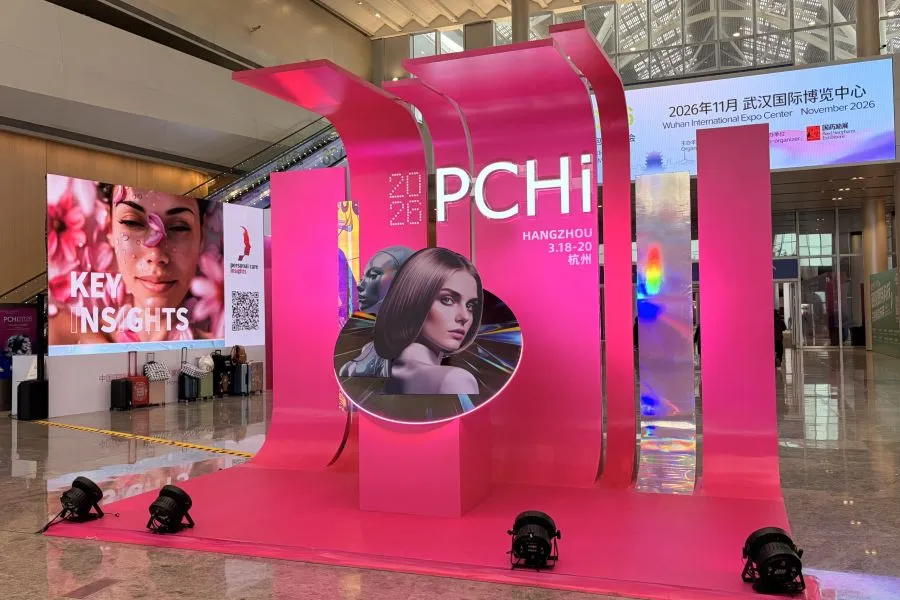
Last week, at PCHi 2026 (Personal Care and Homecare Ingredients) in Hangzhou, China, exhibitors released an array of evidence-based ingredients and presented innovative textures. The common thread between each showcase was the importance of a pleasant sensory experience and proven data to validate product performance.
“Efficacy is one of the key elements that consumers seek. But besides that, we also see that customers are looking for products that can also bring a sensorial experience, a real link to emotions,” Lillian Han, director Asia Pacific at Seppic, told Personal Care Insights at the show.
“This means that Chinese beauty consumers are looking for something that can bring them different experiences, and an experience that makes them happy.”
Han explains that the craving for cosmetics with pleasant sensory experiences led the company to present new formulation kits at PCHi.
Emotional textures
A cosmetic’s feel on the skin can be a make-or-break factor in purchasing and re-purchasing — a consideration the exhibitors at PCHi were well aware of.
Hong Pheng Lim, technical director at Symrise, told us on the show floor that Chinese consumers want light and breathable textures for skin care. The hot climate leads to shoppers favoring a more delicate feel on the skin. In response, Symrise presented Neo Heliopan 310, a UVB filter with an “excellent” solubilization profile.
“Chinese consumers desire light and multifunctional products. Neo Heliopan 310 provides excellent photo stability and UV protection with a soft skin feel without any tacky textures, which fits consumers’ demands,” said Pheng Lim.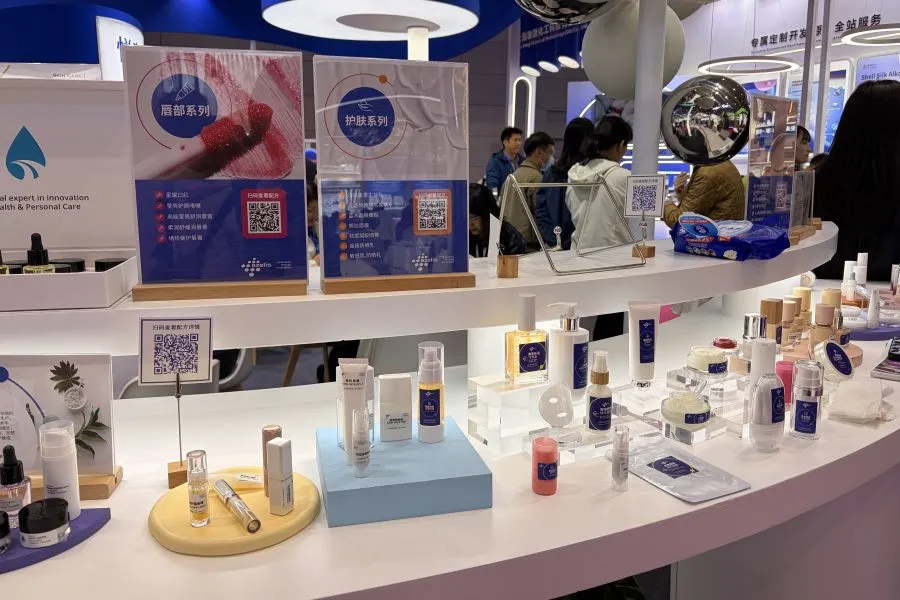 Innovative textures stole the spotlight at PCHi 2026.
Goh Zhen Hong, APAC senior business development executive at Azelis, told us that sensory profiles are a trend increasingly tied to purchase intent for consumers. He explained that Chinese beauty buyers’ desire for positive sensory experiences gives the company “a major” opportunity to explore.
“Consumers are looking for a change. They’re looking to incorporate small moments of self-care, small moments of joy into their daily routines. Sensory profile makes a huge difference in how consumers evaluate or perceive the end product,” said Zhen Hong.
“At Azelis, what we do is bring in functional ingredients, such as your typical emollients, rheology modifiers, delivery systems, and through our expertise in formulations, we’re able to help brands generate differentiated textures with their end products to bring the customers.”
Zhen Hong exemplified Azelis’s Yoghurt Comfort Moisturizing Cream as a solution that brings sensory profiles with antioxidant benefits. He said the cream provides a familiar feel similar to yogurt or cheese, and melts into a velvety, smooth texture.
Azelis also featured its Fruity Micro-Bubble Oil, which uses a dispersion suspension system that helps suspend micro bubbles inside a clear gel. Zhen Hong said the product delivers hydration while providing a playful appearance using texture.
Beauty in the digital age
China’s personal care market is encompassed by the visual appeal of a product. This is amplified by the booming digitalization in the region. Platforms like WeChat now play a pivotal role in shaping consumer purchasing behavior, pushing companies to prioritize aesthetics that stand out on screen.
“This is a market of WeChat, so we have been seeing in these past weeks, visiting customers, that a lot of launches here in China do not even go to the store — they go directly to WeChat,” Beto Pino, VP technical marketing and innovation for Personal Care at Vantage, told Personal Care Insights at PCHi 2026.
“Products need to look pretty. When I say pretty, I mean when a product is photographed, if it has a plain white texture, it may not be WeChat-friendly. You need to think about how a product can have shine, texture, that, when people see it, they remember it.”
“Everybody wants to have that sexiness on digital, but also, when people receive the product, they need to be amazed — that’s the biggest challenge here. Our responsibility with the Chinese market is how we can design the product, thinking about how something is going to be physical and digitally sexy, and that’s precisely what we are presenting.” 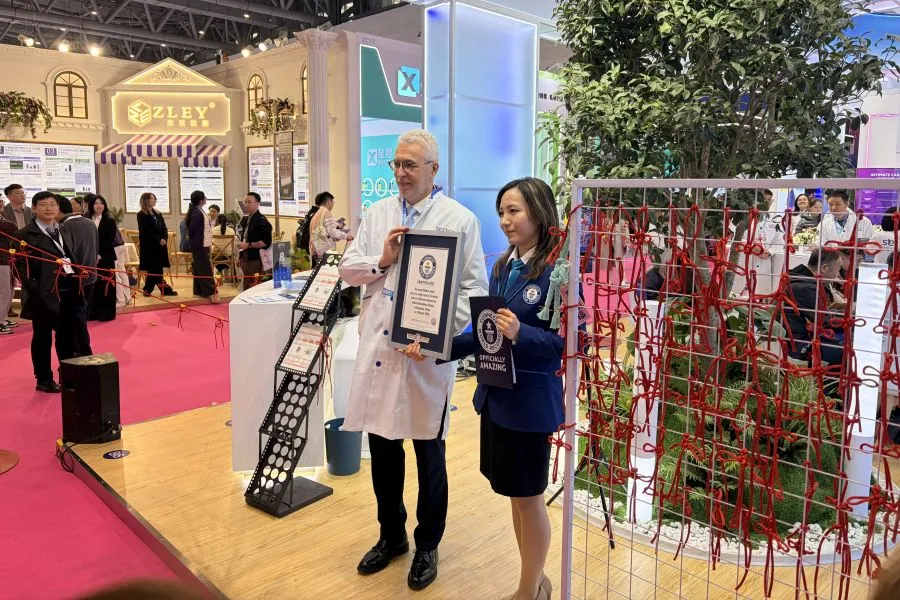 PCHi 2026 demonstrated what the future of China’s beauty industry looks like.
Pino explains that Vantage is combining science, strong sensorial quality, and visuals. He presented a clear nail product that was filled with small flower buds as an example of a blend of the three factors. “This is a market where people really go for things that are beautiful and cute by nature.”
Jean-Yves Bruxer, managing director at Sethic, echoed that cosmetic product sales are based online. “It is a very unique approach, where the product is developed to appeal to a consumer online through live stream selling.”
Seppic’s Han added that digital experiences influence purchasing decisions. She said that the market will evolve with social media.
“This also means that it will be more demanding. More demand for novel solutions, diverse concepts, and textures.”
Han calls China a “very dynamic market,” and predicts that it will continue to be.
Science-backed beauty
Hong Kong-based manufacturer and supplier of active ingredients, Sethic, debuted a skin care ingredient that delivers a “glass skin” effect. At PCHi 2026, Bruxer told us that the company’s research for the ingredient is deep, which is a requirement in the Chinese market.
“Today’s consumers are sophisticated — they want quicker efficacy, but they also want to understand the science behind it. Although we are not facing customers directly, our customers are pushing us to always dig deeper, to give them an innovative point that can differentiate them. So much of our research is also in cooperation with customers to give them an edge, to give an advantage on how to present to consumers,” said Bruxer.
Bruxer emphasized that players in the Chinese beauty industry work fast because they have to. He says consumers press the industry to provide innovative, reliable solutions at an affordable price point.
“It is a market where price is always an issue, so it forces Chinese players to deliver efficient products with deep science at a reasonable price. This also appeals to many consumers, first in the Global South, but maybe in other markets,” highlighted Bruxer.
Daniel Robustillo, sales director at Vytrus Biotech, also said that the Chinese beauty market is demanding. “When it comes to science, they request high science and also innovation.”
“What we try to give them is a lot of innovation related to the market, with really high science to substantiate all the claims that we are working on,” Robustillo told us. 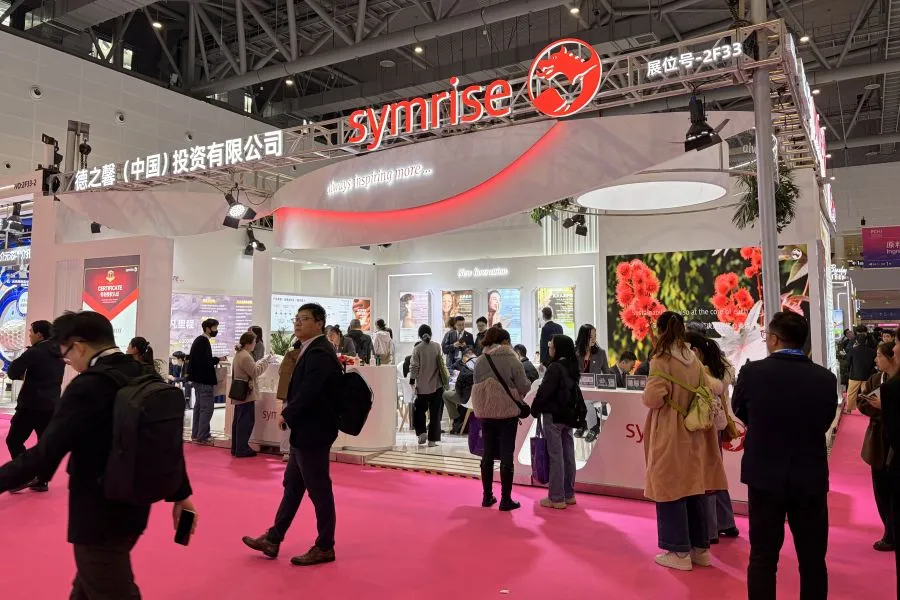 Sensory experiences are key to Chinese beauty trends.
“We work with the microbiome and plant-derived solutions to address longevity, anti-aging, and hair care, but always in a complete way, with the 360 approach — where we cover science, marketing, and innovation.”
Symrise also outlined Chinese consumers’ desire for high-performance cosmetic ingredients. “Chinese consumers are increasingly desiring gentle yet powerful solutions, and they want transparency at the center,” said Pheng Lim.
At the cosmetic active ingredients company’s booth, he showcased SymRelief Green, a green biotech ingredient made to reduce irritation and calm the skin. “The product is 100% natural and supported by extensive efficacy data, making it highly relevant to Chinese consumers, in which 50% report having sensitive skin.”
Robustillo added that he is witnessing an increased demand for biotech-derived ingredients, with many local suppliers heading in that direction.
“We expect that in the next few years, there are going to be more people open to these kinds of solutions, and we will try to be a key partner for the Chinese companies to cover all those needs that are arising in the market.”
Sethic’s Bruxer detailed what he believes will be the next wave of Asian cosmetics: “The world has already seen Asian cosmetics wave after wave. In the 70s/80s, we had Japanese beauty, then 20 years ago, Korean beauty started, and now K-beauty is very popular around the world.”
“I think the next wave will be the Chinese cosmetic wave. It is built on very deep research on the scientific benefits to deliver the optimum efficacy for consumers. This is the approach that China is taking, less on the storytelling, more on the science and the efficacy.”