By Anash.org reporter
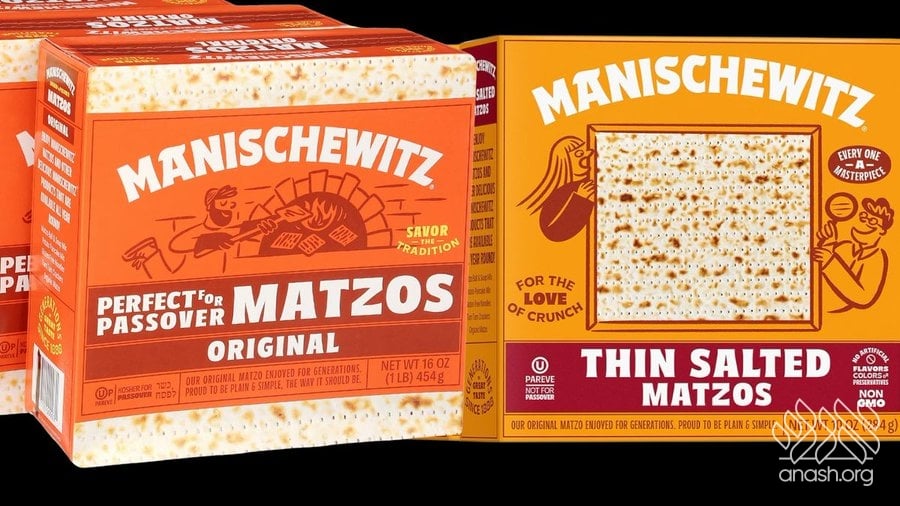
With Pesach days away, a quiet but costly mix-up is making the rounds on Jewish social media. Year-round Manischewitz crackers – bearing an OU certification but not kosher for Pesach – look almost identical to the real thing and are showing up on grocery shelves right next to it.
Plenty of people are buying the wrong box without realizing it.
Several Chabad personalities were among the first to sound the alarm.
Popular speaker Rabbi Shais Taub shared a photo of two near-identical boxes side by side. “It’s heartbreaking when someone thinks they are keeping Passover and is unknowingly eating chametz,” he wrote. “It happens way more often than you might think. Look at these two products and tell me nobody would confuse them.”
Shliach Rabbi Mordechai Lightstone, founder of Brooklyn’s Tech Tribe, warned users: “Look before you buy, or you too might end up purchasing OU-certified Manischewitz brand bread. Manischewitz sells a cracker that looks like matzah and says matzah, but it isn’t kosher for Passover.”
Manischewitz acknowledged the concern. “We’re aware of the conversation and appreciate the community bringing this to our attention, especially at a time as important and detail-oriented as Passover,” said Mirit Shalvi, the company’s senior vice president of marketing. “We recognize that in a busy retail environment, similar packaging across product lines can sometimes create confusion.” The company says it will be reviewing its packaging and working with retail partners on clearer in-store separation.
OU Kosher’s chief operating officer, Rabbi Moshe Elefant, noted that the distinction between year-round and Pesach matza has existed for decades and that non-Passover products are clearly labeled as such. “Those who keep kosher must remain vigilant when shopping and always check the product labels, especially as Passover approaches,” he said.
“Jews trying to have matzah on Pesach buy it, even if it says not KFP, because matzah is matzah,” Rabbi Mendel Super, shliach in Lake Havasu City, AZ, responded to OU Kosher, “especially when grocery stores put it in their Passover display.”
“This shouldn’t be called matzah,” he wrote.