March 27, 2026

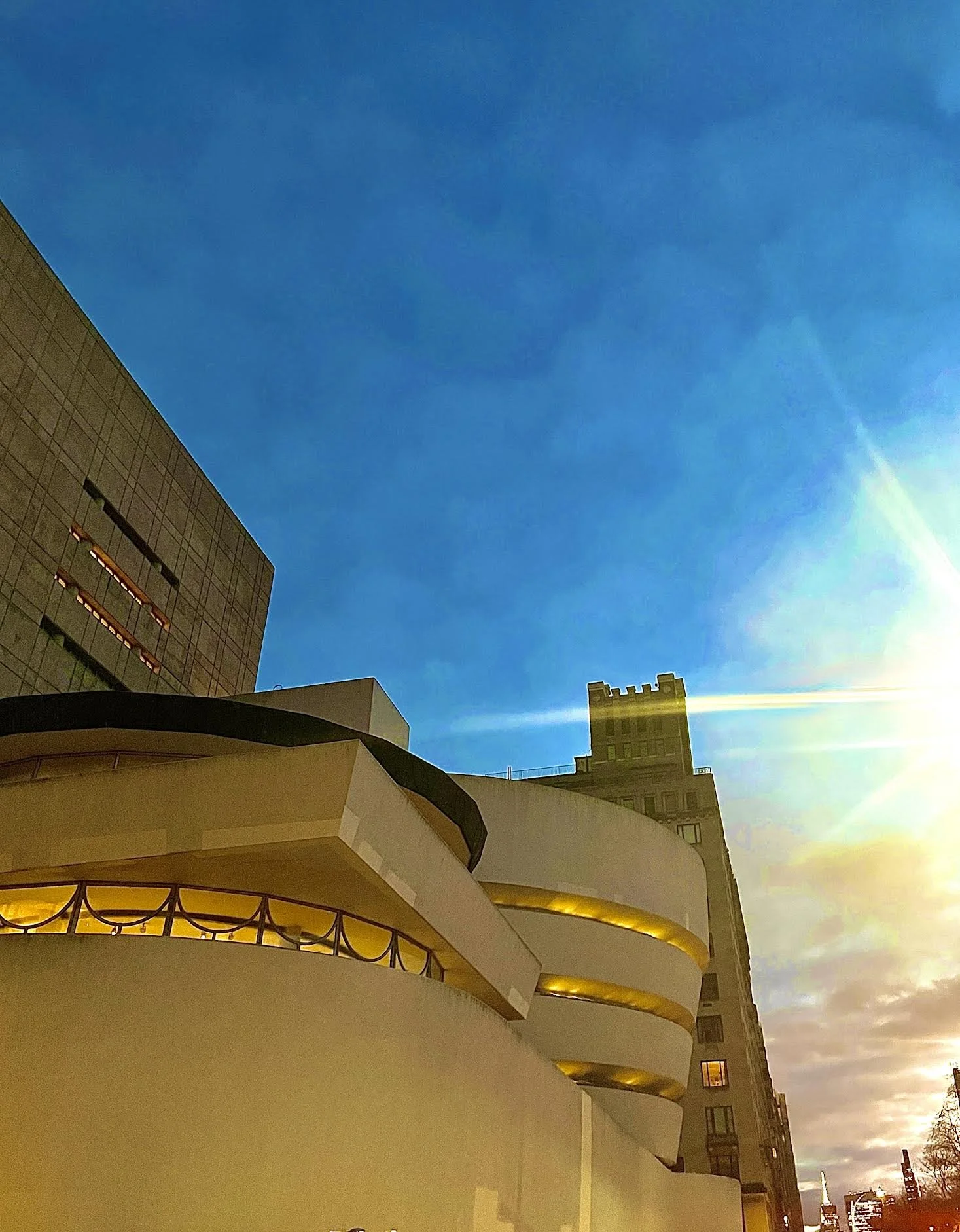
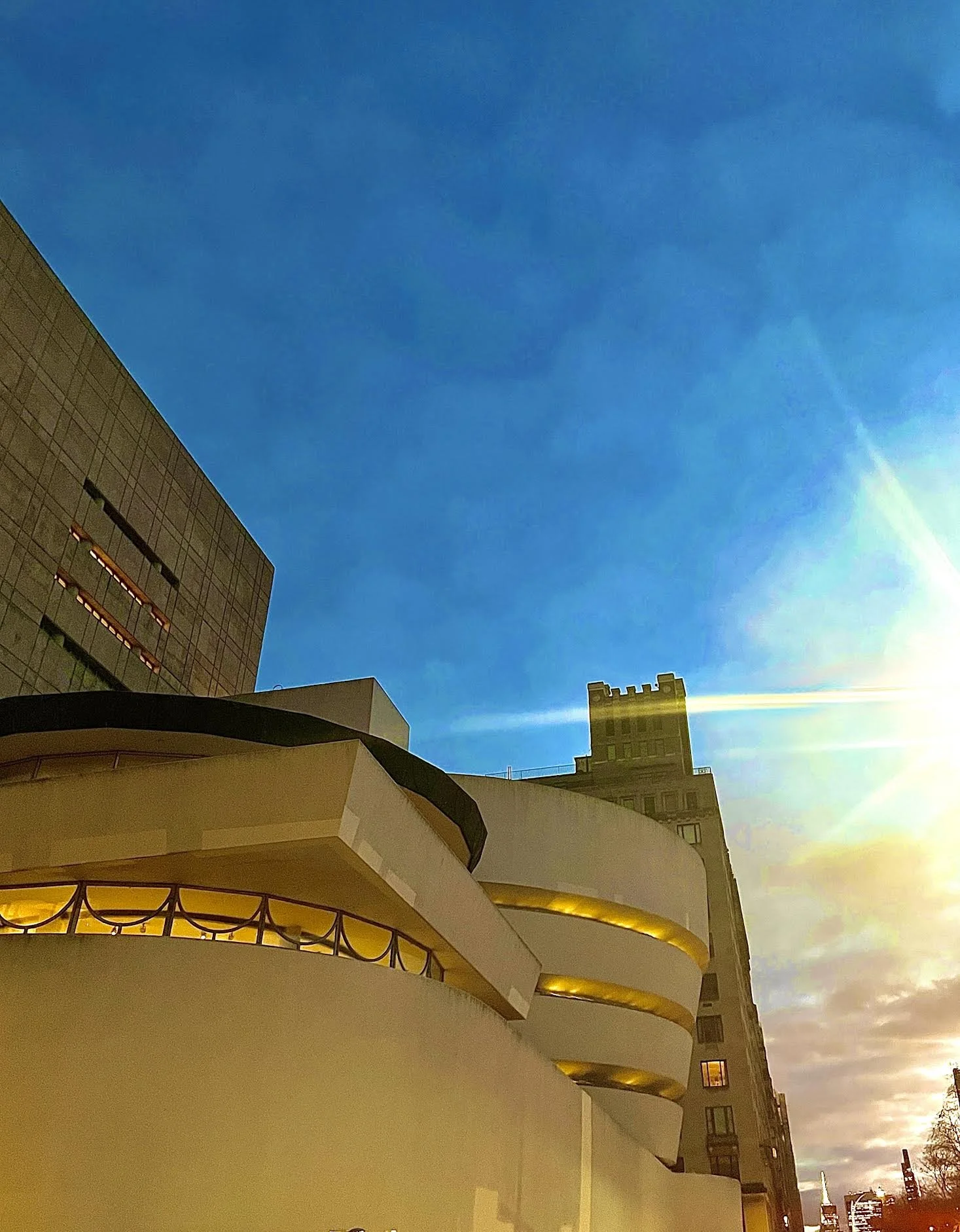
An afternoon with a Guggenheim.
Truthful Fictions
My continuous affliction: A companion of constant amusement: My nightmares appears: Awakening to eyes in panic mode: The fractional psychosis that is eternally embedded is part “…Cuckoo’s Nest”, part a little bit of heaven. Not a moment passes when I am not acutely aware of a photograph(s)to be made. My eyes arrive each morning and depart each evening: The slow contemplative and the reflexes on steroids expose daily captures. The choreography begs to be seen.
I experience accelerative movements in most cities and countries. My eyes cozy behind the black curtains- -The home of shutter-releases heard at one thousandth or three or four seconds. It may be like meditating: Invaluable pleasures measured as in a collective of former dreams: Mind and body experiences anew: Destinations near- -I am alone- -again.
If I was a child again, I might surround myself with Kenneth Grahame’s anthropomorphic four> The willows in the wind- -yes The Wind in the Willows: The animated stirrings about- -Four imps of nature and aberrations: Hand in hand a fantasy becomes the possibilities of the unimaginable: The pleasures are in the companionships: Fantasies abound:
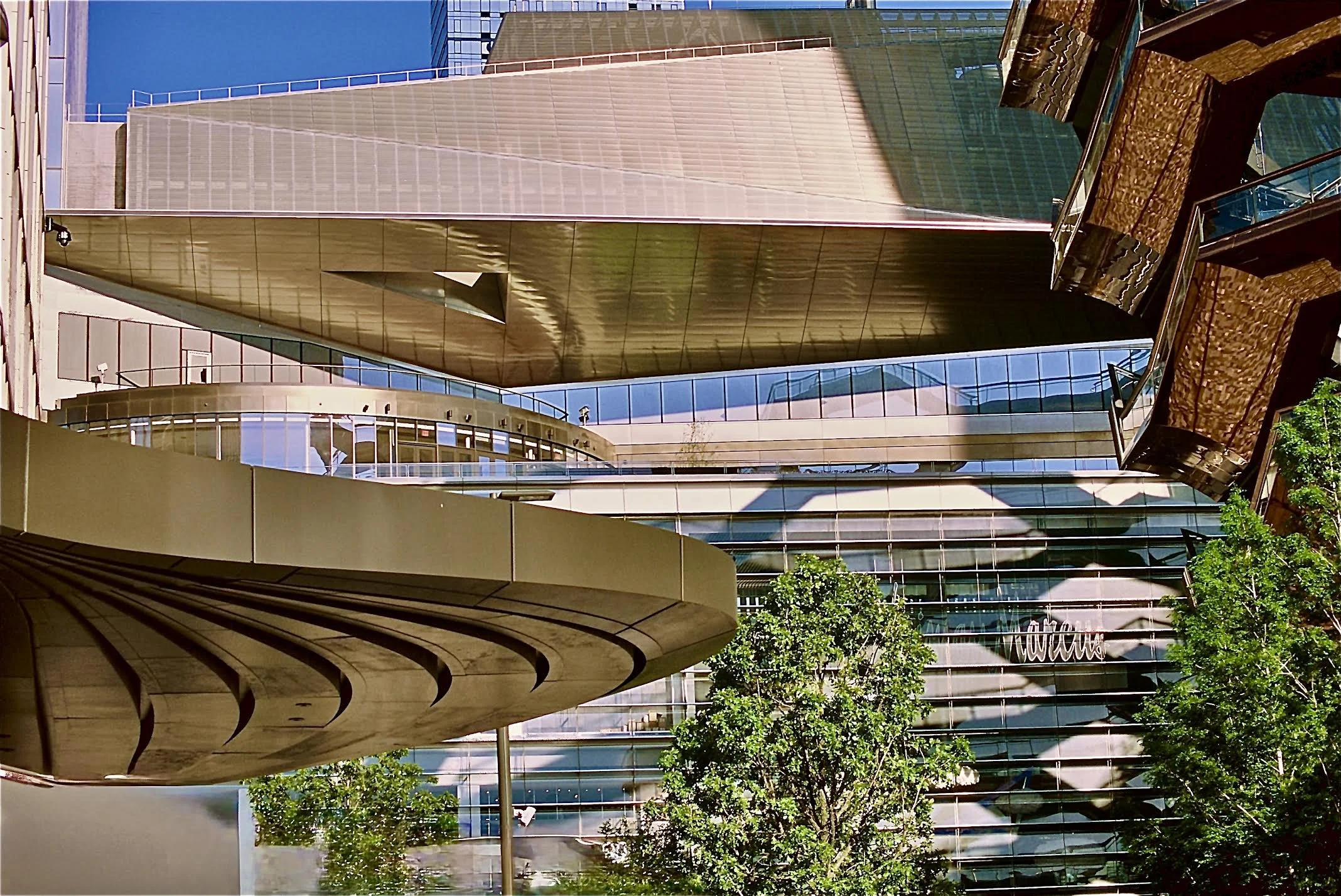
Architectural designs colliding at Hudson Yards, NYC.
Lewis Carroll’s Alice’s menagerie is surprisingly normal: Snug collectively in my minds cubby hole – – Imagine Carroll and Grahame in one sentence: A hideaway where truth and reality dance: Imagine my camera atop a river of dreams and more dreams. Alice and sisters- -An imaginary anthropomorphic clan all swaying on one boat: My camera swoons: Life as we know it pauses: Serenity prevails.
Maybe a real reality is a better type of photograph to consider: Vonnegut’s Billy Pilgrim is not that either: Yet Slaughterhouse-Five sounds like a meatier fiction with hints of reality: The analogy is merely that we (Pilgrim and I) are only tethered because of our ever changing destinations: I dream some more: Like a child’s game of hopscotch, Pilgrim and this photographer step lively: Darkness and light mingle: We run as one: Fears become captures: The soothing sound of Ryuchi Sakamoto’s Forbidden Colours plays: When alone almost anything will do:
The psychosis that is imagined became something tangible when remembered with my conversation with a brilliant mind: Kenneth Frampton, the esteemed architectural critic and historian posed for my camera: We sat in his office at Columbia University: The moment became one of my last, lasting portraits. Frampton leaned across his desk and suggested an idea: Not original by itself: But with his voice‘s subtle power- -it became like a box of toys: The gifted good fortune of feeling wrapped like a Christmas present: I was the red ribbon begging to be untied- -to explore the bounty: Frampton’s gifted idea became a tool and a mantra: I had been running with an idea my entire career: But it never had a vocabulary or an “Oz” like voice: It was merely me fleet footed less than Usain Bolt but a life in photography still blazing across cities, countries and continents:
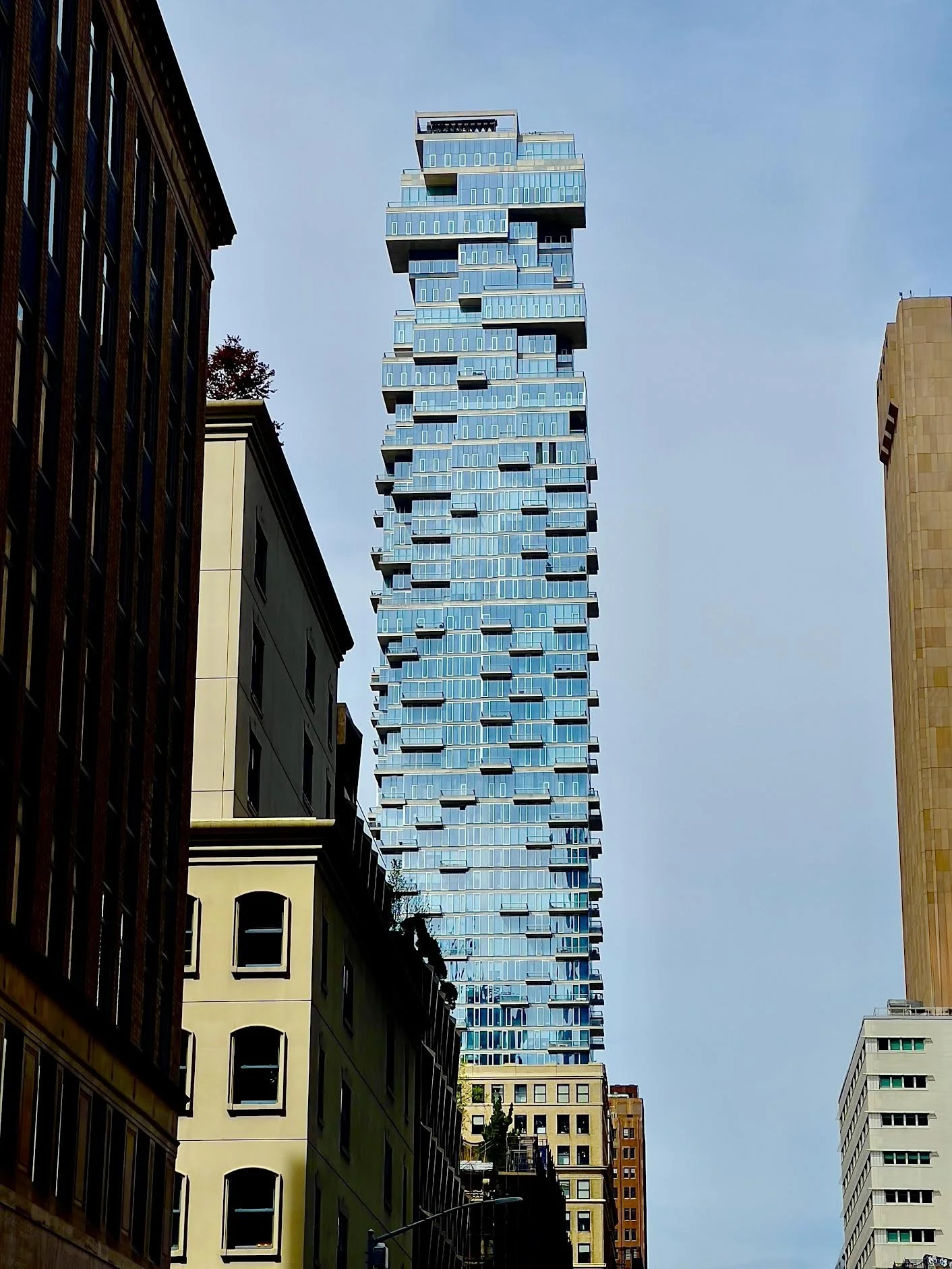
Herzog and DeMeuron in New York City.
My explanation of how I made photographs might be better suited in Tolkien’s “Middle Earth”:
Regrettably I never met with Frampton to show him how his ideas infused my lenses:
I accumulated miles about miles: I saw the intimately true realities: Not an ounce of glory or an ounce of the fabulist- – just a bit of music a bit of history, a fortunate camera and folklore to share.
I wake every morning to lines from Spirits’s “Nature’s Way”. I elevate my lens: I focus: I realize my camera is living in a split image filter like Gregg Toland’s Citizen Kane: Everything near and far in sharp focus.
Even with the grounded Frampton’ observations my eyes straddle worlds of another time:
The psychosis is frightening when alone: It still does not inhibit the focus on my cities, my architecture: My fantasies appear to endow my captures in a kind of fairy dust: Fantasies about fantasies and realities painfully about realities: My camera sees and I follow.
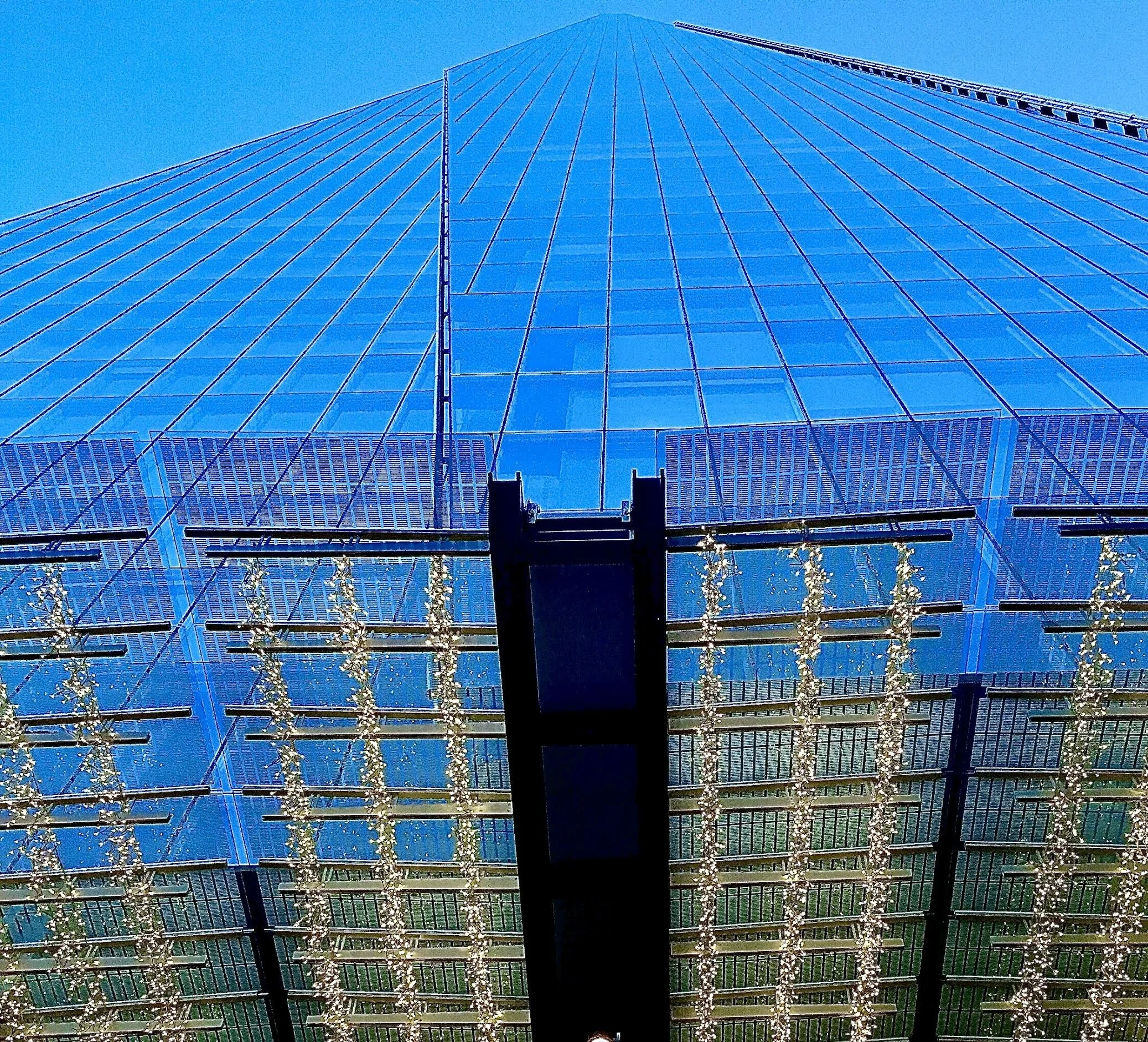
Renz Piano’s “The Shard” from below: London, England.