Published March 27, 2026 03:00AM
A volcano just erupted below Antarctica. Tremors reverberate underneath Earth’s terrain miles from the blast, prompting a massive tsunami to bury most major cities (and countries!) underwater. Dark ash fills the sky. People frantically call their loved ones just before phones become useless, and most can’t find an apocalypse-proof shelter in time. Those who do, stock up on the essentials like bottled water and what becomes one survivor’s holy grail: Bush’s Vegetarian Baked Beans.
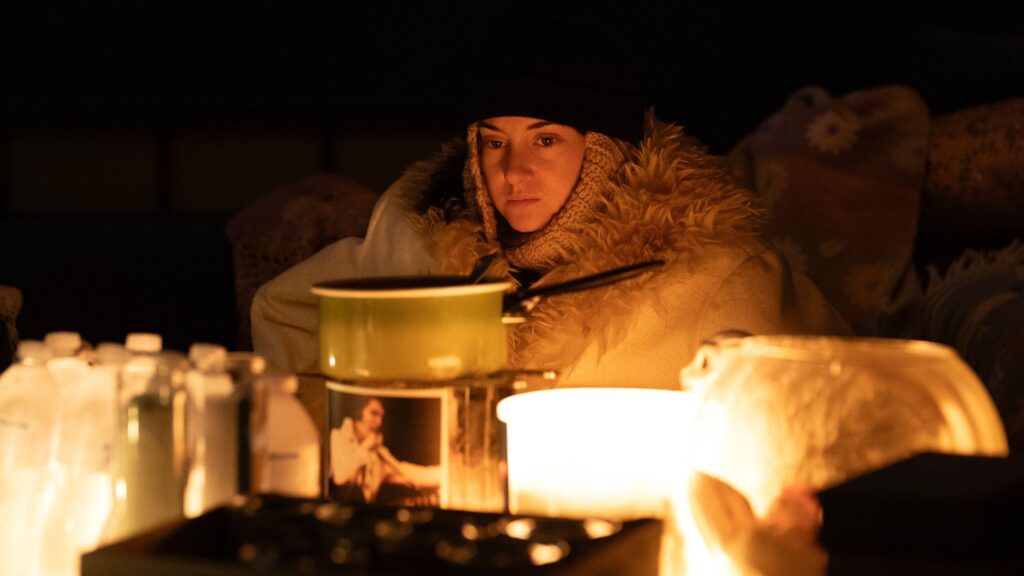
This disaster is the main thread of Hulu’s hit show Paradise, and that lucky survivor is med student Annie Clay, played by Shailene Woodley. She hunkers down in Elvis Presley’s mansion, Graceland, and does her best to fill her time reading by candlelight and eating a lot of beans.
Forty-five days pass. Then 689.
I can usually suspend reality for the sake of being entertained, but it’s going on two years and, all things considered, she’s still in decent shape. That’s suspicious.
Two questions come to mind while watching: How long could someone realistically survive on beans? And what would happen to your body on a bean-only diet? I interviewed a survival expert, a doctor, and a few nutritionists to find out.
The Good and Bad of Beans
“You can survive on them as your only protein source,” says Cal Coblentz, a former survival, evasion, resistance, and escape specialist in the United States Air Force. Their nutrient roster also includes fiber, iron, folate, and magnesium, says Dr. Vikram Tarugu, a board-certified gastroenterologist based in Okeechobee, Florida.
Another major benefit is that “replacing animal protein with plant protein has been linked to improved longevity,” says Avery Zenker, a registered dietitian, a bonus that would seriously come in handy during an end-of-the-world situation.
But canned beans lack one very crucial element: vitamin C, a nutrient that helps skin, bone, and tissue grow, and absorbs iron so you can make red blood cells. It even helps wounds and burns heal—another ability that would be really nice to have if the world ends.
What Would Happen to Your Body If You Just Ate Beans?
TL;DR: Life wouldn’t be great.
After the First Couple of Days
“You’ll probably experience changes in digestion right away on the first day or two,” says Zenker. As you’re likely aware, if you’ve been to any cookout ever, just even one side of beans is enough to make you gassy and regret eating them, thanks to their fiber content. But your poops, at least, will be smooth sailing, she says. Overall, this phase is pretty manageable.
After 1 Week
You’re probably tired of beans now, and a lack of other foods will leave your taste buds craving for something new, says Zenker. Eating just beans, according to Tarugu, is also sure to put a dent in your mood. (Knowing that you’re in complete isolation wouldn’t make you feel good either, though.)
Those easy bowel movements are now turning into what licensed integrative clinical nutritionist Meg Bowman calls “disaster pants,” aka diarrhea.
Between 1 and 6 Months
Because beans are filling, it’ll be tough to consume enough calories, so sluggishness is almost guaranteed at this stage, says Zenker.
The good news: your gut is now used to being bombarded with beans, so your bowel movements will likely go back to normal, says Bowman. The reason? “Your gut bacteria are populating and shifting and expanding to keep up with all this new fiber you’re eating,” says Ashley Kitchens, a plant-based registered dietitian.
That 45-day mark is now looking pretty plausible. My confidence was further bolstered when Zenker informed me about Beau Miles, an adventure filmmaker known for documenting his self-experiments, who, back in 2020, when an entirely different disaster descended upon us, ate only beans for 40 days (191 cans to be exact)—and lived to tell the tale.
But here’s some bad news: the absence of vitamin C is now a problem. Without a sufficient amount of it, according to Coblentz, you would get sick in about one month and get scurvy a few months later. “I’m not a nutritionist, but I do know scurvy is very, very deadly.” He’s right.
Scurvy is a disease caused by an extreme lack of vitamin C. Early symptoms include fatigue and joint pain. If you go too long without vitamin C, your gums could get spongy and bleed (your teeth might even fall out), you’ll bruise easily, and you may develop anemia, a blood disorder marked by a low red blood cell count.
For the body to function optimally, men need about 90 milligrams per day, and women should get at least 75. In a normal world, you could get enough by eating fruits and vegetables or downing a glass of OJ. Annie was growing some kind of purple flower when the sun came back, but that’s…not enough. Even if it was, if radiation got to it, she’d want to avoid it anyway, says Coblentz.
Between 1 and 2 Years
This is where Paradise wants you to rely on your imagination. “We as humans historically have survived on limited diets time and time again, but ‘surviving’ and ‘thriving’ are very different things,” says Kitchens. I agree with her.
Not only is a bean diet not sustainable for this long, Tarugu says, “living well without major deficiencies for almost two years on beans alone is unrealistic without close medical oversight.”
But considering Annie was on her way to becoming a doctor, out of anyone, she’d probably have the best chance of survival in any situation.
The season 2 finale of Paradise comes out on Monday, March 30, at midnight Eastern time. Will you be watching? Let us know in the comments.