Welcome to Boy Math, aka the internet’s favourite branch of creative accounting. Here, a ₹10,000 gadget that might make you more productive is an investment in self-growth, but a 20-minute conversation about feelings feels like a wildly inefficient use of time. Every thought piece in this series unpacks how progress is measured in numbers, upgrades, and visible wins, while the uncomfortable inner work keeps getting rescheduled for some imaginary future.
Lately I have noticed that there’s a particular kind of arithmetic many men seem to practice. It goes something like this: ₹5,500 for whey protein, ₹3,000 for creatine, a few thousand bucks more for vitamins, and some for amping up their bike or car. Add all this, and you’re comfortably spending over 20K in optimizing your body and your bike’s body. But therapy? Suddenly a 1K session will look like a faltu ka kharcha, an unreasonable luxury. Behind the garb of this ‘boy math’ is a deep-rooted truth around how our favourite men approach self-improvement.
© Pexels
We live in a society which usually does not pave way for men to seek therapy or even admit they are going through some emotional struggle. So, I don’t blame them for wanting to invest in the parts that can be measured, photographed or even be shown aesthetically, while avoiding the parts that require them to express their thoughts and sit with their feelings.
This is what the internet jokingly calls boy math. But beneath the meme is a strange truth about how many men approach self-improvement: we will invest heavily in the parts of ourselves that can be measured, photographed, and displayed, while quietly avoiding the parts that require sitting still with our own thoughts.
© Netflix
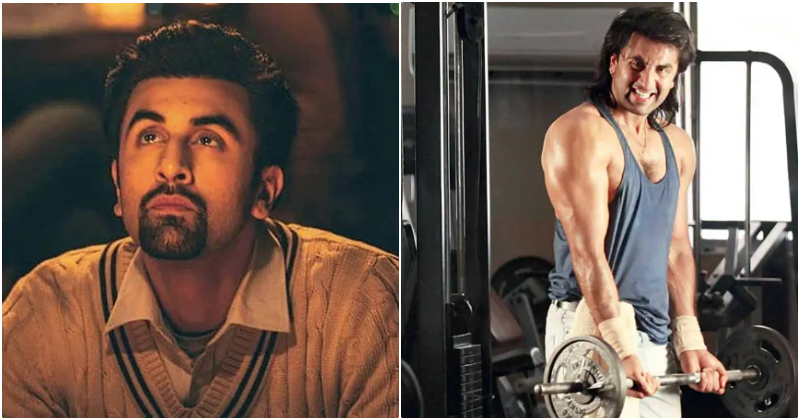
Our modern man will calculate his macros, track his steps, heart rate and then check muscle gain. If I think about it, probably makes sense since improvement here is visible and linear. the feedback loop involved here is clear and reassuring. However, therapy operates on a logic that lies in the opposite spectrum of this. You see, emotional progress is not measured how body fat percentage is. You need patience, an arena for your vulnerability to play. Simply put, most men were never taught or self-restricted the art to articulate their feelings and emotions.
Therapy operates on the opposite logic. Emotional progress cannot be measured the same way you measure body fat. Like how do build a dashboard that measures that you’ve improved your attachment style by 5% or you’ve processed your emotions by 10%? The currency in the emotional economy is so weak, that the onus to self-improve falls solely on the man himself once he realises he needs to do better, for his own good.
© Instagram/Ranveer Singh
Your anger becomes ‘intensity’ between your sets, sadness translates into discipline and anxiety is take care of with a double dose of productivity. Again, this is not a ‘one size fits all’ shoe, but a common denominator that has been noticed amongst men choosing to spend on physical health over mental health. Before the gym police hounds me, I want to make my stand clear.
Physical and mental health are not chosen in isolation over each other. Both are equally important, but the imbalance between them is quite revealing. if a man is justifying spending thousands on optimising his muscle growth, but is hesitating to spend on therapy, then the issue is rarely financial. Barring some exceptions, it is usually psychological.
There is a major need of a paradigm shift for men and the people in their lives, who should enable them to work on their mind and soul. Stop admiring physical resilience and don’t treat emotional resilience as optional.
© Netflix
The best kind of self-improvement is what is not seen in a mirror. It is only felt. So next time you are budgeting for the month, don’t just aim for a strong core, also aim for a stronger mind as well.