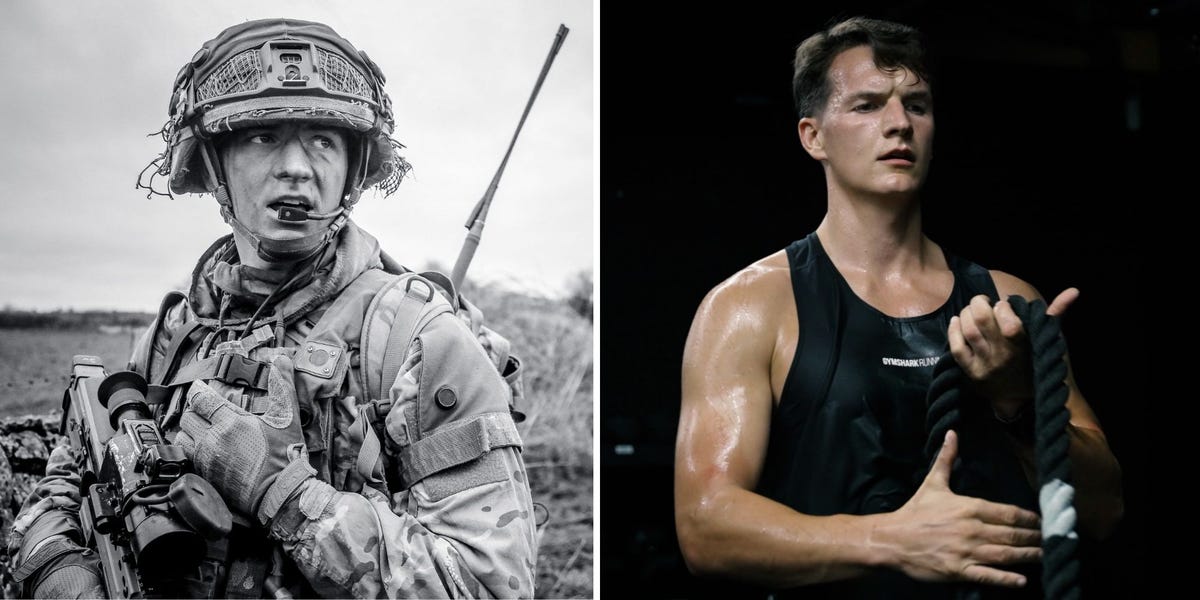
Cutting 20 minutes off a Hyrox time usually demands an extreme approach. But for Elite 15 athlete Danny Rae, it meant training smarter. The British soldier dropped from 1:18 to 57:49 in under a year – not by piling on high-intensity sessions, but by alternating hard and easy days, limiting race simulations and doubling down on recovery.
Rae is a BLK BOX ambassador and features in the brand’s Pursuit of Better Magazine, a digital and limited-edition print publication exploring the beliefs, disciplines and systems underpinning its growth.
His approach is shaped by 13 years in the army, where training rarely happens under perfect conditions. ‘You go through discomfort,’ he says. ‘But at some point, that will come to an end.’ Here, he outlines the training rules that help improve performance, manage fatigue and get more from every session.
1. Nail the Basics
Rather than chasing complex sessions, Rae recommends focusing on fundamentals. ‘I would say first one is do the basic stuff, like nail the basic stuff down well,’ he says. ‘You can often fall into a trap of social media and see people’s workouts and feel like that’s what you need to be doing. But basic strength sessions, basic running sessions. Just doing those consistently is what’s going to make the biggest difference.’
2. Invest in Recovery
‘I would say invest in your recovery,’ he says. ‘Sleep being a big one, just general sleep hygiene… making sure you can try and get as much sleep as you can. Good nutrition as well. All of that stuff supports your training.’ Progress is underpinned by what happens outside the gym.
3. Follow a Proper Programme
‘I would say if you can, get a good training programme,’ he says. Structure, Rae notes, is what allows you to sustain a hybrid split without burning out. ‘People that don’t have a good training programme… you can quickly get tired and exhausted. Having a good plan will allow you to feel ready enough to train every day.’
4. Don’t Overdo Hyrox-Specific Work
Booking multiple Hyrox classes each week might feel productive, but Rae says it can hold you back. ‘Doing too much Hyrox-specific training is probably the biggest mistake,’ he explains. ‘It’s very taxing, it takes a big toll on the body… and you risk injury. You don’t necessarily get better at the sport either. It’s an aerobic-based sport.’
He adds that social media can distort expectations. ‘If an athlete is posting their sessions, that’s part of a bigger plan. It’s not how they’re training every day. Ensuring that you don’t do too many hard sessions is key.’
 5. Build the Ability to Run Under Fatigue
A key lesson from military training is performing when tired. ‘First and foremost, I would say the key crossover for me is running under fatigue,’ he says. ‘It’s something you do a lot in Hyrox and in the army.’
‘We had sessions where you’d be doing functional activity at one end of the gym and then sprinting shuttles to the other side. You’re constantly working and running to keep your heart rate elevated. That transfers directly.’
6. Alternate Hard and Easy Days
‘The format of my training is staggered between easy and hard,’ he explains. ‘Easy day, hard day, easy day, hard day.’ For Rae, an easy day might involve strength work and light cardio, while a hard day focuses on threshold running. This structure helps manage fatigue across the week.
7. Treat Hyrox Sessions Like Match Day
Race-style sessions are used sparingly and with intent. ‘I refer to my Hyrox-specific sessions as match day,’ he says. ‘They’re simulation-based sessions to replicate race conditions as much as possible.’ Rather than full efforts, these sessions often target specific elements, such as sled work or the latter stages of a race.
8. Train at Home First Thing
‘If you’re able to, always start your day with your health and fitness,’ he says. ‘If you leave it to the back end of the day, it takes a very special kind of person to finish work and then go and train.’
Training early removes friction. ‘When I was in the military, if something was non-negotiable, I’d just get up earlier and get it done.’ Rae trains from a home setup built with BLK BOX equipment, which helps eliminate barriers – especially on low-motivation days.
9. Hydrate Properly
‘Hydration is a big one,’ Rae says. ‘In the military we had things like water parades where you had to drink in front of an instructor to prove you were hydrated.’ He now starts each day with a pint of water as soon as he wakes.
10. Discipline Over Motivation
‘It’s worth knowing that with hybrid training, you’ll go through phases of higher and lower motivation,’ he says. ‘But discipline is what’s going to help you achieve your goals.’ Consistency comes from relying less on how you feel.
11. Learn to Tolerate Discomfort
Finally, Rae emphasises mental resilience. ‘One thing I learned in the army is you go through difficult challenges and lots of discomfort, but at some point that will come to an end,’ he says. ‘I’ve had races where I’ve wanted to pull out because it’s so uncomfortable, but you have to recognise that it will end. Nothing lasts forever.’
Related Stories
Kate is a fitness writer for Men’s Health UK where she contributes regular workouts, training tips and nutrition guides. She has a post graduate diploma in Sports Performance Nutrition and before joining Men’s Health she was a nutritionist, fitness writer and personal trainer with over 5k hours coaching on the gym floor. Kate has a keen interest in volunteering for animal shelters and when she isn’t lifting weights in her garden, she can be found walking her rescue dog.