Supplements are everywhere, starting from our brunch conversations and supermarket shelves to Instagram feed. You cannot escape it.
But you can learn to differentiate between what works and what’s in vogue.
NAD+ (nicotinamide adenine dinucleotide) supplements are currently the talk of the town, thanks to celebrity-driven popularity. While Hollywood celebrities Hailey Bieber, Kendall Jenner, and Jennifer Aniston started a conversation around it, Bollywood celebs are equally promoting it.
Read Full Story
Actress Samantha Ruth Prabhu shared a post about NMN (Nicotinamide mononucleotide) that helps boost NAD levels in an Instagram post. While the post has thousands of likes, Dr Cyriac Abby Philips, popularly known as The Liver Doc, called her out.
He criticised this promotion and said, “How science-illiterate movie celebrities defraud their millions of followers by selling supplements that do not work at all.”
However, the internet is divided when it comes to NAD+ supplements. Some call it a marketing gimmick, while others say that there is scientific evidence to support it.
Well, science communicator Krish Ashok said that “all supplements are expensive urine except the ones prescribed after a diagnosed deficiency.”
But there is more to it. We read research papers and asked nutritional and ageing experts to understand the science behind it.
THE SCIENCE BEHIND NAD+ SUPPLEMENTS
From IV drips to capsules, NAD+ is marketed as an energy booster and anti-ageing agent. Let’s understand what it is and what the scientific evidence tells us.
NAD stands for nicotinamide adenine dinucleotide, a tiny molecule found in every cell in a human body that keeps your muscles, brain and heart healthy. Also, the plus sign indicates that the molecule is in its oxidised state.
NAD helps turn food into energy and move your muscles, but NAD levels drop when you age.
So can supplementation increase NAD levels? A 2026 review article looked into peer-reviewed studies on NAD augmentation in humans or rodents between January 2010 and October 2025.
The paper highlighted that, across trials, data suggest that intake of NAD is safe, but there is very little evidence that supplementation works as an anti-ageing agent in humans.
It notes that “evidence of reliable benefit on wellness-relevant endpoints remains limited.”
The paper also said that NR and NMN are already widely marketed in longevity and wellness contexts, but clinically meaningful benefit remains inconsistent.
Dr Geetanjali Chawla, Associate Professor and nutritional scientist researching the science of ageing at Shiv Nadar University, explained that “there is a lack of reproducible/consistent data to indicate that intake of this supplement is beneficial for all individuals.”
For example, some studies show that this supplement improves muscle function in older adults; other studies show no improvement in exercise capacity, so consistent data are missing, she highlighted.
Another paper brings together more than 25 scientists around the world who have released a new expert opinion in Nature Aging. Their combined insights highlight the need for further large-scale studies to determine optimal dose, administration routes, frequency and long-term safety.
However, research in mice has shown that supplementing NAD+ can improve many elements of ageing, including age-associated weight gain.
The majority of studies on NAD+ and ageing have been conducted on cells or animals rather than humans. Animals’ and people’s ageing pathways may not operate in the same way, human ageing is complicated.
Dr Chawla explained the difference between the human and animal ageing processes. “Researchers can quickly test an intervention in mice, as mice have a much shorter lifespan (34 years), and thus the speed of ageing is much faster, but humans live longer, and thus the biological mechanisms are complex and slower.”
She pointed out that the genetic makeup of humans and mice differs, as do their immune systems, reactions to trauma, and age-related illnesses.
“There is a lack of consistent data to support the claim that NAD supplements can be used for stopping ageing,” she commented.
A SINGLE SUPPLEMENT CANNOT TARGET AGEING
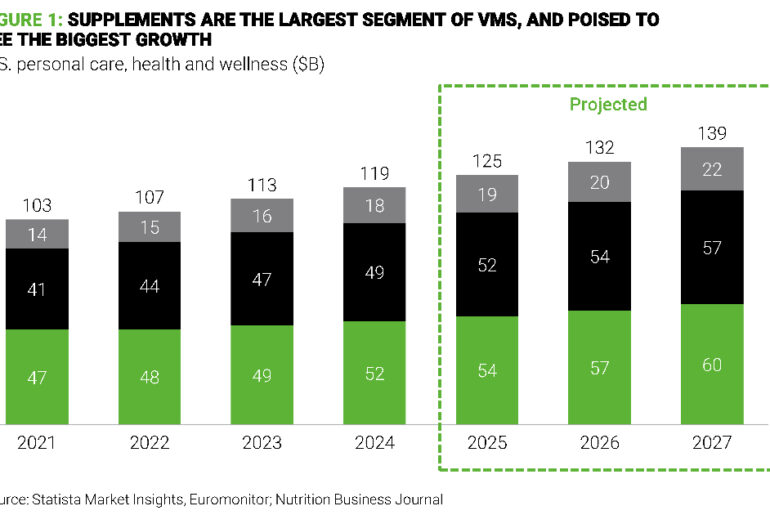
The Indian supplement market is experiencing rapid growth, and the market size was estimated at USD 42.97 billion in 2024.
And it’s important to understand that supplements support health when needed. They are not a magical elixir.
“Supplements are necessary only when there is any specific condition, like iron supplements are necessary for an anaemic person,” said Dr Vikrant Ghanekar, Scientific Officer at Homi Bhabha Centre for Science Education.
He explained that vitamins, minerals and nutrients that we consume from a balanced diet are more than enough. Also, “any drug or molecule that is under animal trial needs prolonged examination on humans to be assured of the effect,” said Dr Ghanekar.
When it comes to ageing interventions, Dr Chawla said that “ageing is a very complex process; a single supplement may not be able to target all the processes simultaneously. We would need many studies to prove that all the hallmarks of ageing can be reversed.”
Talking specifically about NAD supplements, she said there is some evidence, but the data lack consistency, and we need stronger, more reproducible clinical evidence before making a claim about NAD supplements.
“More work on NAD is needed to classify it as an anti-ageing supplement for human use,” said Dr Chawla.
– Ends
Published By:
Nabeela Khan
Published On:
Mar 28, 2026 10:00 IST