If you thought Russian twists were Russia’s only contribution to the fitness world, that’s a gross underestimation of the country’s impact on how we work out today. Notorious for their fitness, Russians seem to be especially obsessed with core workouts, and this is where a lesser-known technique stands out well above the twists. Called the Russian Kettlebell Club (RKC) plank, this move can make a significant difference to how your core looks and feels. The best part: you can use its principles in every other ab exercise, instantly increasing the level of difficulty which would translate into fewer but more effective reps for you.
While researching the exercise, I came across several sources stating that RKC stands for ‘Russian Kettlebell Challenge’. The moves that are a part of this routine were invented by Soviet special forces trainer Pavel Tsatsouline. Contrary to its name, the RKC plank doesn’t actually involve kettlebells. This means it’s not equipment dependent and gives you one less excuse to skip it.
“Pavel’s expertise and knowledge of Russian kettlebell training methods laid the foundation for the development of the RKC program in the early 2000s. This program distilled the most effective techniques from the Russian military and adapted them for civilian use, making them accessible to fitness enthusiasts worldwide,” says a strongandfit.com article titled Mastering the Russian Kettlebell Challenge.
Also Read | Why you should try the ‘honest 8×8 workout’ to get shredded
It’s easy to get inundated by the sheer number of plank variations, but this move doesn’t require you to move more or push weights around. The RKC plank is more of a positional shift, and it takes into account one of the most important parts of training, which is breath work.
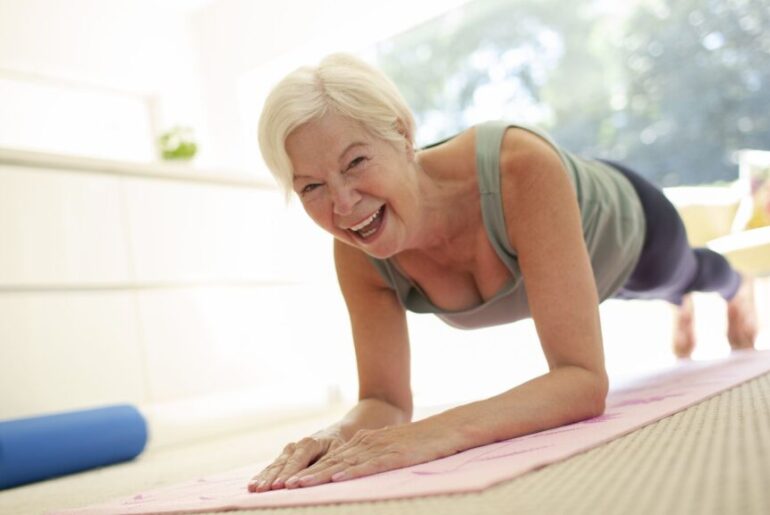
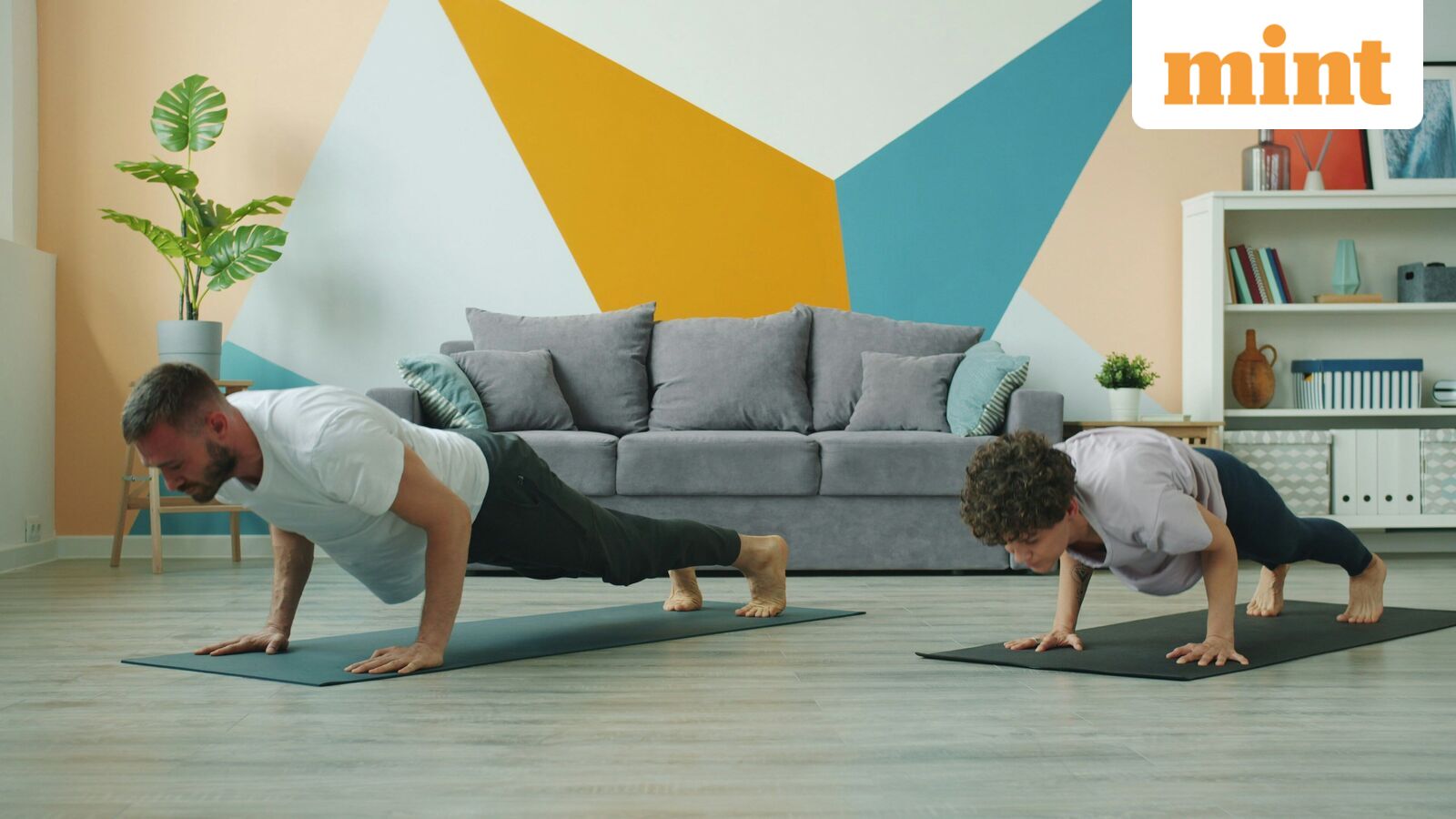
To do it, start in a basic plank position, on the elbows. Here’s the key bit: push your shoulder blades away from the floor and use the upper back to push upwards at the same time. Next, breathe out and fully engage the major leg muscles—the glutes, quads and hamstrings—holding the body in a completely tense position. The challenge is to maintain a steady, natural breathing pattern even as your entire body stays tense. This video by Dr Carl Baird demonstrates how to do it correctly. (https://www.youtube.com/watch?v=4hQmAsF9iL4)
An important point to remember while doing any exercise is to know how long you can hold a position or continue the move. With the RKC plank, stop as soon as your lower back begins to sag and your body can’t remain flat any longer. This is because the exercise is as much a lower back exercise as it is an abs exercise. “Mastering hip extension and maintaining a proper pelvic tilt is vital for optimizing compound lifts and similar movements. The RKC plank effectively trains you to control your hip position, preventing excessive reliance on your lower back during extension,” writes Anthony Balduzzi, a former bodybuilder trained in psychology and nutrition, and founder of the Fit Father Project & Fit Mother Project.
Even Jeff Cavaliere, founder of Athlean-X, agrees that this exercise is a game changer when it comes to achieving a flatter stomach and a stronger back. In his recent video, titled Do This Daily for A Flatter Stomach, he teaches a few breathing techniques and mentions the RKC plank as a move which teaches the body to stay still while major muscles are engaged. “A flatter stomach isn’t just about fat loss. It’s about how your muscles hold your body together.” He says that the RKC plank teaches one how to activate the transverse abdominis – the muscle that pulls the waist inward. “Most people focus only on the six-pack (rectus abdominis). But if you’re ignoring this deeper core muscle, you’re leaving a flatter stomach on the table,” he writes in the explanation note of his video. View it here: https://www.youtube.com/watch?v=H6jCT8IkZpA
Also Read | If you want to get abs of steel, you need to learn how to do the Russian Twist
He goes a step further than the RKC plank though. Jeff Cavaliere suggests that during any ab exercise that allows for a pelvic tilt (such as a plank), you should first expand the rib cage and fill the chest, then fully exhale while drawing the belly button inward to create a vacuum. This, he says, helps activate the deeper core as well as the lower body muscles. Hold this position briefly before releasing. Try both methods and see which works best for you.
The principles are quite simple and can be applied to various other muscles but the RKC plank is easier than other isometric ab exercises which can look intimidating. The carryover effect is immense though. Doing an RKC plank regularly even for five sets of just 10-second holds will make your lifts better; it can also make tougher moves like the hanging leg raise easier.
Pulasta Dhar is a football commentator and writer.