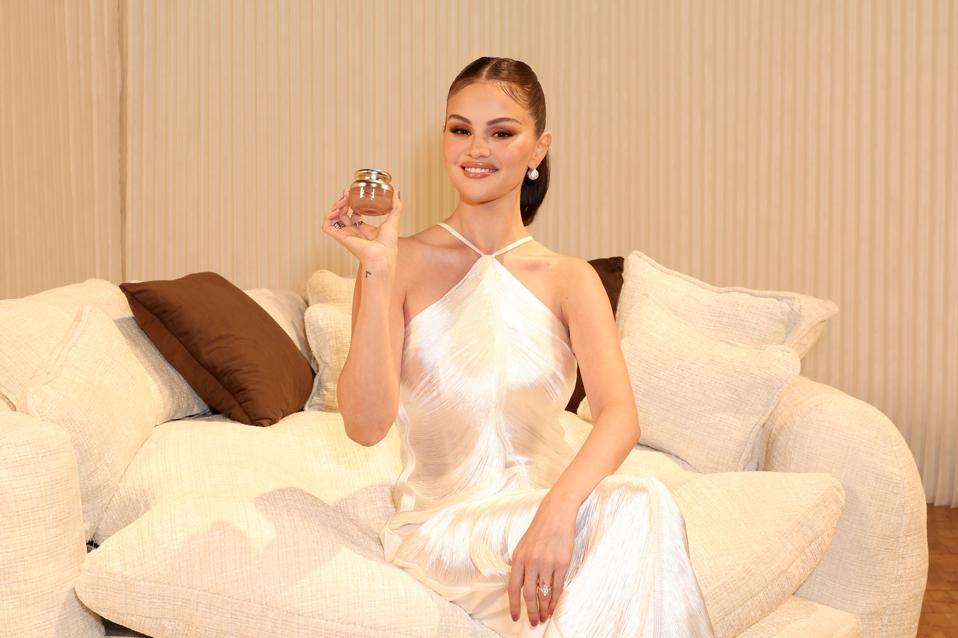
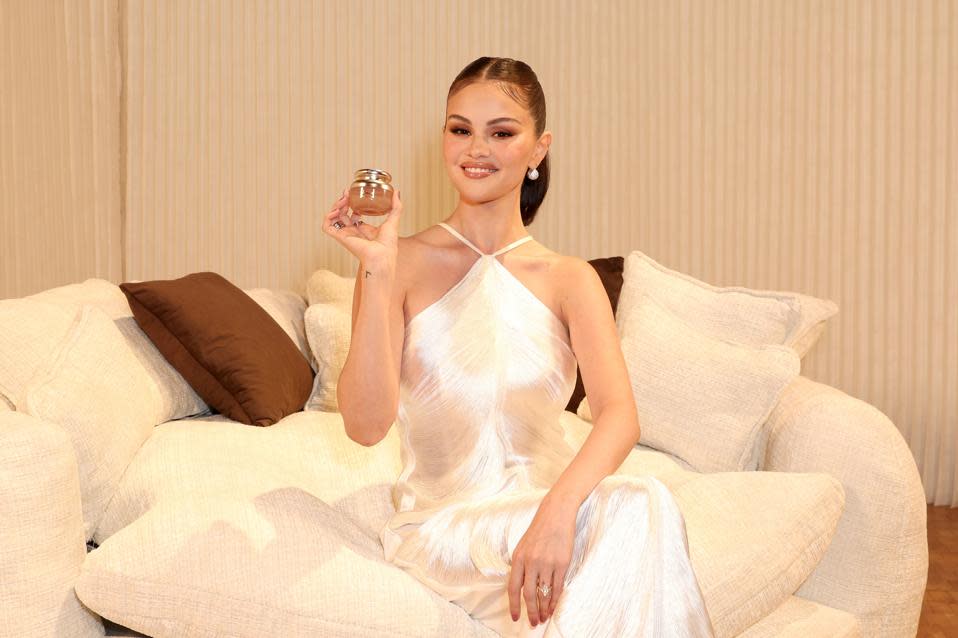
SANTA MONICA, CALIFORNIA – AUGUST 07: Selena Gomez attends Rare Beauty’s Rare Eau de Parfum Launch Party at Santa Monica Post Office on August 07, 2025 in Santa Monica, California. (Photo by JC Olivera/Getty Images for Rare Beauty)
Getty Images for Rare Beauty
The Bologna Fair District hosted the 57th edition of Cosmoprof Worldwide Bologna this week, drawing 255,500 operators from more than 150 countries. The numbers make a straightforward case: beauty is one of the most resilient consumer categories in the world, and the technology being built on top of it is accelerating faster than investor allocations have reflected.
According to Statista, the global beauty and personal care market is on track to generate $667 billion in revenue in 2025, a figure that puts the category ahead of most software verticals that venture capital has historically prioritized.
AI applications within beauty are growing faster than the broader category. The AI in beauty and cosmetics market was valued at $2.7 billion in 2023 and is projected to reach $16.4 billion by 2033 at a compound annual growth rate of nearly 20%, according to Market.us. Grand View Research puts the broader beauty tech market, covering AI, AR, IoT, and connected devices, at $66 billion in 2024 with projections of $173 billion by 2030 at a 17.9% CAGR.
The global SaaS market was valued at roughly $315 billion in 2025. Beauty tech, spanning hardware, formulation science, personalization platforms, and AI, is growing faster and carries consumer loyalty that pure software rarely achieves.
Venture capital flows into beauty have been uneven. The sector peaked at $3.3 billion in 2021, then pulled back. Through July 2024, beauty attracted $438.8 million in VC, with institutional funds demanding unit economics and recurring revenue before deploying. The technology-enabled subsector has held up better than the category overall.
L’Oreal’s venture arm, BOLD, has been among the most active corporate investors in beauty biotech. In 2025, BOLD participated in a $20 million round for Debut Biotechnology, a San Diego-based company using AI and synthetic biology to discover novel skin longevity ingredients. BOLD had led Debut’s $40 million Series B in 2023. The company’s proprietary datasets now achieve 99% predictive consistency, surpassing public benchmarks, and Debut was named one of TIME100’s Most Innovative Companies of 2025.
In April 2024, Estee Lauder Companies and Microsoft announced an AI Innovation Lab, powered by Azure OpenAI Service, to accelerate development across more than 20 prestige beauty brands. That same year, elf Beauty acquired Hailey Bieber’s Rhode for $1 billion, and L’Oreal took a majority stake in British skincare brand Medik8.
Skincare leads deal volume. According to DC Advisory’s Global M&A Beauty Report, 10 of the 27 beauty transactions completed globally in 2025 year-to-date were skincare deals. South Korea saw 18 deals worth $1.6 billion in 2024, with Morgan Stanley Private Equity’s acquisition of K-Beauty brand Skinidea among the largest.
Trade shows are leading indicators for investment flow, and Cosmoprof Worldwide Bologna tracks the industry’s technology shift closely. The 2026 edition drew over 3,000 exhibitors from more than 70 countries across the full supply chain, from raw materials and packaging to finished product and professional services. A dedicated Beauty Tech area showcases AI-enhanced retail, personalization platforms, and diagnostics tools.
Among this year’s exhibitors: becon, a Korean AI diagnostics company featured in the Seoul Business Agency’s curated booth, offering AI-powered skin and scalp analysis. Its presence reflects the K-Beauty wave that venture investors are actively chasing.

Anastasia Soare, the “Eyebrow Queen” and founder of Anastasia Beverly Hills
Mateja Bušić, founder at https://hairbyadeline.com/
On March 28, Anastasia Soare, founder of Anastasia Beverly Hills, joined the Cosmetics Stage for a session on building a global brand from a single proprietary technique. and won the life achievent award. The iconic entrepreneur pioneered the “Golden Ratio” eyebrow method, the kind of defensible intellectual foundation that early-stage investors now look for: methodology with brand loyalty and platform potential built on top.
Enrico Zannini, General Manager of BolognaFiere Cosmoprof, described the 2025 edition as a showcase of “the most impactful trends, from sustainability to the demand for products that cater to emerging consumer clusters, from wellness-focused solutions to the influence of new technologies and artificial intelligence on product experiences.”
Trade shows surface category momentum before it shows up in fund returns, and the 2026 edition of Cosmoprof made several shifts explicit. The CosmoTalks program, which convened over 70 speakers across market analysts, brand executives, and trend forecasters, organized its sessions around five axes: AI acceleration, wellness and longevity, sustainability and ethics, the digital-human connection, and global market intelligence. Each reflects a category where investor capital is already moving.
Fragrance was the most prominent structural shift on the show floor. According to BolognaFiere Cosmoprof’s official 2026 report, fragrance has become one of the most resilient and aspirational pillars of the beauty market, with strong premiumization trends and consumers increasingly treating scent as collectible and identity-driven. Fragrances are projected to be the fastest-growing sub-category in mass beauty in 2026, growing at 11%, per Euromonitor International data cited at the show.
Longevity was a second major thread. Products targeting long-term skin and hair health, rather than immediate cosmetic effect, drew significant floor space and CosmoTalks session time. This directly maps to the biotech investment theses gaining traction with VCs: science-backed actives, clinical validation, and ingredient IP rather than formulation commodities. Debut Biotechnology’s AI-driven discovery of ingredients targeting the 14 hallmarks of aging is a direct expression of the same logic.
The mass-prestige convergence was a third consistent theme. Circana data cited at the show showed US mass beauty sales growing 4% to $34.6 billion in the first half of 2025, outpacing prestige, which grew 2% to $16 billion. Larissa Jensen, SVP and Global Beauty Advisor at Circana, noted that only 14% of US beauty buyers believe higher prices indicate better quality, a signal that efficacy at accessible price points is now the primary purchase driver.
Sustainability pressure on the supply chain was visible throughout Cosmopack, the fair’s dedicated supply chain salon. Quantis, which advises global beauty brands on science-based sustainability targets, presented its Make Up the Future 2026 Report at the show, framing sustainability as a core business risk and competitive differentiator rather than a compliance exercise.
Geographic diversification was a fourth signal. The 2026 edition welcomed new national pavilions from Saudi Arabia, Belgium, Portugal, and Hungary. The Cosmoprof website recorded a 53% increase in new leads from Asia and a 23% increase from the Middle East ahead of the show, per BolognaFiere’s own data. The show was deliberately scheduled after Ramadan to maximize MENA participation, a deliberate commercial decision that reflects how seriously the organization is treating emerging market growth.
Firms building positions in beauty tech span the full risk spectrum. Forerunner Ventures, an early backer of Glossier and Curology, focuses on community-led commerce. Imaginary Ventures targets digital-first consumer brands. L Catterton has deployed across mass and prestige tiers. Unilever Ventures, whose portfolio includes Trinny London and True Botanicals, sharpened its focus on the wellness-beauty overlap after its $1 billion acquisition of Nutrafol in 2022.
Beauty brands with technology differentiation command better unit economics, stronger retention, and more defensible competitive positions. AI-powered personalization captured $620 million of the $1.8 billion deployed into New York beauty tech deals in 2025, according to Ellty, with clean beauty and retail technology taking the rest.
The Asia-Pacific region is the fastest-growing market for beauty tech, with a projected CAGR of 21.8% through 2030, per Grand View Research. India’s beauty market, sized at $28 billion and growing at 10% annually, has attracted more than $3.8 billion in private equity since 2020, per DC Advisory.
Beauty has tripped up investors who applied SaaS-style frameworks to a physical, sensorial, and social category. The brands with the strongest returns, Anastasia Beverly Hills, The Ordinary, Glossier, built loyal communities before distribution. Technology is now coming in through formulation, diagnostics, personalization, and supply chain, rather than through marketing.
The more durable investment targets, visible throughout the Cosmoprof ecosystem, are in infrastructure: ingredient discovery platforms, AI diagnostic tools, B2B formulation services, and supply chain transparency. These have recurring revenue structures and enterprise buyers, financial profiles that institutional investors can underwrite against a clear exit path.
Beauty trends cycle fast. Ingredient science, personalization infrastructure, packaging/sustainability trends and supply chain software do not. That distinction is what separates the beauty bets likely to return capital from those chasing a TikTok moment.