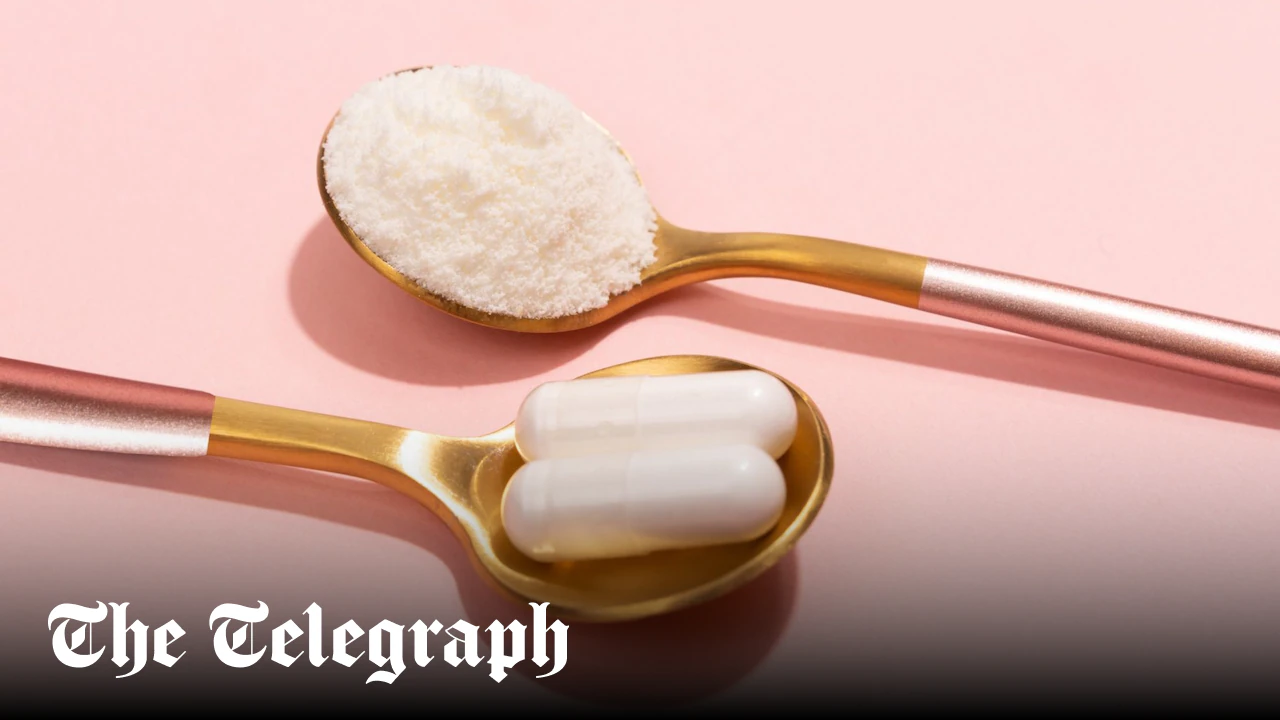
“Does collagen actually work?” This is a question I am asked on a weekly basis from friends who, like me, are around 40 and spotting the first proper signs of ageing. The short answer is – it’s complicated, but it now seems we’re on to a more promising answer. In a new study by researchers at the Anglia Ruskin University, in 113 trials involving 8,000 patients, it was found that collagen supplements taken over a long period of time do indeed boost the skin and joints, as well as providing improvements in skin elasticity and hydration (although it does not significantly affect skin roughness).
It’s the point about improved signs of skin ageing that I’m interested in exploring. Collagen production declines as we age, which is why there are hundreds of powders, tablets and liquids on the market to help replenish collagen stores. However, the researchers also stated that collagen should not be seen as an “anti-wrinkle quick fix” but could be “a legitimate adjunct for skin ageing”.
I couldn’t agree more. No supplement is a magic pill that will prove more effective than the basics: a healthy, balanced diet, using good sun protection and avoiding smoking, which is a sure way to speed up the depletion of collagen in the skin. There is also not an infinite amount of collagen you can gain with all the supplements; you just want to maintain good levels.
But as an added extra, there are some excellent collagen supplements on the market, and I’ve tried many different ones over the past few years. But before I get on to some of my favourites, let’s cover some basics of collagen in case you’re new to the topic. Collagen is a protein naturally occurring in the body that is made up of a chain of amino acids, but because it is a large molecule, it cannot pass through the walls of the gut.