Key Takeaways:
Beauty is expected to be more resilient than luxury, supported by strong e-commerce penetration.Ramadan demand persists, but shifts toward value-driven, essential categories such as fragrance and skincare.In an uncertain climate, brands succeed by prioritizing cultural sensitivity, community, and quieter activations.
Ramadan is typically one of the busiest periods for beauty in the Middle East. But this year, a somber air settled over the season as brands navigated a complex emotional and economic landscape.
Since February 28, American and Israeli attacks against Iran, and the subsequent retaliation targeting US bases and allies, have left Gulf States in the crossfire. Canceled flights, closed stores, rising food prices, shipping delays, and suspended events have left many businesses and consumers in flux.
According to a recent Bernstein Research report, Bahrain has emerged as the most volatile market for store operations, followed by Qatar and Kuwait. Saudi Arabia’s retail scene remains largely uninterrupted, while malls in the UAE have stayed open despite absorbing the highest volume of Iranian missile and drone strikes of any nation in the conflict.
The luxury sector has been hit particularly hard, with Bernstein analysts estimating that regional sales in March will halve overall, largely due to disrupted tourist traffic and airport retail. Beauty will not emerge unscathed either, with The Chalhoub Group, Sephora’s Middle East operator, closing stores in Bahrain and operating on a voluntary basis in other markets in early March.
That said, beauty appears better positioned than luxury fashion to weather the storm.
“We need to consider that beauty has a significantly higher online penetration—sales online wouldn’t be negatively affected by lower traffic in-store; quite the opposite,” Luca Solca, Bernstein analyst and lead author of the report, told BeautyMatter. “Besides, if, because of fear of the war, people spend more time indoors, that means more time online, which would be conducive to more beauty consumption as COVID has shown.”
Why Ramadan Is so Important for Beauty
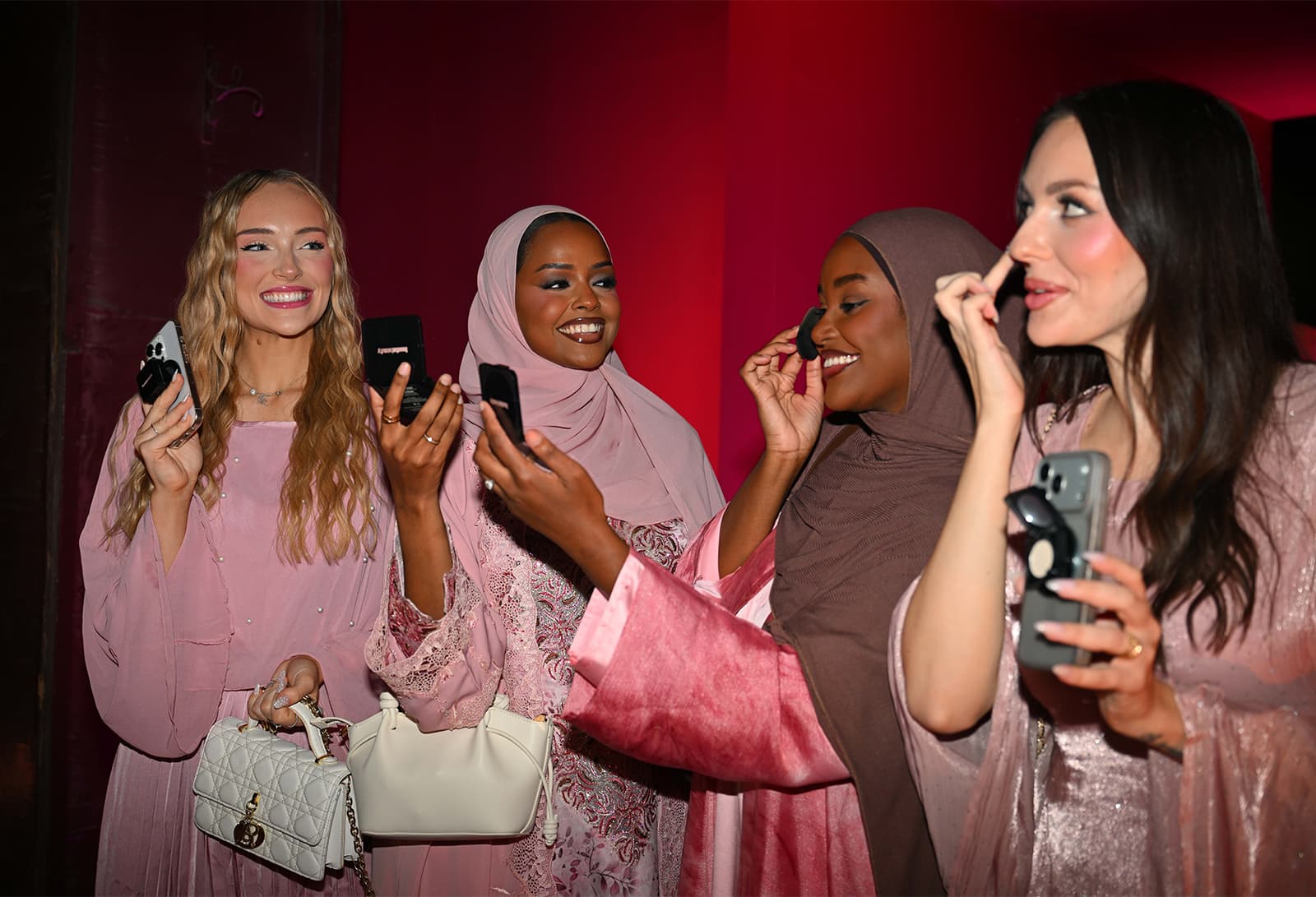
Despite these difficulties, beauty brands continued to show up for Ramadan—and for good reason. The Islamic holy month, when Muslims fast from sunup to sundown, and Eid al-Fitr, the celebration marking its completion, are both culturally and commercially significant. It’s a time of spiritual reflection, social gatherings, charity, and gifting, with beauty rituals often embedded into these routines.
In 2025, Ramadan sales in the UAE alone were estimated to hit $10 billion. Beauty products led growth at over 20% year over year, driven by rising self-care trends and gifting traditions, according to Redseer Strategy Consultants. In Saudi Arabia, spending jumped 34.7% to $4.6 billion in just the week leading up to Ramadan, according to data from The Saudi Central Bank.
In 2026, spending intentions remain positive but more selective. A survey by market research company Toluna (collected in late January, before the war) finds that half of UAE and Saudi residents expect to spend more on shopping than they did in 2025. However, the report notes that this momentum “is being channeled most clearly into practical and festive essentials rather than into a broad-based uplift across all categories,” with shoppers favoring fragrances and skincare over cosmetics.
In the wake of the war, this selectivity has deepened, with spending becoming even more deliberate.
“There is a noticeable move toward mindful consumption,” said Sayed Jaafar Shubber, a Bahrain-based marketer and co-founder of Octo Fusion Creative Hub. “People are spending more time researching the values of the brands they support. We are seeing less impulse buying and more intentionality, especially toward regional brands that feel closer to home.”
Creating Campaigns That Count
Amid these changes, what stays constant is beauty’s central role in grooming, gifting, and celebration. As a result, Arab beauty brands didn’t pull back from Ramadan marketing but pushed ahead, albeit with a more measured approach.
Standout marketing campaigns this year largely focused on deeper themes like self-care and ritual. For instance, Emirati luxury skincare brand Aïza partnered with local content creators to showcase how its products, rooted in Arab superfood ingredients, can be seamlessly incorporated into evening skincare routines and Eid morning preparations to restore hydration and glow.
Lebanese-founded skincare brand Antati similarly homed in on self-care, releasing the Ramadan Essential Pouch Set. This includes its new Safa Renewal Lip Oil, designed to nourish and restore the lip barrier, a useful product in a month of reduced hydration. The brand also shared a statement on Instagram in March on “choosing humanity over hostility,” a notable move at a time when many regional brands have avoided explicit political commentary.
“While Aïza focuses on improving dehydration from daytime fasting, Antati talks about reducing puffiness from long nights,” said Reiting Lee, founder of The Oriental Hybrid, an intercultural communication consultancy supporting Arab and Chinese brands. “This Ramadan, skincare is more important than ever as many consumers are experiencing breakouts from the stress of the war and worry about their loved ones. In countries like the UAE, Lebanon, and Bahrain, consumers are also required to spend more time at home for safety.”
Other brands like Kayali highlighted community and cultural connection. On February 18, the fragrance brand founded by Mona Kattan launched a month-long, exclusive Kayali Majlis (a majlis is a traditional space in Arab homes for hosting guests) experience at The Lana Dubai, which ran until March 19. The event drew inspiration from the brand’s Freedom Collection, featuring a curated menu based on signature notes along with shisha, backgammon, and live music.
“Kayali’s Majlis activation in Dubai is a smart example of how to show up during the month without turning it into a performance,” said Taqua Malik, Dubai-based founder and CEO of Freedomvisory Ltd., a consultancy dedicated to helping businesses navigate the Middle East. “Instead of leaning on the usual seasonal cues or pushing a loud product message, it centered on something that carries real weight here: hospitality.”
Meanwhile, Saudi makeup brand Moon glaze celebrated Ramadan with a launch at Sephora Middle East on February 6, which the brand said “could not have come at a more meaningful time.”
“During these difficult times, showing up for our community feels more important than ever. Beauty is a small but meaningful way to bring joy to everyday life,” said a brand spokesperson.