The Indonesian government is linking its flagship Free Nutritious Meals (Makan Bergizi Gratis/MBG) program, designed as a national economic stimulus and human capital investment initiative, with renewable energy and waste management objectives, integrating circular economy principles into large-scale public food distribution.
The National Nutrition Agency (Badan Gizi Nasional/BGN) has introduced mandatory waste management standards for all nutrition service units, following President Prabowo Subianto’s directive to accelerate the development of waste-to-energy (WTE) infrastructure across the country.
The policy connects Indonesia’s expanding nutrition program with broader environmental, sanitation, and energy transition goals.
Circular economy requirements for nutrition services
Under the new regulation, every nutrition service unit must implement comprehensive management of food waste, solid waste, and domestic wastewater based on circular economy principles.
The program targets more than 41.6 million beneficiaries, including school children, toddlers, and pregnant women, making operational sustainability a central concern as nationwide implementation expands.
BGN issued the regulation to ensure the program safeguards both public health and environmental sustainability. The move follows the temporary suspension of more than 700 service units earlier this month that failed to comply with newly enforced sanitation and waste management standards, signaling stricter operational oversight.
Dadan Hindayana, Head of BGN, emphasized that sanitation compliance is essential to maintaining program credibility and health outcomes.
“This regulation is important to protect public health, prevent environmental pollution, and ensure proper food hygiene and sanitation,” Hindayana said in a press statement on March 20, 2026.
Facilities are now required to maintain waste monitoring systems, including wastewater quality testing at least once every three months to meet national sanitation standards.
National push to accelerate waste-to-energy projects
The regulation forms part of a broader national strategy to address Indonesia’s chronic urban waste challenges while expanding renewable energy capacity.
On March 25, 2026, President Prabowo Subianto invited Rosan Roeslani, Minister for Investment and Head of the Daya Anagata Nusantara Investment Agency (Danantara), at his private residence in Hambalang to discuss accelerating WTE project implementation.
According to Cabinet Secretary Teddy Indra Wijaya, the President has instructed ministries and regional governments to coordinate waste management solutions in major urban centers, including Jakarta, Tangerang, Bandung, Semarang, Surabaya, Medan, and Bali.
“President Prabowo wants the central government to immediately manage waste that has long remained unhandled: to clean it, remove it, and convert it into energy, particularly electricity,” Teddy said on March 25, 2026.
Turning food waste into energy resources
Launched in January 2025 to strengthen nutrition outcomes while stimulating domestic economic activity, the MBG program is increasingly evolving into a platform for technology-based waste management and resource recovery.
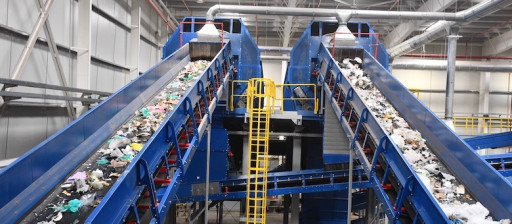
Organic and inorganic waste generated from millions of daily meals is expected to be converted into domestic energy resources, reducing landfill dependency while supporting Indonesia’s renewable energy ambitions.
Officials expect the integrated policy to address long-standing waste accumulation issues, strengthen national energy security, and create employment opportunities within emerging green industries.
Implementation will be jointly overseen by central ministries and regional administrations to ensure regulatory compliance, operational consistency, and long-term sustainability.