On Elizabeth Street in New York City’s Nolita neighborhood, perfume shoppers are spoiled for choice. There’s the long-running Le Labo store, the multi-brand boutique Scent Bar and an Aesop outpost. Many of the scents in those stores run at least $200 a bottle, if not more. But, as of June, shoppers can head to the Dossier store on Elizabeth Street to find versions of popular scents like Le Labo Santal 33 or Maison Francis Kurkdjian Baccarat Rouge 540 for under $50 a bottle.
When Dossier was first launched in 2019, it was one of a handful of so-called dupe perfume brands emerging on the periphery of the fragrance industry. Dossier and brands like Oakcha and Alt. Fragrances, which similarly sell lower-priced perfumes “inspired by” designer and luxury brands, were originally sold via DTC channels, with reviews largely driven by TikTok and Reddit users.
In subsequent years, as demand for perfume across the market has ballooned, dupe fragrance brands have exploded into the mainstream, entering major retailers, partnering with celebrities and influencers, and garnering endorsements in glossy magazines. And in Dossier’s case, the brand now occupies the same prime real estate as stores selling the original, triple-digit version of the scents that inspire its dupes.
“One of the main reasons why the ‘dupe perfume’ culture has grown so much is because the luxury brands increased their price by so much,” said Sergio Tache, founder and CEO of Dossier Perfumes.
The brand emerged at a time when Covid lockdowns propelled consumers to discover perfume online, Tache added. “PerfumeTok exploded, and Reddit was there and really educated the consumer base, in terms of what they should be buying or not,” said Tache. “You have an educated consumer base now, who understands what the brand tax is. And because there’s economic anguish, they are now looking for more affordable alternatives.”
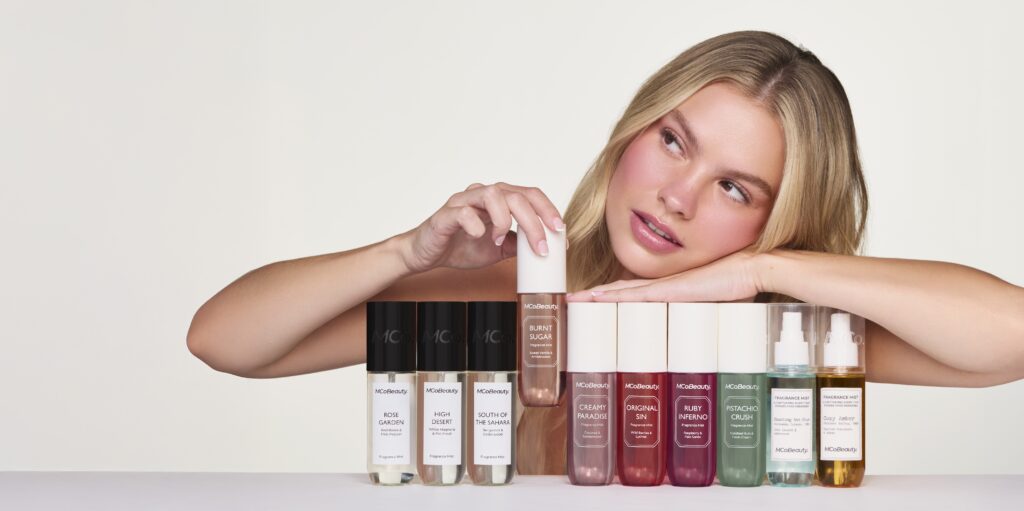
Dossier broke into Walmart in 2022. In 2025, it entered Target and CVS, opened its Nolita store and partnered with musician MGK on its first celebrity fragrance. Alt. entered Sally Beauty in 2025. In 2025, MCo Beauty, the Australian brand known for fragrance and makeup dupes, expanded its U.S. presence with a roll out to 1,200 Target doors. In 2024, Allure named Dossier’s Sage & Black Tea Renew scent, from the Originals collection, among its Best of Beauty winners.
“Places like Target having these brands, it’s ultimately about those retailers wanting to take a slice out of the dupe domination. And we are in a dupe domination,” said Lisa Payne, head of beauty at trend forecaster Stylus. “The fact that these brands are surviving — and thriving, in fact — is indicative of a more savvy generation of shoppers who understand, more so than any other, where the value of products lies, and how much of the cost is associated with marketing budgets, with packaging, with name and all of that.”
Dupe perfumes are evolving beyond copies of long-running designer and luxury hits like Dior Sauvage and Creed Aventus, too. Much of MCo’s fragrance mists source inspiration from the new wave of top perfume brands, like Kayali and Sol de Janeiro. According to Meridith Rojas, chief marketing officer of the Americas at MCo Beauty, MCo can launch a product from concept to shelf in as little as six months.
“Dupes were considered for a long time a dirty word,” said Rojas. “The reception into the mainstream has enabled many brands that are fragrance-specific — or that, like us, focus on dupes across beauty — permission to just be a bit more vocal. We don’t need to hide. And we don’t need to dwell in the shadows.”
But even with the open adoption of dupe perfume brands by major retailers and publications, within the fragrance industry, the term still elicits a certain hesitation — and in some cases, outright legal challenges. In 2024, Sol de Janeiro filed a suit against MCo Beauty alleging false advertising, trade dress infringement and unfair competition. Both Sol de Janeiro and MCo declined to comment on the lawsuit.
Much of the fragrance on the market, from mass to luxury, is made by a handful of fragrance houses, such as Givaudan, IFF, Dsm-Firmenich and Symrise; for some brands, advertising that their scents are made by perfumers employed by those companies is its own kind of marketing. Dossier and MCo declined to share who makes their fragrances or if they partner with a particular fragrance manufacturer.
“We don’t communicate the perfumers we work with,” said Tache. “It’s our secret sauce, and it’s something that even the perfumers don’t feel typically, historically, really comfortable sharing.” Dossier’s website, which lists transparency as one of its brand pillars, describes its scents as sourced from Grasse.
Givaudan and IFF declined Glossy’s request for comment on the topic. Sally and Target did not make representatives available for interview. When asked for comment, Dutch-Swiss fragrance manufacturer Dsm-Firmenich shared the following statement:
“The perfumery industry is increasingly dynamic and continues to evolve with new consumer habits, formats and brands. In this context, we assess where it makes sense to participate, and we do so with clear creative and integrity standards,” a Dsm-Firmenich spokesperson shared with Glossy via email. “We value the originality of creation and the trust built with leading brands and customers, and we will not pursue opportunities that could compromise that.”
Independent perfumer Joey Rosin was not surprised the major perfume houses would be circumspect on the issue of working with dupes.
“The big [comapnies] that are making the fragrances that people are duping are also making the dupes,” said Rosin, co-founder and perfumer at Hoax Parfum. “It’s uber-duber secretive. Of course, they’re not gonna say. But the perfume world is only so big. And if you really consider it, a big brand that’s making dupes, they’re going to big houses.”
As a perfumer, Rosin has mixed feelings about the ethics of dupes. While some dupes may, in fact, offer a more fairly priced version of what is ostensibly a cheap formula, those copies can also erase the craftsmanship and knowledge that professional perfumers possess in order to create such a scent
“I think, fundamentally, having access to fragrance is a good thing. And it would be great for people to be able to enjoy fragrances and express themselves through smell, and have access when it’s otherwise inaccessible because of too high a price point. And some brands, they’re cash grabs,” Rosin said. “But if you sat with me for all the hours that it took to make a single fragrance and the years that I’ve spent working — and I’m at the early stages of my career — I would be, on one hand, complimented, flattered, and completely and utterly mortified if someone was selling a dupe of one of my formulas.”
Despite how perfumers may feel about their work being copied, there exists little protection beyond trade secrets to prevent their work from being duped. Perfume formulas are not protected by copyright.
“When you’re thinking of patent, trademark or copyright, fragrance is particularly difficult to protect because those laws just don’t really lend themselves to the physical manifestation of what a fragrance is,” said Elizabeth Sbardellati, head of Greenberg Glusker’s Trademark Protection & Enforcement Group. “You can reverse engineer pretty much anything that has a chemical composition. You can smell it yourself, have someone in the industry — a nose or a perfumer — identify what scents are in there, and tinker around and create something that is very similar. And because the fragrance itself isn’t capable of, for example, being trademarked or copyrighted, there’s nothing illegal about that exercise.”
There is also nothing inherently illegal about comparative advertising, the tactic dupe brands use when they say their product is inspired by another brand, Sbardellati said. And while a successful Sol de Janeiro suit against MCo could embolden other brands to take more aggressive tactics against dupes, the specifics of the case wouldn’t necessarily set a clear legal precedent.
“The issue with these types of lawsuits, trade dress or trademark infringement, is that they’re always going to be very fact-intensive,” said Sbardellati. “At the end of the day, it really comes down to the likelihood of consumer confusion, the egregiousness of the copying, the similarity between the packaging, what exactly is being said on the website and how it’s being presented.”
Industry or legal misgivings don’t seem to impact the public’s growing predilection for dupes, however.
Dossier is the top-selling fragrance brand at Walmart and within the top three fragrance brands at Target, according to the brand. According to YipitData, Dossier achieved roughly $60 million in U.S. annual sales in 2025 and recorded 120% year-over-year sales growth as of February 2026. When MCo declared April 4 the inaugural “National Dupe Day” in 2025, it saw a 10,000% spike in sales on its website. According to Spate’s proprietary popularity index, social media and Google searches for Oakcha have grown 268.9% year over year as of January 2026. On TikTok Shop, the brand’s sales grew by over 125% year over year to $6.2 million in the first half of 2025, according to data from Charm.io.
Dupes are expanding globally, as well. Tache said Dossier is planning to expand its retail footprint in Mexico via Walmart, Ulta and Liverpool department stores. In February, MCo expanded to Canada via Walmart. And the demand for dupes is likely only to climb as the consumers’ desire for perfume outpaces their spending power.
“Millennials and Gen Z, who are the main target right now for the [fragrance] market, have less purchasing power. So they would like to have more fragrances, but at the same time, they can’t spend too much money on them,” said Costanza Sofia Maset, lead editor and strategist at the indie fragrance consulting firm Nunotes.
Maset noted that it’s not usually the diehard fragheads or most knowledgeable perfume fans who are buying dupe perfumes. But that won’t stop the dupe brands from attempting to sharpen up their image.
“If fast fashion taught us something, it’s that [the dupe sector] is not going to stop. It’s just going to try to remarket itself, to be perceived a little better, a little more quality,” said Maset. “But it won’t go away, because there is too much at stake.”
Similar to the fast-fashion sphere, where Zara recently tapped former Dior and Margiela designer John Galliano for a two-year creative partnership, dupe perfume brands are attempting to establish themselves as legitimate perfume innovators. Dossier, Alt. and Oakcha now all offer “originals” collections, or perfumes not explicitly inspired by existing scents.
“At the end of the day, what we want to do is to make great perfume. Whether that is Impressions or whether that is Originals, we want to be recognized as a phenomenal perfume house that makes great perfume,” said Tache. “Every year is a focus on Originals, but this year, in particular, the stuff we’re going to release is going to be very strong. … We’re very excited about 2026 for Originals.”
But even so, it’s the dupes that drive the sales. At Dossier’s Nolita store, the dupes of best-selling scents like Dior Sauvage and Le Labo Santal 33 get front-table display. And the brand’s best-selling scent? Ambery Saffron, inspired by MFK’s Baccarat Rouge 540.