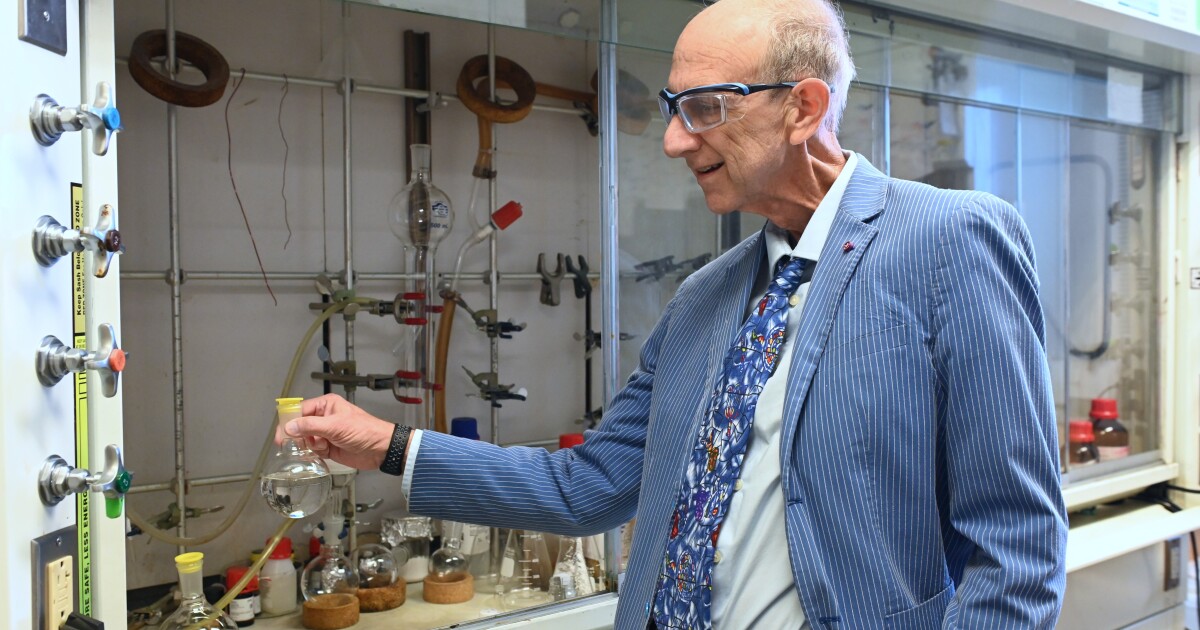
Researchers at the University of Texas at Austin and MD Anderson Cancer Center have developed a potential chemotherapy drug that may prompt the immune system to attack dangerous cancer cells as if they were infected by a virus — and they believe that other types of chemotherapy could do the same.
Jonathan Sessler, a chemistry professor at UT, began the process of developing the experimental drug known as Compound 1 a decade ago. The goal was to cause stress to cancer cells by causing a buildup of toxic molecules called “reactive oxygen species.” But over years of research, Sessler’s team began to observe something unexpected: mice injected with cancer cells that had been pre-treated with Compound 1 were forming an immune response. Their immune systems also remained primed to respond to future cancer threats.
“All of a sudden, cancer looks like a virus,” Sessler said. “We know how to attack viruses — we don’t know how to attack cancer very well.”
Cancer is good at hiding in plain sight from our immune systems, Sessler said. That’s because our systems have a built-in “self-tolerance” to prevent our cells from attacking each other and doing damage to healthy cells.
Researchers wanted to get to the bottom of how Compound 1 was overcoming that self-tolerance and causing the immune system to kick into gear. That’s where graduate student Matthew Levine came in. He completed RNA sequencing to isolate the various genes that were responding to the Compound 1 treatment and found that genes associated with a protein responsible for recognizing viruses were being activated.
“Our compound was triggering genes that are similar to what is activated when you have a virally infected cell, such as if you’re exposed to COVID-19,” Levine said.
Now that the team knows what to look for, the next step is to see if other chemotherapy drugs can have a similar effect, inducing the same kind of “viral mimicry” when calibrated to the right dosage.
Traditional chemotherapy treatments work by using large doses to target abnormally fast-growing cells. It can successfully wipe out cancer cells, but other fast-growing cells like immune and hair cells are collateral damage. UT chemistry professor Brent Iverson, who also collaborated on the research, said the team’s findings indicate that a “less is more” approach could potentially be effective in combination with established immunotherapies.
Courtesy of the University of Texas at Austin
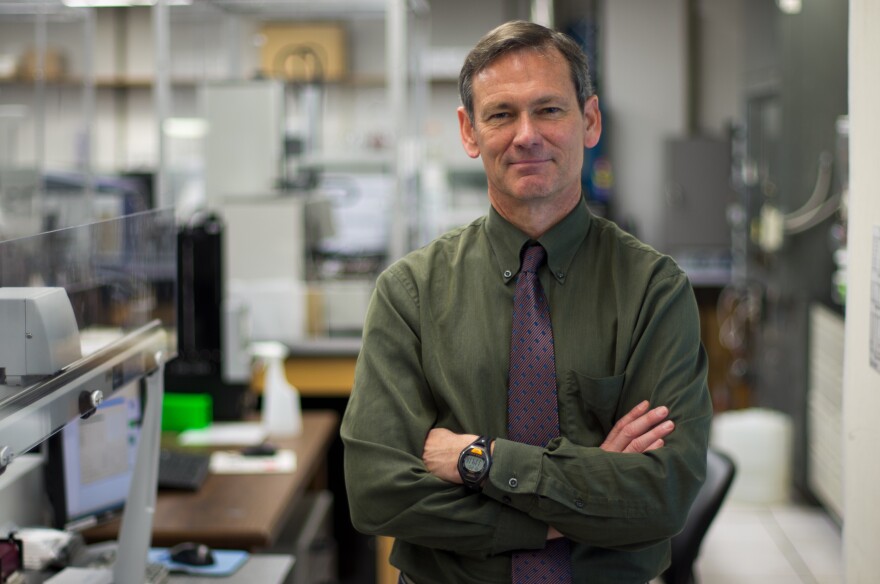
UT chemistry professor Brent Iverson poses for a photo in 2022.
“What we’re saying is, ‘Hey, wait a minute, if the immune system is a big part of the story, we don’t want to wipe out the immune system at the same time we’re killing the tumor cells,’” Iverson said.
Lower doses might also help to prevent the tendency for cancer cells to become resistant to chemotherapy over time, Levine added.
The team’s initial findings were recently published in PNAS, a peer-reviewed journal published by the National Academy of Sciences. But there is still considerable research and testing that needs to be completed before the team’s work could be introduced to real-world cancer patients.
“It’s not ready for clinical application, but we think years from now, it might be, and that’s why we want to start this conversation with the chemistry community and the oncology community,” Iverson said.
Sessler said the theory is an example of how the scientific process can work when interdisciplinary resources are deployed. In addition to the chemistry brains on Sessler’s team, contributions came from Lauren Ehrlich, a UT professor of molecular biosciences, and Ronald DePinho, a professor of cancer biology with MD Anderson.
As the team looks to test their “viral mimicry” hypothesis more broadly, Sessler said future collaborations, especially with clinical partners, will be key.
“This is the evolution of science in action,” he said. “The most interesting thing in the lab is not ‘Oh, it worked,’ or even, ‘Eureka!,’ it’s, ‘What is going on?’ That’s where the really good science starts.”
Support for KUT’s reporting on health news comes from St. David’s Foundation. Sponsors do not influence KUT’s editorial decisions.