March 27, 2026
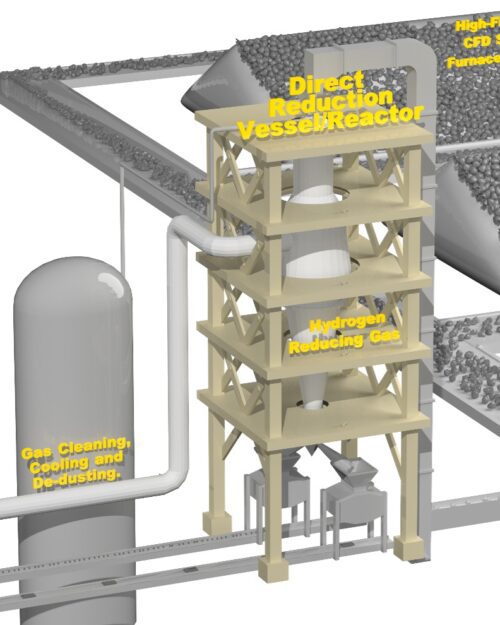
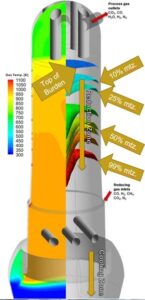 CIVS Research Engineer, Sam Nielson, presented CIVS DRI research at the AIST Scrap Supplements and Alternative Ironmaking Conference in Orlando, FL on March 9-11. The presentation titled “Numerical Simulation of Reducing Gas Composition Impacts on DRI Shaft Furnace Operation” is co-authored by CIVS Associate Director for Research Ty Okosun, Kevin Persad and Thomas Cash from Nucor Louisiana, Eugene Pretorius from Nucor Berkeley, and CIVS Director Chenn Zhou.
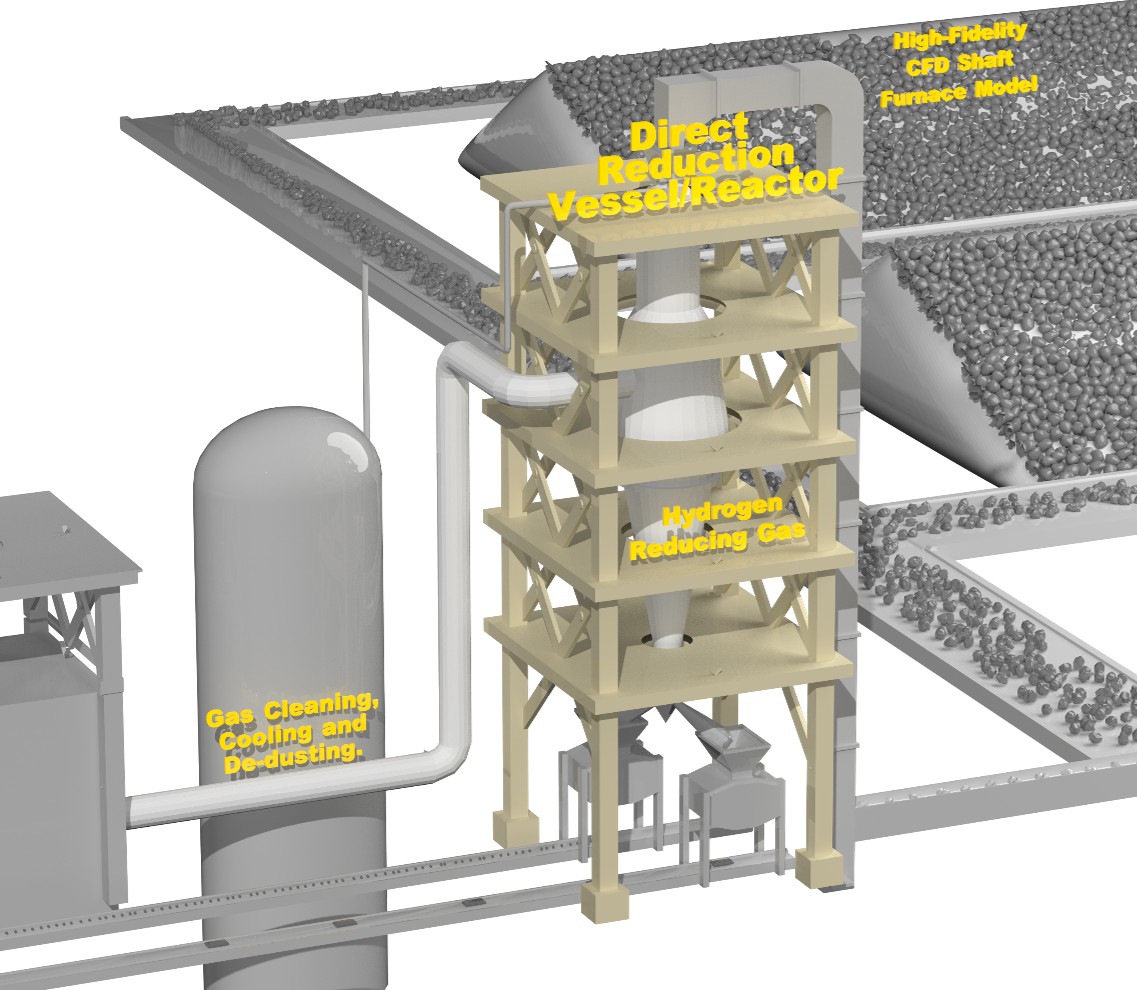
As the steel industry investigates processes for decarbonizing virgin iron production, the Direct Reduced Iron (DRI) process stands out as one of the most well-established processes with a path to reach zero CO2 emissions. Several researchers and industrial operators have begun exploring the concept of carbon-free DRI, which presents unique operational challenges. This paper discusses the development of a new Computational Fluid Dynamics (CFD) model of the DRI furnace using a Eulerian multiphase approach to handle the burden and gas flow, and the application of this model to investigate high and low productivity operations, as well as a test scenario for 100% H2 DRI operation. Typical industrial operating conditions are used for validation of the CFD modeling approach, with existing comparisons showing an average difference of 7% from industrial data. This study also explores how the location of reaction regions differ in the furnace with varying productivity and reducing gas composition, as well as the sensible and chemical heat energy demands for achieving target metallization with varying reducing gas compositions.
The 10th Scrap Supplements & Alternative Ironmaking Conference brought together industry leaders to share the latest innovations and strategic insights in the evolving field of alternate iron units (AIUs). The international forum highlighted emerging technologies, process and project development, and future directions critical to enhancing ironmaking efficiency beyond traditional scrap use. With a focus on advancements in alternative ironmaking technologies, the event explored innovations that support higher-grade steel production and decarbonization goals. This conference offered a unique opportunity to shape the future of ironmaking through shared expertise and collaboration.