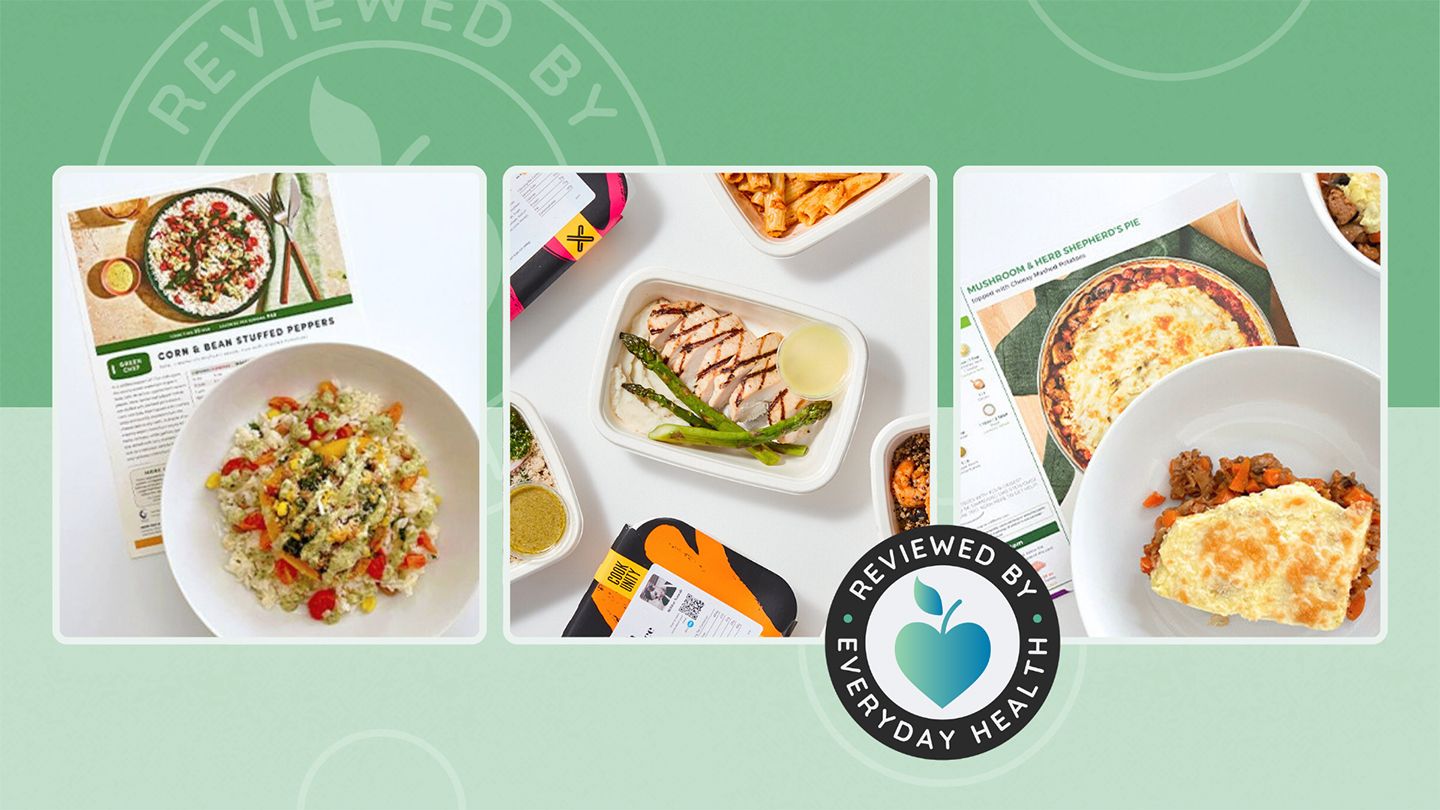
This service stands out for offering chef-crafted, prepared meals with over 50 menu items, including Asian-inspired, Mexican, Italian, bar food, and salad options. All CookUnity meals are single portions and oven-ready, and you can choose from menus including GLP-1, Pescatarian, Mediterranean Diet, Vegan, Low-Calorie, and Low-Carb. You can also tailor your selection around the type of protein, like beef, chicken, or salmon, or by type of cuisine, chef, or lifestyle, which, for example, includes better meal options for lunch or dinner. Examples of the entrées our tester, health writer Mary Sauer, tried included Sesame Salmon, Mission-Style Chicken Burrito, and Pesto Chicken Bowl. There is also an option to add on breakfast, cold-pressed juices, and treats.
Meals are freshly prepared and not frozen, arriving with instructions for oven or microwave heating; some meals (like salads) don’t need to be heated at all. While Sauer found most meals heated well, some items, like mashed potatoes and cauliflower rice, didn’t.
Macronutrient (protein, fat, carbohydrates) information is provided with all meals, although there is no micronutrient or fiber information available — nutrients that are important at any age but can be more so for seniors. According to Mitri, the most important nutritional elements to look for in meal delivery plans for seniors are adequate protein, fiber, and key vitamins and minerals, along with balanced portions of carbohydrates and healthy fats. She explains, “Protein is especially important for maintaining muscle, strength, and independence as you age. Aiming for at least 20 grams of protein per meal is a good general ballpark to look for.” Fiber is another essential nutrient that 90% of older adults aren’t getting enough of, which can negatively impact gut health and blood sugar control, she adds.
[2]
Also, to support bone health, meals should include key micronutrients, such as calcium and vitamin D.
Sauer reported that the portion sizes were mostly generous, and so was the amount of protein, although she felt some meals could have included more veggies. She noted that she intentionally chose several high-protein, low-calorie meals, and those meals felt very healthy. However, she observed that meals not specifically labeled as low-calorie were actually high-calorie (around 1,000 each), which could be beneficial for seniors who eat smaller portions and require more calories.
Read our full review of CookUnity.