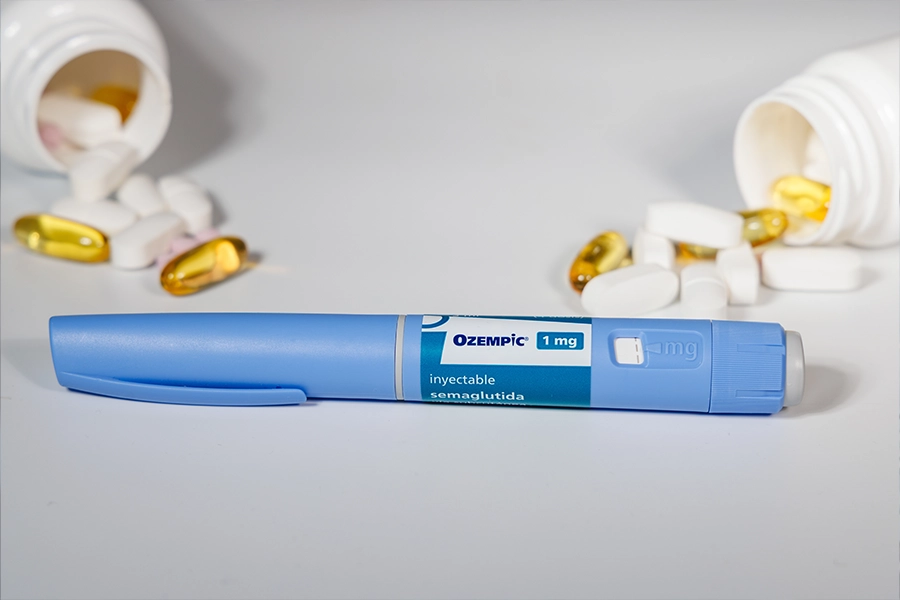
India is expected to see a GLP-1 boom as Novo Nordisk’s semaglutide patent has expired in the country this month. GLP-1s like Wegovy and Ozempic have made massive impacts in diabetes and weight loss treatments, especially in the US. The expiring patent marks a major moment for India’s pharma and nutrition sectors, as local drug makers have launched and are planning to bring cheaper alternatives, thereby increasing global access for millions suffering from chronic diseases.
Analysts are expecting over 40 local companies, including Alkem, Dr. Reddy’s, Lupin, Mankind Pharma, and Zydus, to launch over 50 brands in the weeks following the patent expiry. Prices are almost 70% to 90% lower than the original drugs. Among the lower-end prices is Natco Pharma’s ₹1,290 per month (~US$14), going up to Sun Pharma’s ₹5,200 per month (~US$55).

The cheaper drugs are most welcome in the country, as a study in The Lancet reports 101 million people are diabetic and 136 million are prediabetic in India. A Journal of Obesity review article points out that according to India’s National Family Health Survey-5, one in every four Indians has obesity. It predicts that the country may suffer a loss of almost US$440 billion, a 19-fold increase in obesity costs by 2060, without public health measures.
Nutrition Insight speaks with the India-based food, water, and air testing center Equinox Labs to learn how wider access to cheaper generics could impact eating patterns. With expertise in quality assurance and sustainability, its founder and CEO, Ashwin Bhadri, explains what this means for nutrition quality and the challenges generics would pose to regulation and compliance.
How could wider access to low-cost GLP-1s change eating patterns in India?
Bhadri: GLP-1s will reduce appetite; that is straightforward. The real risk is what replaces that consumption in a market like India.
 Ashwin Bhadri, founder and CEO of Equinox Labs.When people eat less without guidance, they don’t automatically eat better; rather, they move toward convenience. And in India, convenience often sits in categories with known gaps in hygiene, adulteration, and label integrity. We’ve tested packaged and ready-to-eat products across categories, and a significant proportion fail on labeling accuracy, contamination thresholds, or basic hygiene compliance. That’s the food environment people will lean on more heavily when their overall intake drops.
The risk doesn’t reduce with lower consumption. It concentrates. Every substandard input carries more weight when there are fewer inputs overall. That’s what stakeholders need to be watching: not just what people are eating less of, but what they’re relying on more.
What does increased GLP-1 use mean for nutrition quality?
Bhadri: Here’s what concerns me most: when people eat less, they reach for supplements, protein products, and fortified foods to compensate. And that category has some of the worst compliance rates we see in testing.
We’ve tested products across protein supplements and fortified foods where actual protein values have fallen short of label claims by 20 to 40%. Micronutrient fortification that exists on the pack but not in the product; ingredients are not fully disclosed. This isn’t occasional; it’s a systematic pattern.
For someone on GLP-1s, these products often become their primary nutritional source, not a supplement to it. If the base is compromised, there’s nothing else catching the shortfall. So the conversation cannot just be about nutrition; it has to include verification, testing, and label accuracy. Otherwise, we’re replacing calorie excess with hidden deficiencies.
If cheaper GLP-1 alternatives become more widely used, what issues worry you most from a public health perspective?
Bhadri: The biggest concern is what’s driving the cheaper price point, because in this category, cost reduction almost always means compromise somewhere in the chain.
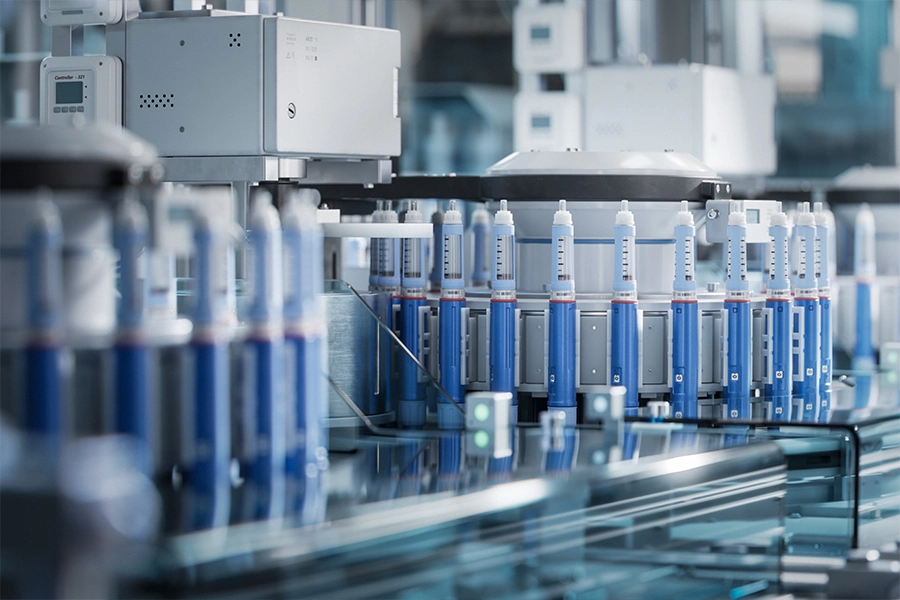 India’s GLP-1 generics slash prices up to 90% but risk nutrition shortfalls as consumers lean on possibly faulty supplements.These are highly sensitive peptide compounds. Small deviations in formulation, storage, or handling don’t just affect efficacy but also affect safety. And unlike a substandard food product where the harm is visible or traceable, a poorly manufactured GLP-1 alternative causes harm quietly, often attributed to something else entirely.
What worries me most from an audit standpoint is the combination of unvalidated manufacturing controls, the absence of third-party testing, and weak cold chain compliance. India still has significant last-mile gaps in temperature-controlled logistics. A product may leave the facility within spec and degrade completely before it reaches the consumer, and nobody in that chain is accountable because nobody is looking.
These failures are not theoretical. They are already happening. The problem is they aren’t being measured yet.
How could wider access to GLP-1 generics create challenges if regulation and testing do not keep pace?
Bhadri: Affordability without oversight is a risk multiplier, and we’ve seen exactly how this plays out in food safety.
When price pressure dominates, the label and the product begin to diverge. Without validated testing protocols, there is no mechanism to catch that divergence. In a drug category where dosing precision directly impacts health outcomes, that gap isn’t acceptable.
What compounds this further is the unregulated use. When there’s no medical supervision, no structured reporting, and no adverse event tracking, problems don’t surface until they’re already at scale. At Equinox Labs, we’ve audited enough facilities to know that compliance failures don’t happen overnight; they build silently across manufacturing, storage, and distribution, each step normalizing a slightly lower standard than the one before.
 As cheap semaglutide floods India, Equinox Labs flags adulterated proteins and cold chain failures.Self-declaration is not quality assurance. It never has been. And in a market that’s about to grow rapidly on the back of cheap access, relying on it is a serious mistake.
Where do you see the biggest gaps in ensuring these products are reliable?
Bhadri: Honestly, the gaps aren’t hard to find; they’re just not being addressed with the urgency they deserve.
The most foundational one is standardized testing. There are no widely enforced, validated methods for testing GLP-1 peptide compounds across labs in India. Without that standardization, results vary between labs, data becomes unreliable, and regulations built on that data have no real foundation. This isn’t just a minor technical gap but the base layer on which everything else depends.
The second is mandatory third-party audits. Self-regulation in a price-sensitive, high-growth market doesn’t work. We know this from food safety — the categories with the weakest audit culture are consistently the ones where quality failures cluster. Independent audits need to be non-negotiable, not aspirational.
And then there’s post-market surveillance, which is perhaps the most urgent and the most neglected. Once a product enters the market, it largely disappears from regulatory view. Random sampling, real-time testing, and active adverse event tracking need to exist as a functioning system, not as provisions on paper. Because by the time a problem becomes visible without that infrastructure, it’s already a public health event.