Campus rec leaders from Moraine Valley Community College and Georgia Southern University share what group fitness formats are doing well, which are declining and how they’re using data to keep students engaged.
From Zumba and Step to HIIT and circuit training, group fitness has long been a cornerstone of campus recreation. But when fitness trends move fast and student interests are always evolving, it’s important to pay attention to the formats filling rooms and the ones losing participation.
Campus rec professionals from Moraine Valley Community College (MVCC) and Georgia Southern University (GSU) explore their departments’ most popular classes and the formats losing their footing. Most importantly, they share the process behind deciding what to keep and what to retire, along with how their departments meet students where they are, not where they were.
An Overview of Group X
Since the COVID-19 pandemic, campus rec at MVCC has seen significant growth in its group fitness programs.
Erin Aguirre, the assistant director of Fitness and Wellness Services at the Health, Fitness & Recreation Center (FitRec) at MVCC, said many students gravitated toward the fitness floor over confined group fitness studios post-pandemic, leading to a decline in class participation.
“Following the shutdown, member engagement took time to recover,” said Aguirre. “However, over the past two years, we’ve seen a substantial resurgence in group fitness participation with multiple classes each day consistently reaching capacity.”
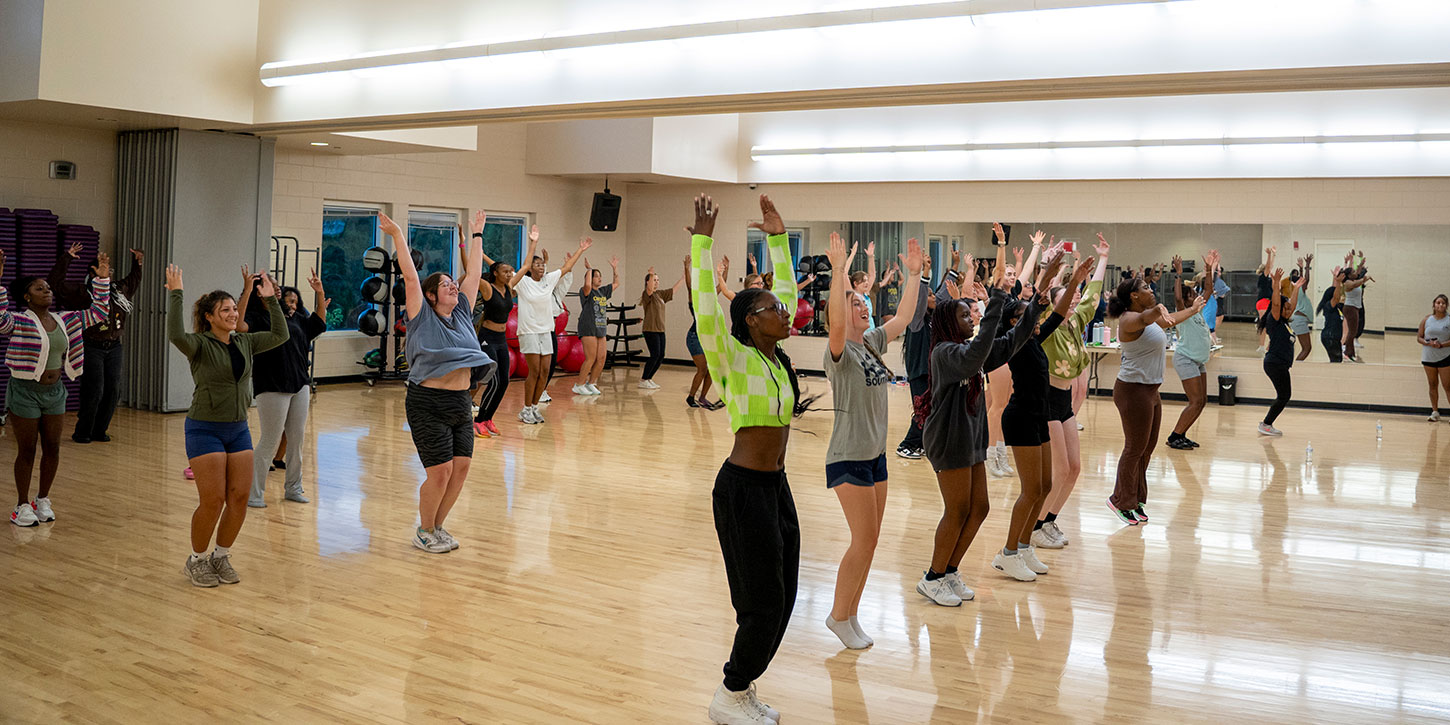 Image courtesy of Georgia Southern University
Campus Recreation and Intramurals (CRI) at GSU has seen similar momentum. Trish Evans, the director of Group Fitness for CRI, said the department has expanded from nine instructors to 32 in three years, a sign of just how quickly demand has grown.
“I think the reality set in last semester when we were going into finals week,” explained Evans. “We still had a waitlist to get into our classes and that just doesn’t happen around that time. The students are ready to go home for Christmas and are typically checking out, but our numbers were just holding so steady.”
What’s Working and What’s Not
While group fitness participation is strong across the board, some formats clearly resonate more than others.
High-impact cardio and traditional strength circuits have seen declining engagement at both MVCC and GSU, a trend Aguirre ties to injuries among long-term participants who gravitated toward lower-impact alternatives.
But where some formats are losing ground, others are surging. Low-impact, strength-based classes have seen the most significant growth at MVCC in recent years, fueling a rise in popularity for Pilates and weightlifting.
The top formats at GSU are similar; mind-body programming consistently draws the highest participation, whether yoga or Pilates.
Both Evans and Aguirre point to social media as a major driver of this shift.
“This popularity can be attributed, in part, to the increased accessibility of reliable information from credible sources on how to train effectively for overall health and strength,” explained Aguirre.
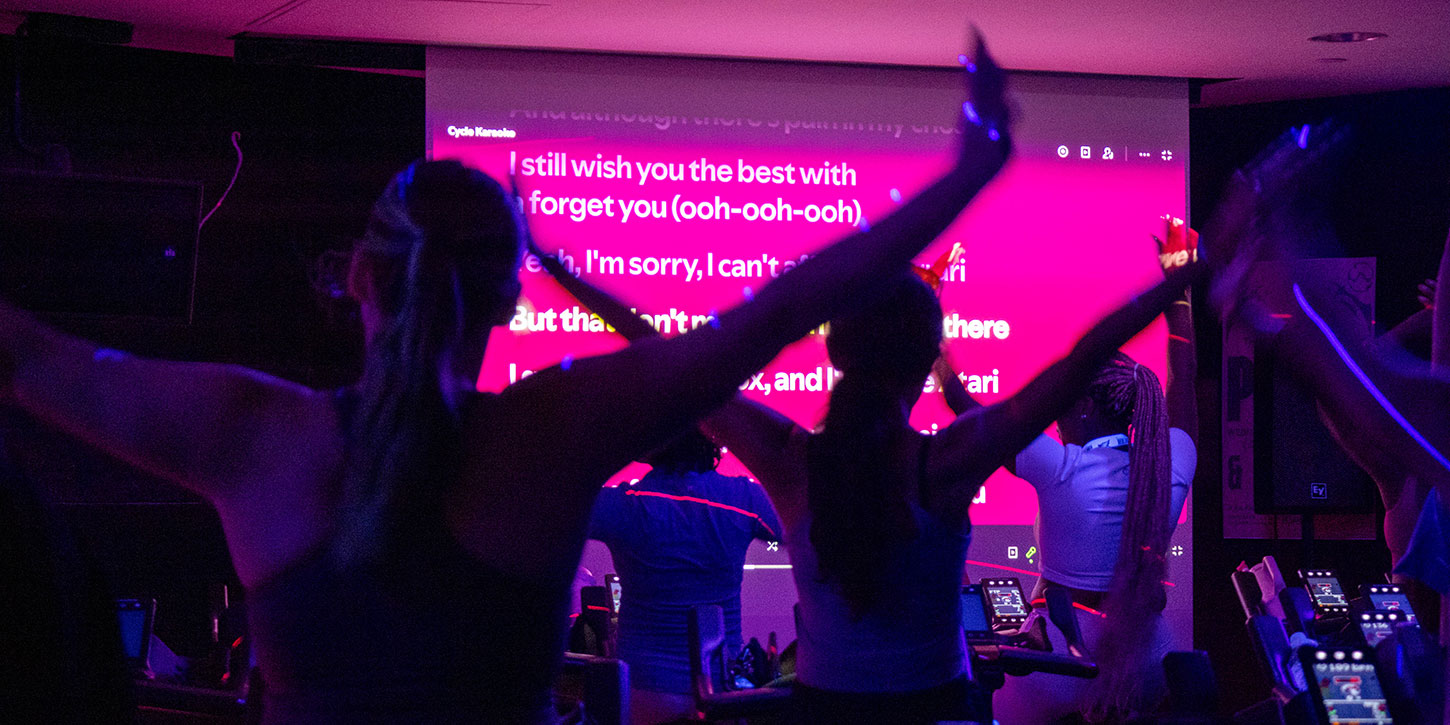 Image courtesy of Georgia Southern University
Meeting Students Where They Are
When it comes to deciding which programs to add and which to retire, the teams lean on a mix of quantitative and qualitative data.
At MVCC, member participation is the primary driver behind scheduling decisions.
“If a class underperforms during one schedule, we may offer it at an alternative time to assess demand,” said Aguirre. “However, if participation does not improve after two scheduling cycles, we evaluate whether the class should be discontinued.”
The department’s emphasis on finding times that work best for students has led it to think beyond traditional class schedules. Recognizing that not all students can attend during peak hours, MVCC has equipped its studios to support Les Mills virtual programming during off-peak times so members can participate at their convenience.
Evans takes a similar data-driven approach at GSU, running weekly statistics through IMLeagues — the department’s class registration software — to track not just how many students sign up, but how many actually show up.
If a class is struggling, Evans will work with the instructor and rethink the format to increase engagement.
“Our dance classes weren’t doing great but our instructors were phenomenal so we pulled out this special event,” explained Evans. “We put Just Dance up on the TV screens in our multipurpose room, and people were coming in off the track because they were hearing the music they all grew up with.”
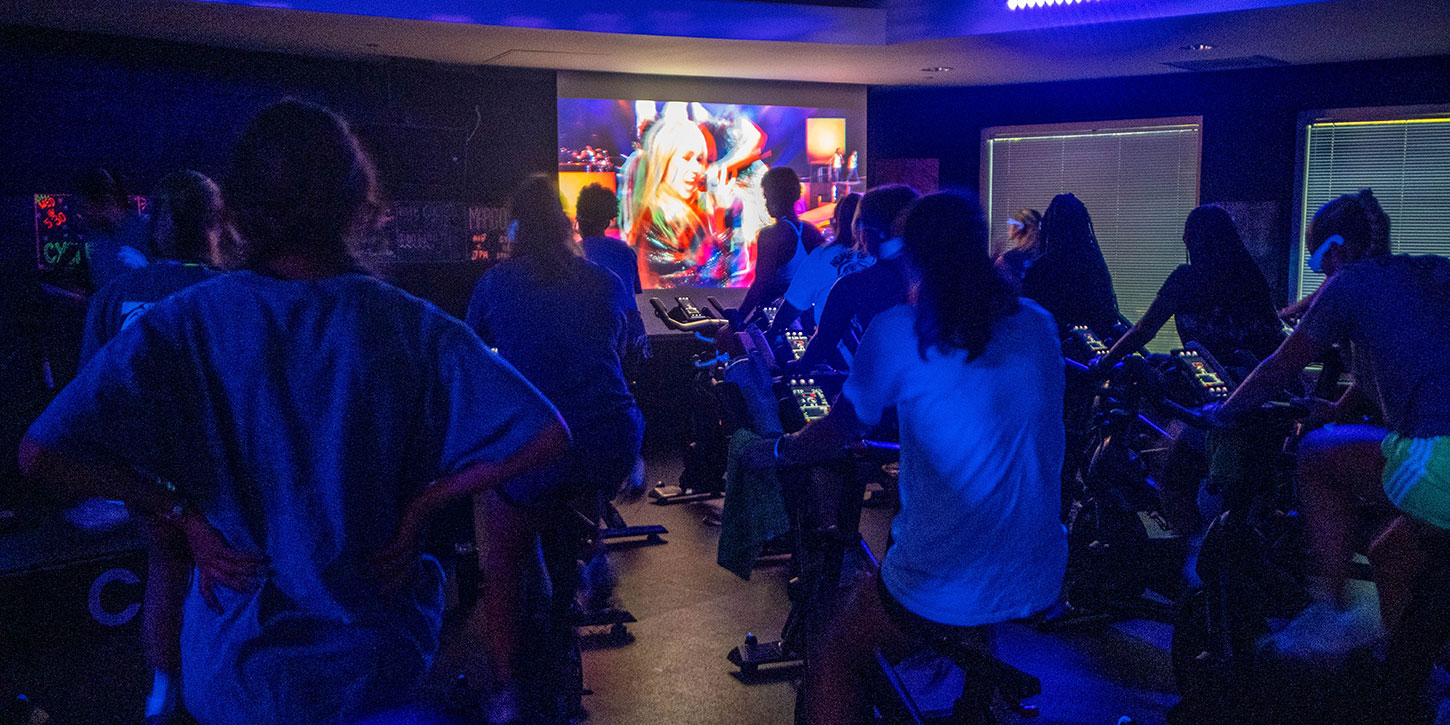
Beyond daily classes, the department has turned group formats into special events to keep students engaged and coming back. The Pedal and Popcorn series transforms a cycling class into a watch party with concerts projected on a large screen and has even evolved into a full themed series.
Strong marketing helped increase participation and engagement with both special events and everyday classes. From trending themes to social media campaigns, marketing is a key element of group programming at GSU.
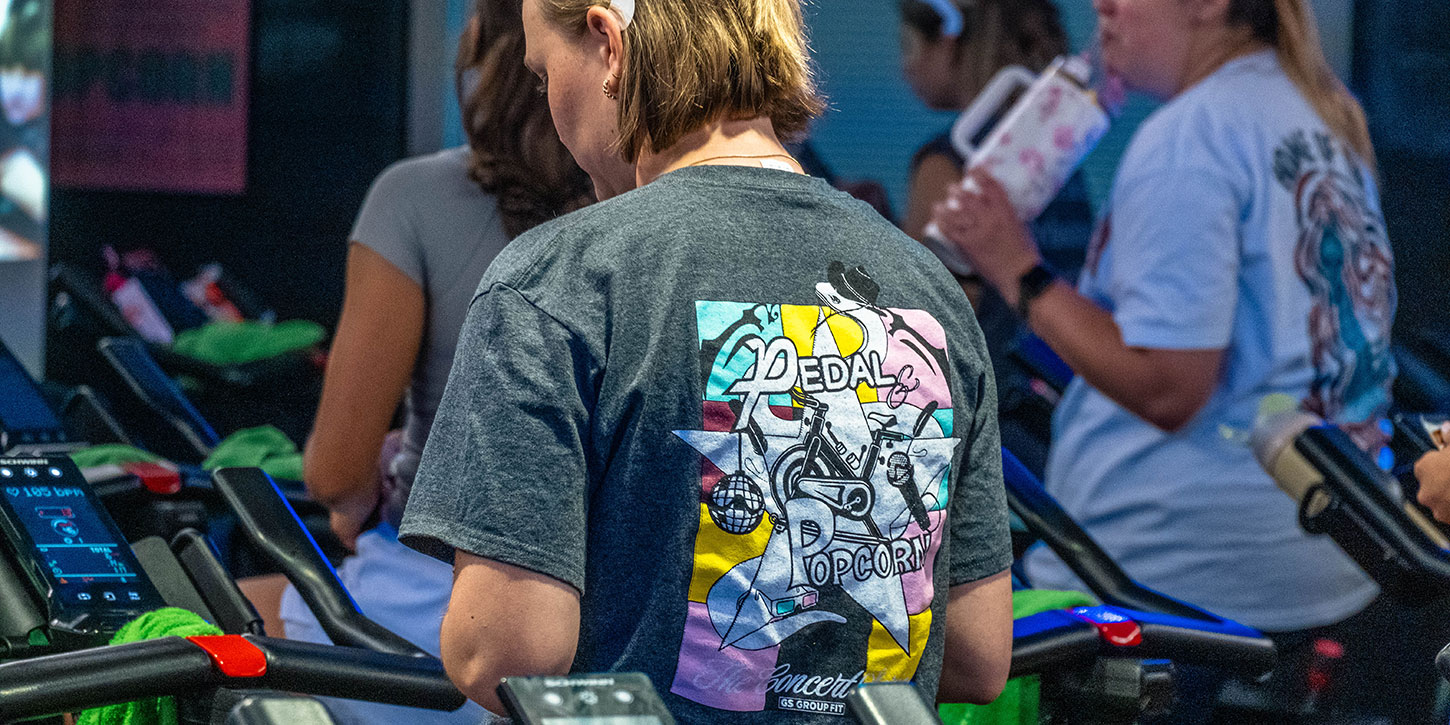 Image courtesy of Georgia Southern University
Rethinking Group Fitness: Advice from Campus Rec Pros
For other campus rec teams looking to rethink their group fitness offerings, MVCC and GSU offer tangible advice.
Since group fitness certifications can be both time-consuming and costly, Aguirre recommends utilizing formats like Les Mills and Zumba.
“These programs typically require a two-day training that concludes with a performance assessment,” said Aguirre. “Les Mills and Zumba provide structured music and choreography, streamlining class preparation for instructors.”
For Evans, her advice is twofold: listen to students and be willing to make a change.
Being aware of overarching trends helps teams stay engaged with students, but Evans said it’s equally vital to examine what’s working and what isn’t within your own programming and to improve upon it year after year.
“Be willing to listen and filter the feedback you may get when you ask how you could have done this better,” explained Evans. “Also be willing to say that just because you’ve done something a certain way for 10 years, it doesn’t mean it’s successful or doesn’t need to be revamped.”