In the third of a series on challenges facing Hong Kong’s growing autistic population, Tara Loader Wilkinson speaks with a mother of an autistic son who found a simple way to help boost acceptance of neurodivergent people, and a filmmaker who is giving them a voice.
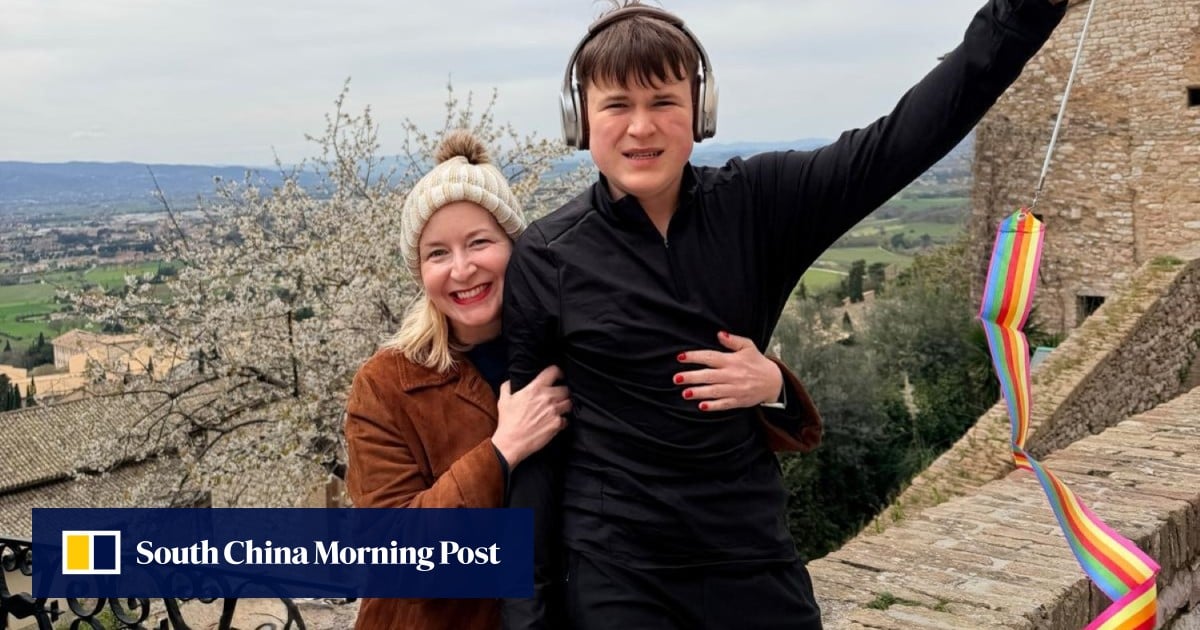
Sometimes the small things make the biggest difference. So it was with 12-year-old Alexander Talos Schaus, who was born in Hong Kong and diagnosed with autism at the age of three.
He is largely non-speaking; he communicates with limited words and through a tool known as an augmentative and alternative communication (AAC) device.
In his early years, Alex was frequently treated with disrespect and bullied for behaviours such as tapping, fidgeting or verbal “stimming” – making vocalisations such as humming or repeating words and sounds to self-regulate.
Things are different now.
“Alex now wakes up every morning with a smile,” says his mother, American-born legal industry executive Mary Schaus, who has lived in Hong Kong since 2004 and also has an older son, Kane.
Five years ago, she set up Talos Foundation, a non-profit group, to promote neurodiversity awareness and inclusion, after realising the need to help people recognise and understand invisible disabilities such as autism in Hong Kong.