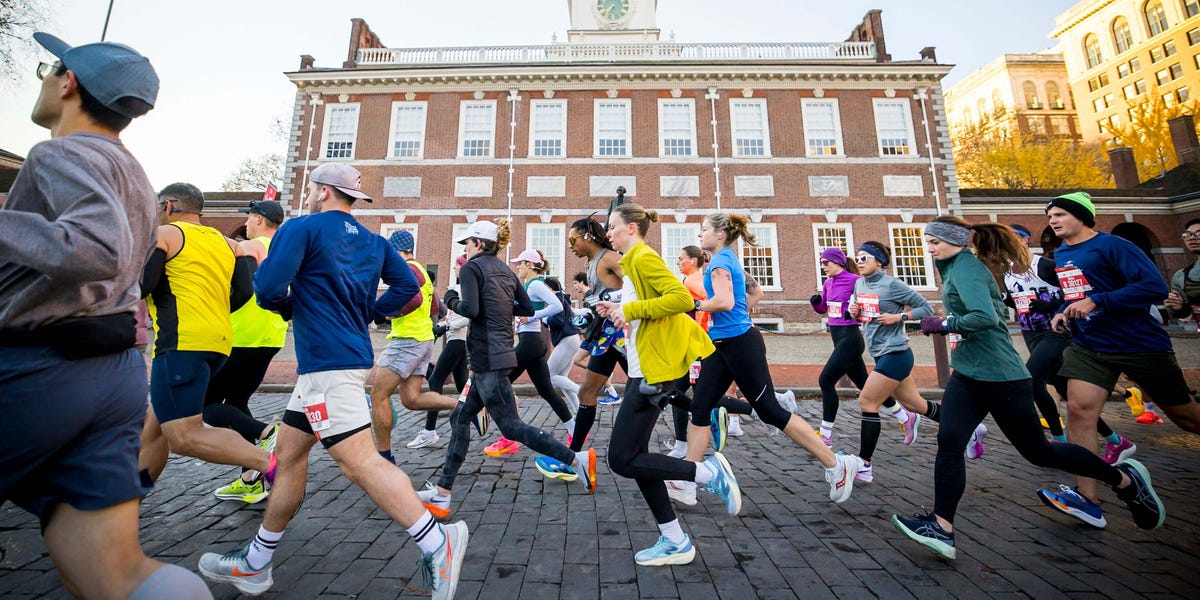
Not every runner will know what it feels like to hit the wall in a marathon—that moment when you feel like you can’t run any farther. But those who do know will tell you that it can make race day feel pretty miserable. Every step feels like a chore. Your motivation nosedives. And maintaining pace feels impossible.
Physiologically, hitting the wall (or bonking) is what happens when your body switches energy sources while running longer distances. “When you think about somebody hitting the wall in a marathon, it’s literally when they have run out of glycogen stores (which is the stored form of carbohydrates), or there’s no longer glucose (which is the carbohydrate that’s readily available in your bloodstream), so both of those are pretty much completely gone and your body has to shift to using fat as the primary source of fuel,” Kristy Baumann, marathoner, registered dietitian, and the owner of Marathon Nutritionist, tells Runner’s World.
Fat is a very slow, less efficient energy source, especially when you’re running at race pace, so your body has to slow down to make energy, she explains.
Related Links
Some runners have successfully avoided the wall by dialing in their pace, mentally breaking up the distance into smaller chunks, and even brushing their teeth midrun. But of all the tips and tricks you can try to avoid this phenomenon, there is one that reigns king, deserving most of your attention.
Nutrition can make a big difference when it comes to tackling those last few miles of your marathon, and it’s hard to believe until you actually experience it, Baumann says. Fueling for 26.2 miles is not just about eating more carbohydrates, it’s about eating the right amount of those carbs at the appropriate times, she explains.
If you travel to a race or even attend the race expo, those events can distract you from your normal routine, and therefore, keep you from meeting your nutrition needs (say, if you miss a meal or snack). Many runners underestimate how these little changes can lead to not eating enough carbs, Baumann says, and perhaps that’s why many people miss the mark when it comes to avoiding the wall.
How to Rethink Your Nutrition Needs
There are two steps you can take to avoid the wall during a marathon. Both of these steps involve eating more carbohydrates, your body’s main source of energy. “One, you need to do a proper carb-load, which is not just eating pasta the night before your race. It’s much more in depth than that,” Baumann says.
Carb-loading should start two to three days before your race, with a focus on simple, easy-to-digest carbohydrates, like white rice, pasta, and low-fiber veggies. Aim to eat 8 to 12 grams of carbohydrates per kilogram of bodyweight (about 4 to 5.5 grams per pound) per day. That’s about 600 to 825 grams of carbs for a runner who weighs 150 pounds. Baumann recommends starchy veggies, like sweet potatoes (without the skin as that packs a lot of fiber), butternut squash, or pumpkin because they contain a higher amount of carbs, making it easier to hit your goal intake.
If you were to stretch that across three meals and two snacks, Baumann says, that could mean having a bowl of oatmeal with fruit, brown sugar, and orange juice for breakfast. Then a grilled chicken sandwich with pretzels, applesauce, and a cup of fruit juice for lunch, and a stir-fry with sautéed veggies, protein, and white rice for dinner. Your snacks could include a fruit smoothie or even a carb-rich sports drink.
One of the biggest mistakes runners make in preparation for a marathon is simply adding more carbs to their diet, says Baumann, instead of cutting back on protein and fat, which can cause you to feel fuller and make it harder to eat more carbs throughout the day. To avoid this, focus on a smaller portion of protein and fat—for example, a smaller cut of chicken breast on your sandwich to make room for those snacks and other meals you have planned for the rest of the day.
Related Links
The second area of focus is fueling during the race, taking in carbs early and often to prevent your body from completely running out of glucose later. Carb-loading will only sustain you for about 90 minutes, Baumann says, but you don’t want to run out of energy stores before you fill up again. So start fueling at least 30 minutes into your race, and then continue taking in fuel in 30- to 45-minute increments.
Aim for 30 to 90 grams of carbohydrate per hour (or 15 to 45 grams every 30 minutes) in the form of energy gels or alternatives like high-carb sports drinks and chews. (You should practice this in training to figure out the best amount and timing for you!)
“Oftentimes runners will wait until they start feeling fatigued, or start feeling tired, but you have to be proactive and start taking gels, chews, or your carbohydrate foods [or drinks] before that happens,” Baumann says.
Yes, pace can affect whether or not you hit the wall; however, focusing on your energy needs is crucial. If you’re an experienced marathon runner who often struggles with this, you might benefit from teaming up with experts such as a registered dietitian who doubles as a run coach, so they can help you nail down what is derailing you and how you can better fine-tune your nutrition strategy.

Monique LeBrun is a health and fitness editor who is based in Easton, Pennsylvania. She covers a wide range of health and wellness topics, with a primary focus on running performance and nutrition. Monique is passionate about creating content that empowers runners to become the best versions of themselves. As an avid runner and parent, she loves spending time outdoors with her daughter, who often accompanies her on weekend runs as her personal mini run coach.