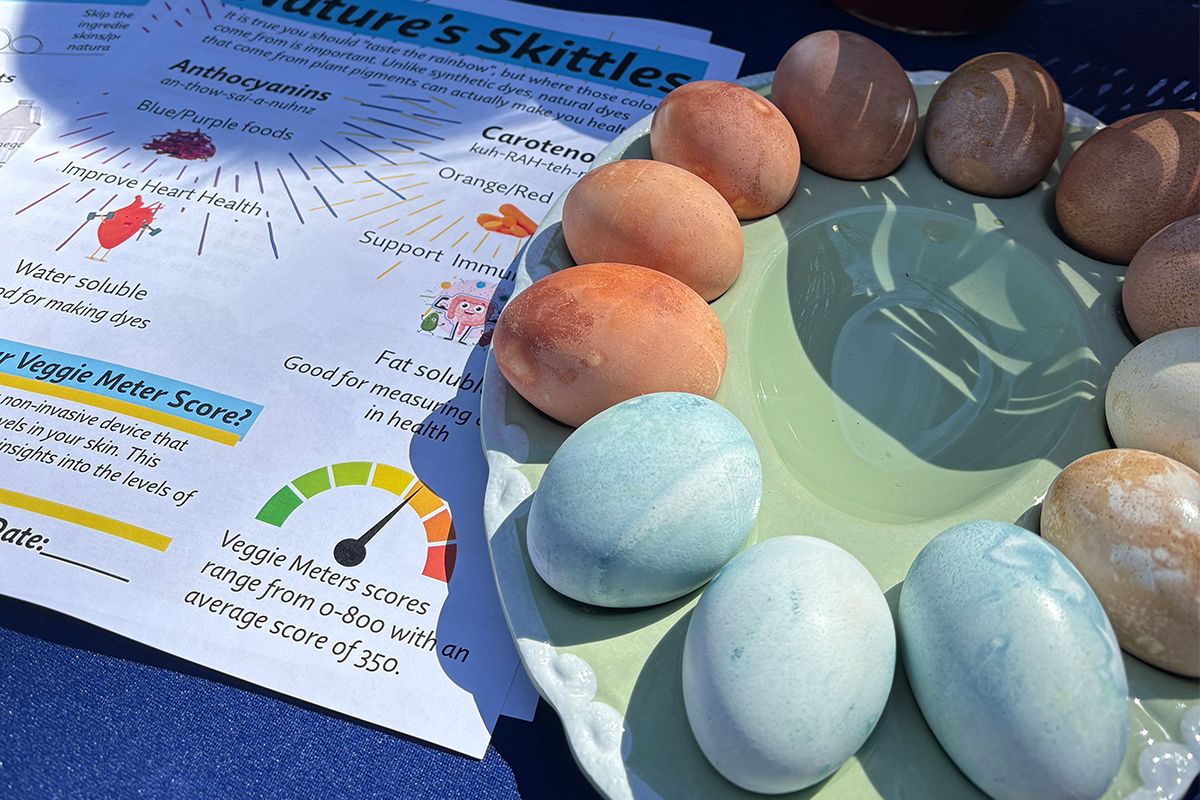
Dyeing eggs is an annual tradition for many families celebrating Easter, but many families would like to avoid using synthetic dyes.
The WVU Extension Family Nutrition Program had the opportunity to share information about the benefits of using plant pigments or natural dyes from fruits and vegetables to dye eggs during First Lady Morrisey’s Rhododendron Roll held at the State Capitol in Charleston on March 28.
“Dyeing Easter eggs is a fun family activity, so being able to share information on how to do that in a healthy way and on a budget was very timely,” Kristin McCartney, associate professor with the Family Nutrition Program, said.
The table featured displays of plant dyes made from vegetables, including purple cabbage, kale and peels from red and yellow onions. Families received a recipe for the dyes along with information on health benefits of anthocyanins and carotenoids — primary plant pigments. Reusable shopping bags shaped like carrots and a book featuring easy, budget-friendly vegetable recipes were also provided to families.
The event also offered the perfect opportunity to conduct carotenoid assessments using the Veggie Meter, a noninvasive device that allows the program to measure health changes that can result from participation in fruit and vegetable incentive programs.
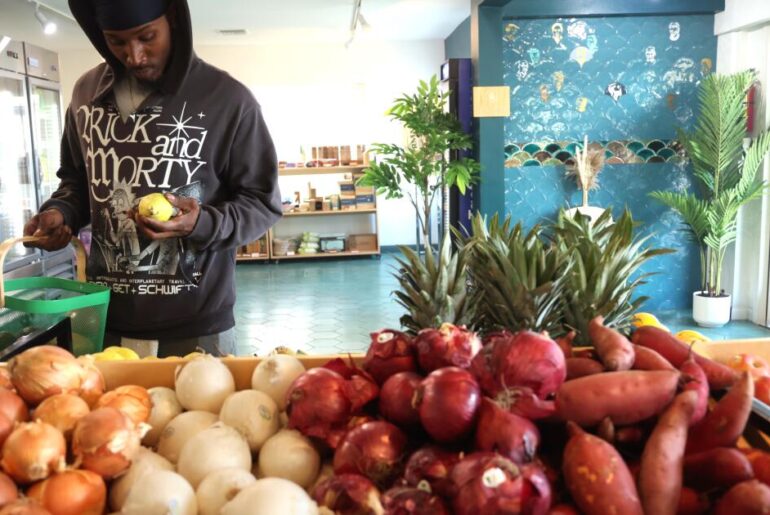
“The Veggie Meter is relatively new technology that uses a fingertip scanner to detect the level of orange, yellow and red pigments in the skin that come from eating brightly colored fruits and vegetables, such as bell peppers, carrots, pumpkin, sweet potatoes, spinach and kale. The more of these you eat, the higher your score will be,” Gina Wood, associate professor with the Family Nutrition Program, said. “We’ve seen scores increase significantly when people participate in prescription programs, such as FARMacy WV.”
West Virginia recently passed HB 2354, a landmark law banning seven synthetic dyes and specific preservatives in food and drugs due to concerns about the impact on children’s health and behaviors. While implementation of the ban is currently halted due to legal proceedings, the legislation has brought greater awareness about food dyes and their health impacts.
Faculty from WVU Extension and the Davis College of Agriculture and Natural Resources, both housed within the Division for Land-Grant Engagement, can be a resource for families looking for ways to grow, prepare and preserve foods to improve their budget and their health.