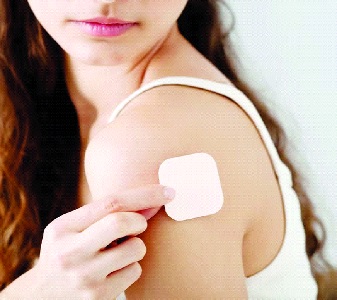
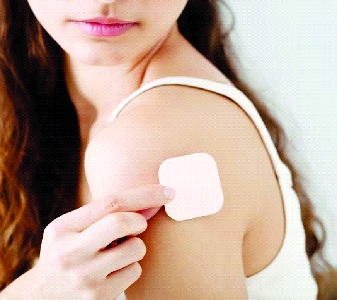

Peel and stick nutrient patches are the latest wellness trend on social media, marketed as an easy way to absorb nutrients without popping a pill. Unlike oral supplements, patch-based nutrients promise to directly enter the bloodstream, surpassing the gastrointestinal tract. Nutrient patches available in India are marketed for energy, sleep, immunity and multi-vitamins.
But are they really a breakthrough in the world of nutrition, where half the world is trying to figure out what works best for their deficiencies?
And do they live up to expectations? Are they true to the hype created by social media?
Research papers and experts suggest that the science behind this is not strong. The sticky patch’s science just doesn’t stick well. We explain why.
HOW DO NUTRITION PATCHES WORK?
Wellness patches claim to release a dose of vitamins and nutrients directly from your skin to your blood. These patches bypass the digestive system and liver metabolism.
And this delivery system creates a fanfare and, thus, popularity. Also, it’s appealing to those who may have difficulty swallowing pills.
However, nutrition specialist and RNA biologist Geetanjali Chawla at Shiv Nadar University, Noida, expresses serious doubts over their capacity for absorption.
“The skin is made to keep most foreign particles out and acts as a protective barrier.” Additionally, “everything that falls on the skin is not taken up in the bloodstream.” She explained how water-soluble vitamins (such as vitamin C) may not penetrate the skin. But fat-soluble vitamins (Vitamins A, D, E and K) may be able to penetrate the skin, but the amount that actually reaches the bloodstream may not be sufficient.
“When we take a vitamin pill orally, it enters our digestive system, and through the intestine it reaches our bloodstream by binding to specific receptors.”
But skin patches have a different system; we rely on the vitamin to cross the skin barrier and reach the bloodstream. Most vitamins are too large to pass through the skin, and much larger amounts are needed than what can pass through a patch.
“A patch cannot provide as much vitamin as a tablet can. The amount that does pass through the skin and reaches the bloodstream is probably not enough,” she explained. So even in cases when vitamins do pass through the skin, the amount in the patches and the amount absorbed are probably low. Also, because there is no data to understand how much a human body can absorb a nutrient from these patches.
Moreover, there are only two studies to date that have tested the micronutrient delivery via transdermal patches on human participants, and the results are not promising. In fact, future large studies are needed to understand the efficacy of multivitamin patches before they can be recommended.