Researchers have found that artificial sweetener consumption is not linked to increased risk across several major cancers.
That result narrows long-standing concerns while leaving open questions about what current evidence can actually rule out.
Links between artificial sweeteners and cancer

Across six earlier meta-analyses, pooled evidence from tens of thousands to millions of participants forms the basis for this finding.
At Guilan University of Medical Sciences, physician-researcher Ehsan Amini-Salehi compiled and evaluated those results, documenting risk estimates that consistently hovered near neutral levels.
Those values remained close to one across breast, pancreatic, stomach, and bladder cancers, indicating no meaningful increase in risk within available data.
Even so, the consistency of these near-neutral results rests on evidence that remains uneven in quality, requiring closer scrutiny before drawing firm conclusions.
Where one signal appeared
One narrow result did stand out: low intake tracked with a small drop in colon and rectal cancer risk.
That drop translated to a small difference, with people consuming low amounts appearing slightly less likely to develop the disease than nonusers.
Remove a few influential studies, though, and the protective pattern disappears, which tells readers not to mistake a fragile signal for proof.
Moderate and high intake showed no such benefit, so the most eye-catching number never matured into a reliable story.
Why certainty stays low
Low certainty runs through the paper because many earlier studies measured sweetener use in rough, inconsistent ways.
Some counted all artificial sweeteners together, while others tracked only diet drinks, making unlike exposures look deceptively similar.
The review also found wide variation in results across studies, especially for bladder cancer.
When the starting studies do not line up, a pooled answer can look firm while resting on uneven ground.
Counting all sweeteners
Counting every sweetener together may hide effects that belong to one ingredient rather than the whole category.
A French cohort of 102,865 adults linked higher overall sweetener intake, especially aspartame and acesulfame-K, with slightly higher cancer risk.
That earlier signal does not match the new pooled result, which suggests that sweetener type, diet pattern, or study design matters.
Anyone reading a headline about artificial sweeteners needs to ask whether it describes one compound or the whole bucket.
How labels can mislead
On store shelves, the phrase sugar-free often signals substitution, not the absence of intensely sweet additives in the ingredient list.
The Food and Drug Administration permits several of those ingredients in foods and drinks sold as sugar-free or diet.
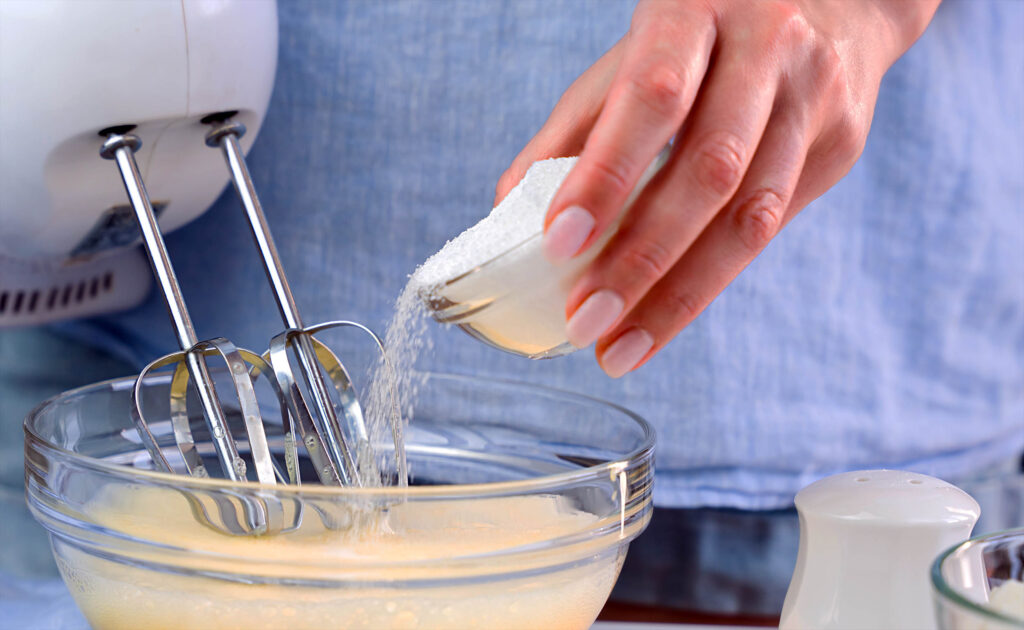
Because those compounds can be far sweeter than sugar, manufacturers need only tiny amounts to keep a product tasting sweet.
That marketing language tells shoppers something about sugar content, but it says very little about long-term cancer evidence.
Why bodies muddy links
Body weight and metabolic illness complicate these studies because many people switch to diet products after health problems start.
That creates reverse causality, a misleading pattern where illness changes behavior first, instead of behavior changing illness.
Obesity can raise insulin and chronic inflammation, which can damage tissue over time, so sweetener users may already carry extra risk.
For that reason, weak associations can linger for years without proving that the sweetener caused the harm.
What regulators still say
Regulators still treat most approved sweeteners as acceptable for use, even while one ingredient keeps drawing extra scrutiny.
In 2023, the World Health Organization reported aspartame as possibly carcinogenic to humans, but its risk panel kept the intake guideline unchanged.
That split happened because one group asked whether a hazard might exist, while another judged likely risk at usual intake.
Consumers hear both messages at once, which helps explain why public confidence keeps wobbling even after null cancer findings.
How history shaped fear
Decades before this review, early animal research linked some artificial sweeteners to bladder tumors and fixed the concern in public memory.
Later human evidence has not shown a clear overall bladder cancer increase from sweetener use.
That old scare still matters because people often remember the first warning long after the science changes.
The new paper speaks into that history, not by erasing concern, but by narrowing the places where a signal appears.
Artificial sweeteners and future cancer study
Future studies will need cleaner exposure records, longer follow-up, and clearer separation between individual sweeteners and mixed products.
Researchers also need more diverse populations, since the current evidence leans heavily on a limited set of regions.
A better next step would track what people actually consume over time, not just what they remember later.
Until that happens, the hardest question remains unresolved: whether any one sweetener carries its own cancer risk.
The new evidence makes one point clear: the broad claim that artificial sweeteners raise major cancer risk is not holding up.
Yet the same paper also warns that weak studies, mixed exposures, and unresolved confounding still keep the final answer out of reach.
The study is published in the European Journal of Medical Research.
—–
Like what you read? Subscribe to our newsletter for engaging articles, exclusive content, and the latest updates.
Check us out on EarthSnap, a free app brought to you by Eric Ralls and Earth.com.
—–