CAPE CANAVERAL, Fla. — The Artemis II astronauts have captured our blue planet’s brilliant beauty as they zoom ever closer to the moon.
NASA released the crew’s first downlinked images Friday, 1½ days into the first astronaut moonshot in more than half a century.
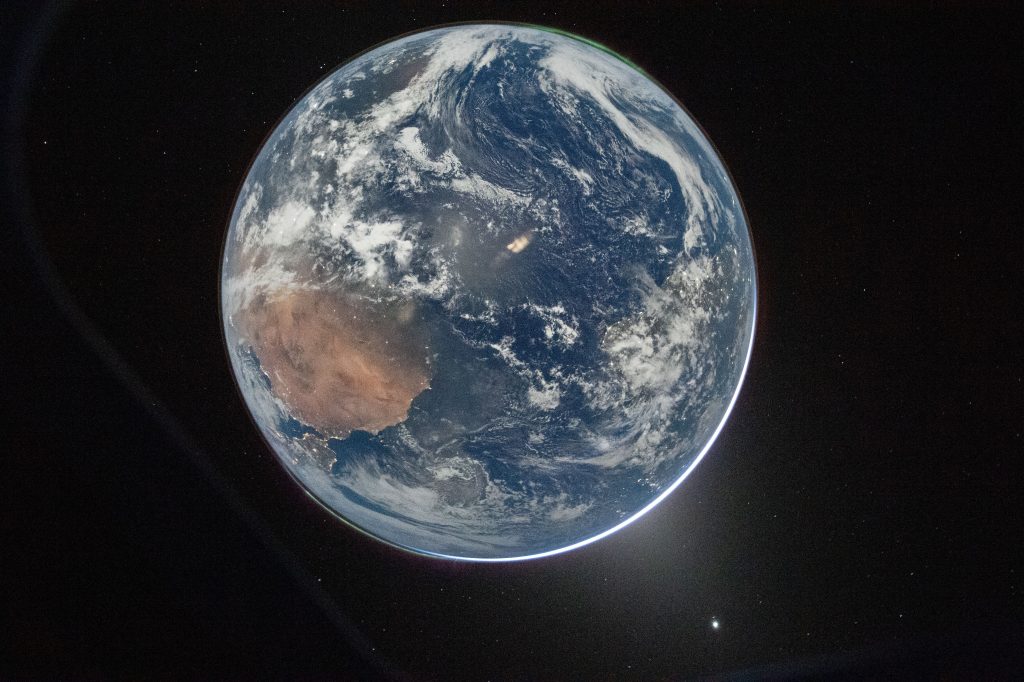
The first photo taken by commander Reid Wiseman shows a curved slice of Earth in one of the capsule’s windows. The second shows the entire globe with the oceans topped by swirling white tendrils of clouds. A green aurora even glows, according to NASA.
As of midmorning Friday, Wiseman and his crew were 100,000 miles from Earth and were quickly gaining on the moon with another 160,000 miles to go. They should reach their destination on Monday.
The three Americans and one Canadian will swing around the moon in their Orion capsule, hang a U-turn and then head straight back home without stopping. They fired Orion’s main engine Thursday night that set them on their course.
After Mission Control shifted the position of their capsule, the entire Earth complete with northern lights filled their windows.
“It was the most spectacular moment, and it paused all four of us in our tracks,” Wiseman said in a TV interview.
They’re the first lunar travelers since Apollo 17 in 1972.
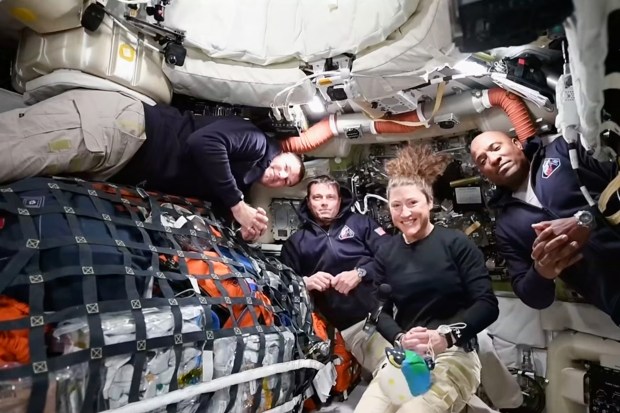 The Artemis II crew, from left, Canadien astronaut and mission specialist Jeremy Hansen, Commander Reid Wiseman, mission specialist Christina Koch and pilot Victor Glover on a video conference. (NASA via AP)
Meanwhile, teams at Kennedy Space Center’s Launch Pad 39-B began their first look at how much damage the launch site took after the Space Launch System rocket blasted off on Wednesday.
The SLS is the most powerful rocket to ever launch to orbit, producing 8.8 million pounds of thrust on liftoff. Its only-ever previous launch, the Artemis I mission in 2022, handed out severe damage to the mobile launcher, or ML1, that required significant repairs.
Directly after Wednesday’s launch, Lori Glaze, acting associate administrator for NASA’s Exploration Systems Development Mission Directorate, said imagery of the site seemed promising. Teams headed out to the pad after the hazardous conditions were given the all clear.
“We haven’t seen evidence of things like after Artemis I, (when) the elevator doors were blown off. We haven’t seen that,” she said.
The Orlando Sentinel contributed to this article.