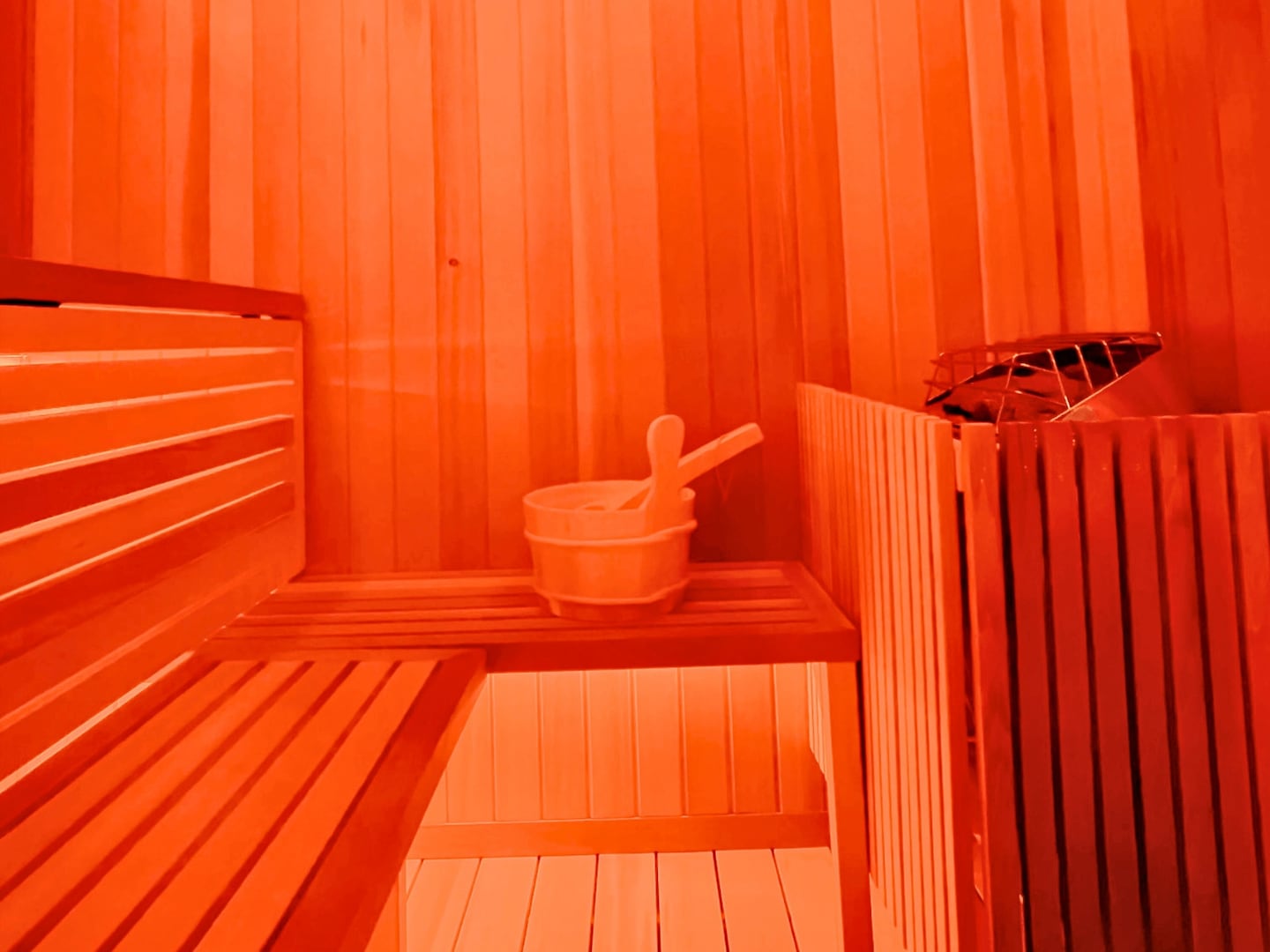
But unlike our Nordic counterparts, saunas have historically been a supporting role in Americans’ wellness routines, typically reserved for moments of “me time” in gyms or hotels.
“It’s something you just happen to do after your workout,” said Peter Russell, founder of Timbre Thermal Retreat in Revere. Plus, “they’re never that clean.”
And while research suggests that saunas may help reduce stress, improve heart health, and soothe sore muscles, local businesses like Moki and Timbre are trying to take saunas beyond one’s wellness routine and turn them into a social ritual.
Get Starting Point
A guide through the most important stories of the morning, delivered Monday through Friday.
In this universe, you don’t meet for drinks. You meet for a sauna (and leave your phone at the door).
“What you see in these other cultures is that the sauna is kind of the heart and soul of the community,” Russell said. In the United States, we’ve “gravitated to bars and cafes … and I think we’re just kind of finding that there is this other option that everyone else is doing around the world that is really fun and a great way to connect.”
Our fashionably late arrival to the sauna party can be attributed to a perfect cultural storm: A bump in health consciousness post-COVID, younger generations spending more on wellness, and a noticeable pullback from drinking.
And until recently, many third spaces didn’t make money unless you left with a hangover, Russell said.
Throw in some influencers sharing videos of themselves braving the cold plunge, and boom, you’re in business.
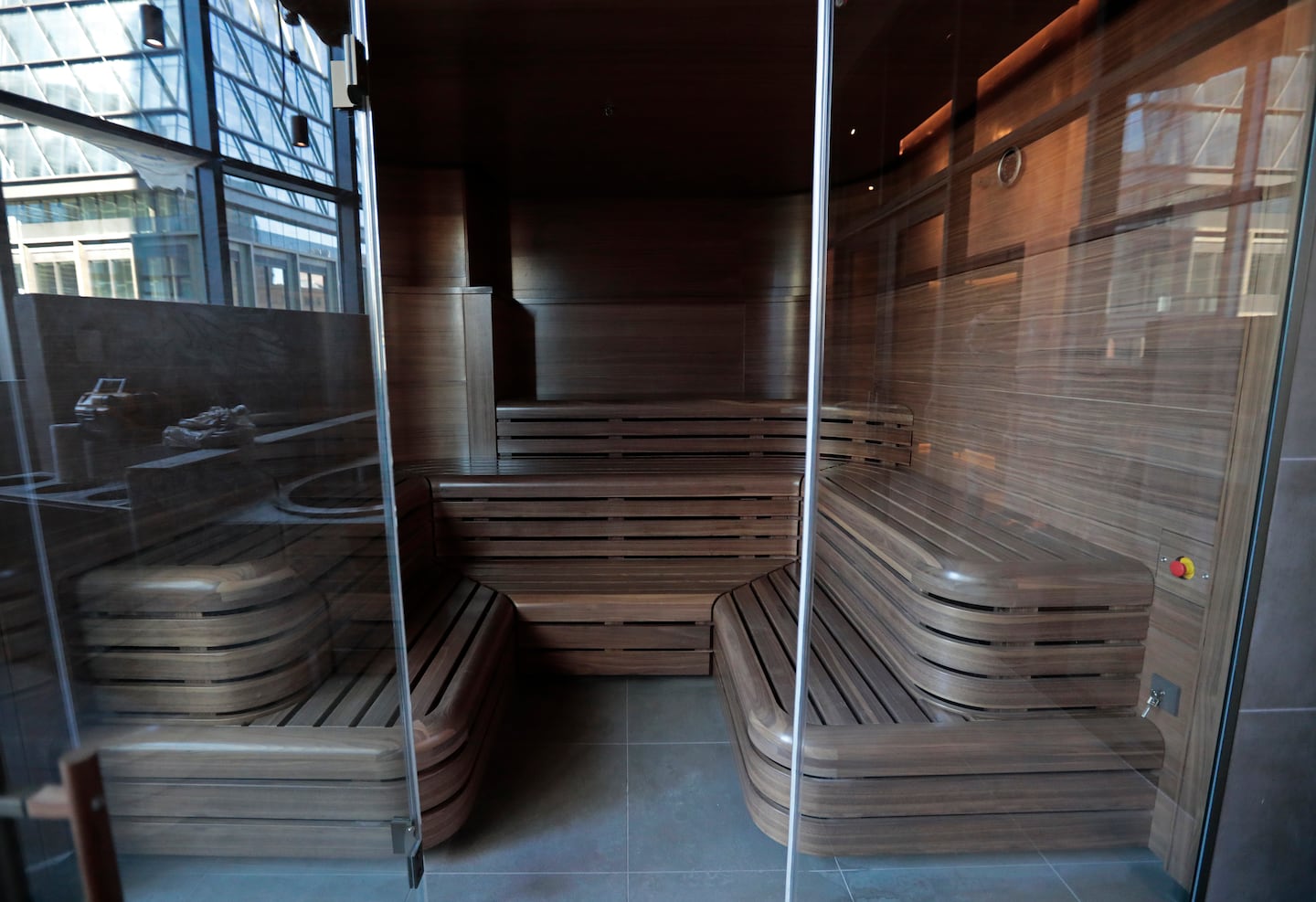 A large sauna at Remedy Place ahead of its grand opening a year ago.
Pat Greenhouse/Globe Staff
That shift is playing out in places like Remedy Place, a new social wellness club in the Seaport that offers a slew of amenities like IV drips, hyperbaric oxygen chambers, and AI massages. Their 10-person communal contrast suite, featuring a sauna, an ice bath studio, and steam room, is advertised as a place to bring a friend or meet someone new.
“Ten years ago, people thought this was ‘very LA,’” said Remedy Place CEO and founder Jonathan Leary. “Today, it’s part of a much larger global cultural shift. People need connection, they just want it in ways that support their health instead of compromising it.”
Leary said more guests come to Remedy Place with a plus one than solo. They’ve also seen a surge in group bookings, from birthdays to bachelorette parties to corporate outings.
Venues like Moki, Timbre, and Remedy Place offer a certain kind of “cool” factor that’s helped launch saunaing into Boston’s mainstream. But communal saunas like these aren’t new here.
Look north to Chelsea and you’ll find Dillon’s, the oldest-operating steam bath in the country.
Look south to Pembroke and you’ll find Uljas Koitto Temperance Society, home to a 100-year-old, volunteer-run, Finnish sauna perched on Furnace Pond — the ultimate cold plunge during the winter. (Reader, nearly every person I spoke to for this story begged to not blow this spot up.)
 Dillon’s Steam Bath in Chelsea. Lisa Rizzo
Lest we forget, “sauna culture and bathing culture in general in America was very taboo,” said Moki founder Mark Peloquin. “It had a connotation of … it was very risque, and it was just more counterculture.” Blame our Puritan roots!
But strip away the mood lighting, the “vibes,” and yes, the clothes, and what’s left is something much simpler:
“I think the magic of sauna in particular is that you’re doing this really hard thing, maybe with strangers, maybe with friends, and there’s something human about that,” said Paige Swanson, founder of Bathers, a soon-to-be bathhouse in Somerville. After all, sitting in a hundred-something-degree room isn’t exactly easy.
Even in moments of silence, there’s an unconscious understanding that “we’re all doing this hard thing,” Swanson said.
“A sauna is like the great equalizer,” Peloquin noted. “There are no hierarchies in a sauna. And I think that’s very refreshing for people to be in a space where you’re not being judged, and you are on the same level playing field of everyone else.” In some cases, even with the CEO of a major company, he added.
Back in Moki’s sauna, it didn’t take long to break the ice.
“Do you want to add water to the rocks?” I asked the room.
The sauna erupted in a steamy cloud, followed by a chorus of giggly “ahhhhs” as we settled into the heat. The finance bros lamented their summer of international weddings. The grad students compared dissertations. We all winced in solidarity as each person took their turn in the cold plunge.
Somewhere in Finland, they’re probably still rolling their eyes — but maybe now, they’re cracking a knowing smile: a room full of strangers, not just sweating, but connecting.
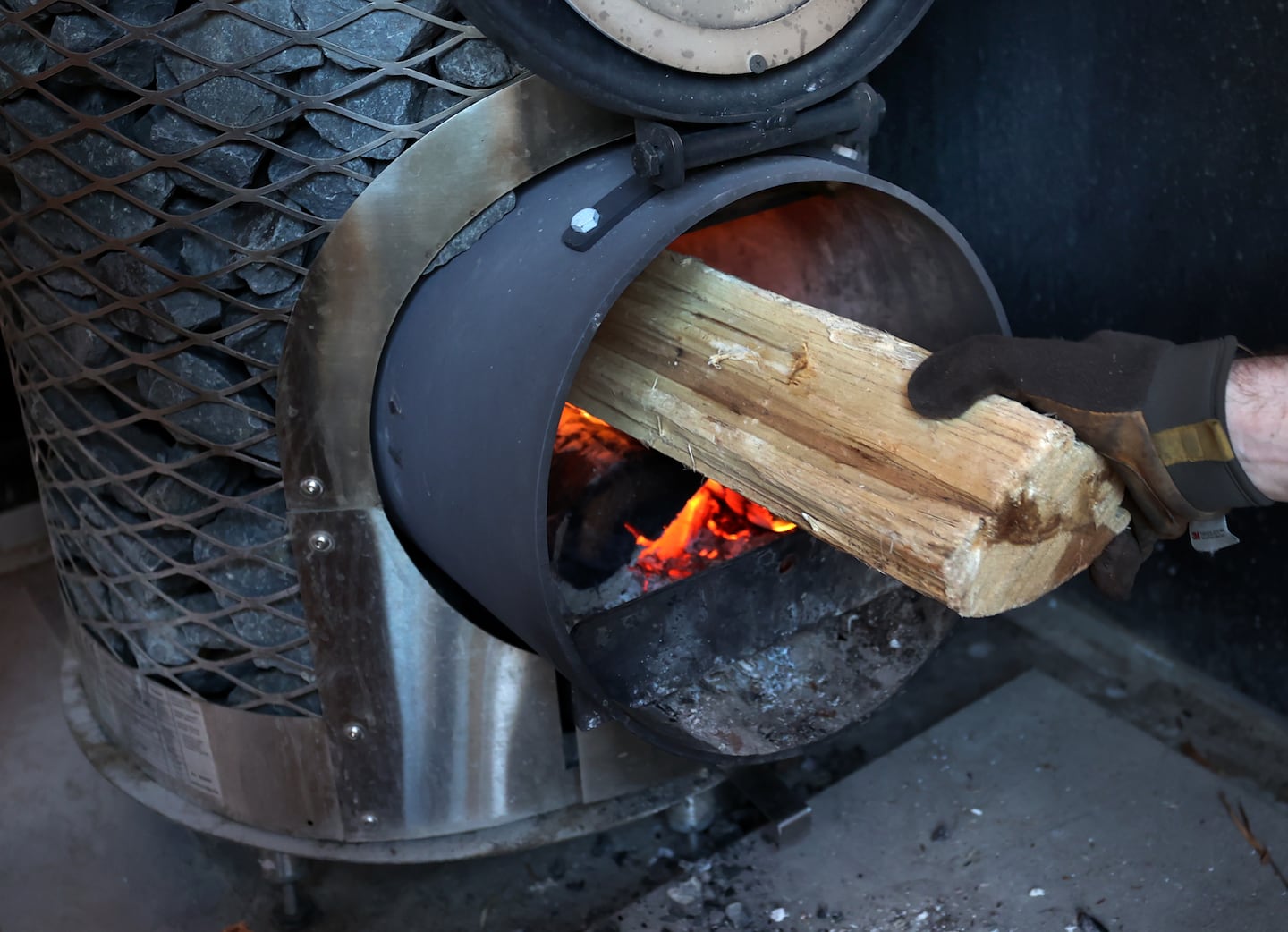 A log was placed in the stove to heat rocks in the sauna at MOKI Sauna Village in 2024.David L. Ryan/Globe Staff