Last Updated:April 06, 2026, 09:40 IST
Trump said Iranian negotiators have been granted “immunity from death” and claimed Tehran has effectively conceded on not acquiring nuclear weapons.




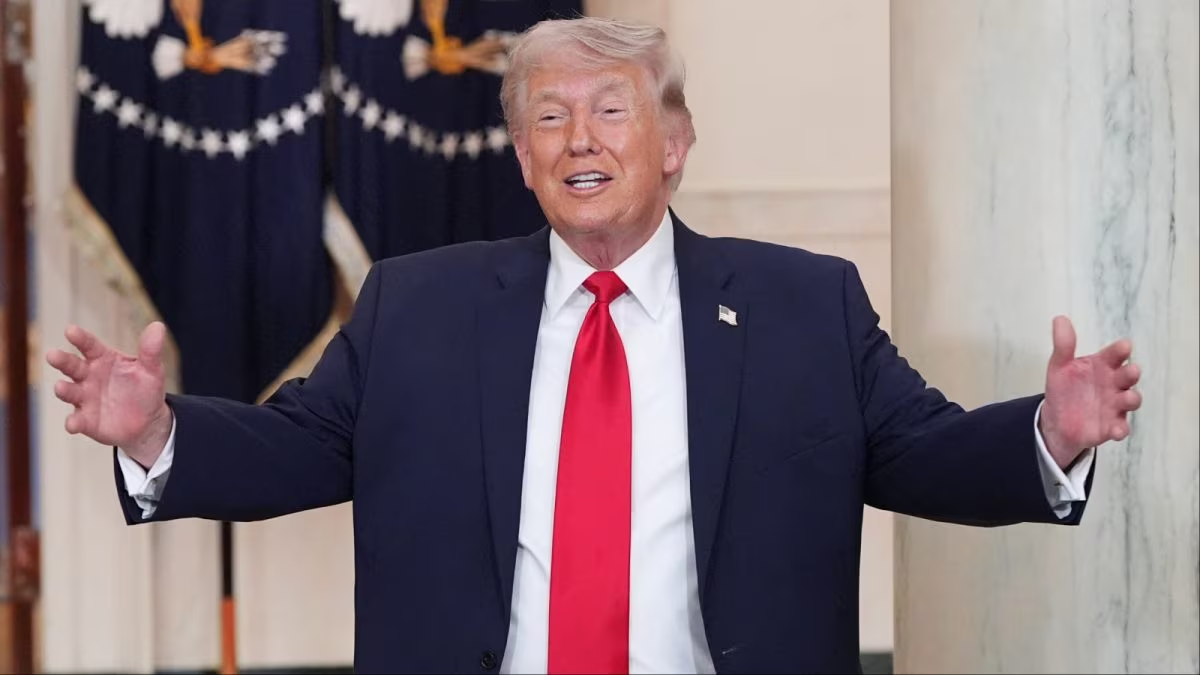
US President Donald Trump gestures after speaking at a televised address (File photo/AFP)
US President Donald Trump said Iranian negotiators have been granted what he described as “immunity from death” as diplomatic efforts continue to end the ongoing conflict between Washington and Tehran.
Speaking in an interview with Fox News on Sunday, Trump suggested that key sticking points in the negotiations had already been resolved, particularly on Iran’s nuclear ambitions.
LIVE Updates On The US-Iran War
“We’ve given them immunity from death. And we’ve told the people that we’re dealing with, who are the top people,” Trump said during the interview.
Emphasising progress on the nuclear issue, he added, “The big thing is they’re not going to have a nuclear weapon. They’re not even negotiating that point. It’s so easy. That’s already been conceded. Most of the points are conceded.”
Trump indicated that ceasefire talks linked to what he described as Operation Epic Fury remain under control.
“We have it under control, seriously under control. They want to make a deal so good, they just can’t get to the final starting line. But I think they’re close,” he told Fox News.
His remarks suggest the US administration believes negotiations with Tehran are moving toward a potential breakthrough, even as hostilities continue across the region.
TRUMP WARNS OF SEVERE CONSEQUENCES IF TALKS FAIL
In a separate interview with Axios, Trump said the United States is engaged in “deep and intense negotiations” with Iran and expressed cautious optimism that an agreement could be reached before his stated deadline on Tuesday.
“The negotiations are going well, but you never get to the finish line with the Iranians,” Trump told Axios, while adding that “There is a good chance, but if they don’t make a deal, I am blowing up everything over there.”
Trump also addressed concerns regarding the humanitarian impact of military action, telling Axios that he believes Iranian civilians opposed to the government may view strikes as weakening the regime.
He said civilians are “living in fear” and expressed concern that they might worry about a possible US withdrawal from the conflict, adding, “We are not going to leave.”
Trump further told Axios that during the rescue of a crew member from a US F-15E fighter jet downed in Iran, American officials initially feared Iranian forces might be attempting to lure US troops into a trap using deceptive signals.
He claimed the stranded weapons system officer transmitted a brief radio message stating, “Power be to God,” which officials believed was consistent with the individual’s religious beliefs and helped verify the authenticity of the communication.
“Thousands of these savages were hunting him down,” Trump said, referring to Iranian forces, while alleging that rewards had been offered for capturing the downed crew member.
He added that the US military used advanced technology to locate the officer hiding in mountainous terrain and that Israel provided limited assistance during the rescue effort.
STRAIT OF HORMUZ TENSIONS RAISE GLOBAL CONCERNS
Trump has also threatened severe consequences if Iran fails to reopen the Strait of Hormuz by his deadline, warning the country would be “living in Hell” if the critical waterway remains closed.
The strait is a key global energy chokepoint, handling significant volumes of oil and gas shipments.
Iran has responded with threats of its own, including warnings that it could disrupt traffic through the Bab el-Mandeb Strait near the Red Sea.
Iranian officials have suggested that reopening Hormuz could depend on compensation for war-related damages.
The conflict has already triggered attacks on energy and civilian infrastructure across several countries in the region.
Drone and missile strikes have caused damage to power plants, petrochemical facilities and desalination infrastructure in Gulf countries, highlighting the widening regional impact of the conflict.
Legal scholars cited by the Associated Press noted that international humanitarian law permits attacks on civilian infrastructure only if the anticipated military advantage outweighs the expected harm to civilians, a threshold considered difficult to meet.
Airstrikes were reported in Tehran early Monday, with explosions heard across parts of the city.
Meanwhile, the conflict, which began in late February, has led to significant casualties across multiple countries, disrupted global energy markets and heightened concerns about further escalation in an already volatile region.
Diplomatic engagement has continued alongside the fighting.
Officials from Oman have held discussions with Iranian counterparts on proposals to ensure safe maritime transit, while Egypt has engaged with US, Iranian, and regional representatives to prevent further escalation.
ALSO READ | How US Airman Hid In Iran’s Mountains Before Being Rescued In Daring Mission
First Published:
April 06, 2026, 07:08 IST
News world Trump Says He Gave Iran Negotiators ‘Immunity From Death’, Claims ‘Key Points Resolved’Disclaimer: Comments reflect users’ views, not News18’s. Please keep discussions respectful and constructive. Abusive, defamatory, or illegal comments will be removed. News18 may disable any comment at its discretion. By posting, you agree to our Terms of Use and Privacy Policy.
Read More