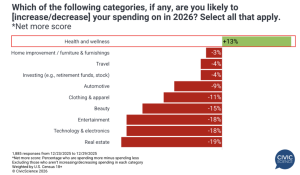
Recent survey results from CivicScience find that health and wellness is the only category studied in which intent to increase spending in 2026 outweighs intent to cut back.
In every other category, the percentage of consumers who plan to spend less exceeds the percentage who plan to spend more. That resilience, however, is not one-size-fits-all, as consumers define health and wellness purchases differently.
The survey data collected in late December showed that consumers are most likely to plan to reduce spending on entertainment, technology, electronics, and real estate. This data also aligns with increasing intent for health-focused New Year’s resolutions this year, according to CivicScience.

Ways Consumers Are Increasing Health and Wellness Spending
Among those who say they plan to increase health and wellness spending this year, food and nutrition lead by a wide margin. Half expect to spend more on healthy groceries and nutrition products, making it the most common form of investment in personal health.
Mental health-related purchases, such as therapy and meditation apps, follow at 26 percent, alongside beauty and personal care purchases. Rounding out health and wellness preferences among all U.S. adults surveyed were home wellness gear (e.g., exercise equipment), 22 percent; wellness travel (e.g., health retreats), also 22 percent; gym or fitness memberships, 21 percent; wearable tech (e.g., fitness trackers), 19 percent; and recovery services (e.g., saunas), 18 percent.
However, there is a clear generational divide in how these budgets are allocated. While older demographics lean heavily toward dietary health, Gen Z is diversifying spending across beauty, mental health, home wellness equipment, and wellness-focused travel, signaling a shift toward a more holistic, lifestyle-integrated definition of well-being.
ImI Image courtesy Integris Health / Charts courtesy Civicscience