A top-selling Chinese health supplement company has triggered a national scandal after its products were revealed to be produced domestically, despite being marketed as high-end Australian imports.
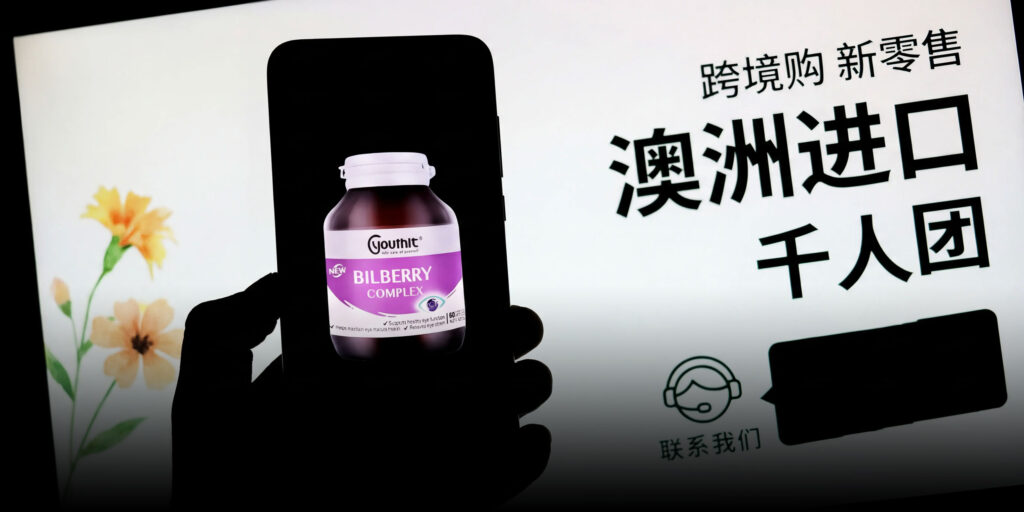
Revealed on April 1 in an investigation by state broadcaster CCTV, the brand, called YouthIt, also allegedly purchased international cosmetic awards to boost its image, and its products lacked the governmental approval required to be listed as health supplements.
The news quickly went viral online, with the hashtag “YouthIt” attracting more than 130 million views on Chinese microblogging platform Weibo as of Tuesday.
Touted as a deluxe Australian supplement brand, YouthIt is among the top supplement sellers on major domestic e-commerce platforms, having sold more than 6 million bottles of lutein — an antioxidant used to protect eye function — across all platforms. Products cost between roughly 300 ($44) and 400 yuan each.
False claims of overseas origins have been a common marketing tactic among some Chinese brands, used to create a premium image and justify higher prices. But the practice is now coming under increasing scrutiny, with regulators cracking down on fraudulent advertising.
The brand’s false origin claim first drew scrutiny from consumers, who traced YouthIt’s product import information to a company based in the eastern Anhui province. CCTV reporters then visited the brand’s registered address in Melbourne, Australia, finding an unrelated auto repair shop rather than a health supplement production facility.
In response to the CCTV investigation, the State Council’s food safety office, the State Administration for Market Regulation, and the General Administration of Customs, launched a joint investigation before summoning Douyin, the Chinese version of TikTok, Alibaba’s e-commerce platform Tmall, and lifestyle platform Xiaohongshu, also known as RedNote, for talks regarding stricter enforcement of cross-border e-commerce company oversight.
“Platforms, as the infrastructure behind these transactions, cannot hide behind claims of ignorance,” Lei Jiamiao, a lawyer at Henan Hounuo Law Firm, told Sixth Tone. Under China’s E-commerce Law, platforms must verify merchants and ensure the safety of food and drugs, or face liability for compensation if they fail to address known issues.
YouthIt responded in a Friday statement that it is cooperating fully with the regulators’ investigation and has launched an internal review and self-correction process. The company said it ended its cooperation with its marketing firm, Suoxiang Marketing, in 2024, which YouthIt said had exaggerated the brand’s story to attract clients.
An anonymous employee at Suoxiang Marketing told CCTV that the marketing company had boosted the brand’s credibility by hiring overseas experts, purchasing international cosmetics awards, and generating tens of thousands of promotional posts on domestic social media.
The brand also obtained endorsements from multiple celebrities and well-known livestreamers. Since the scandal erupted, several who promoted YouthIt products have issued online apologies and promised to reimburse customers who purchased products through their sales channels.
“In the YouthIt case, livestream hosts hired to promote the products cannot evade responsibility if they falsely endorse claims about origin or international awards,” Lei said. “According to livestream marketing and advertising regulations, hosts and platform operators must verify supplier credentials and assume the legal duties of advertisers or endorsers.”
Zheng, a manager at a supplement-brand marketing firm, told CCTV that many products marketed as foreign-made are actually produced domestically, and that prices of such products can be inflated 10 to 20 times their true value.
Sun Xiao’an, a consumer from the eastern Zhejiang province, told Sixth Tone that she has been buying YouthIt’s lutein capsules for her daughter for three years, hoping to control her myopia. Over that time, she spent roughly 10,000 yuan on related products.
“I believed that buying from the official store on Tmall meant the products were reliable,” she said. “When I purchased the products, I even confirmed with customer service that they were suitable for minors.”
Sun now worries about what she and her daughter have been using. “After three years, I have no idea what ingredients were in these products, what their composition was, or whether they posed any health risks.”
Tmall has refused to issue refunds for opened products, only allowing returns for unopened items purchased within the past three months, Sun added.
According to domestic market analytics firm Zhiyan Consulting, fraudulent marketing practices are on the rise in China’s dietary health supplement market, reaching 312.4 billion yuan last year, driven by consumer information gaps, weak platform oversight, and the country’s booming influencer economy.
To combat the problem, the government has simultaneously stepped up efforts to regulate the health supplement sector. In November 2025, the State Administration for Market Regulation launched a nationwide crackdown on false advertising aimed at seniors, with an emphasis on drugs and health supplements.
Editor: Marianne Gunnarsson.
(Header image: A YouthIt promotional image. From Weibo)