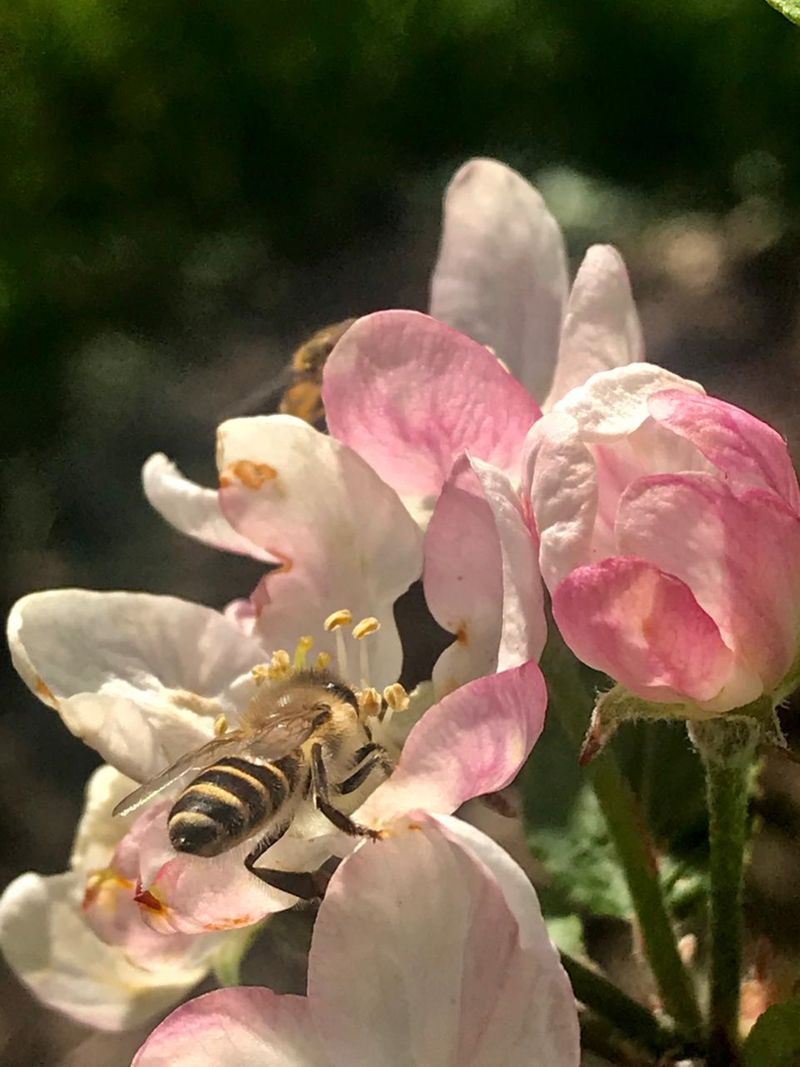
In recent years, Himachal has witnessed a dramatic shift in weather patterns, affecting relationship between ecological systems and sustainable development of temperate fruit cultivation. Erratic, unseasonal and scanty precipitation, along with heavy hailstorms during the growing season and below-average snowfall, are gradually impacting apple productivity. An unprecedented rise of around 10°C in temperatures during February and early March this year triggered an early break in dormancy and the initiation of sap flow in apple and other temperate fruits, advancing the usual bud-break dates. However, rainfall and snowfall in the higher hills in late March slowed the process, bringing it closer to normal timelines. In the low and mid-hill regions, flowering began irregularly, leaving farmers worried about poor fruit set due to adverse weather conditions.
Pollination, a key factor
During the flowering stage, pollination is one of the key factors for successful fruit production in apple orchards. It directly influences fruit set, yield, quality and ultimately the marketability of the harvest. Pollination refers to the transfer of pollen grains from the anther (male part) to the stigma (female part) of a flower. It occurs when a pollinator collects pollen from one flower and inadvertently transfers it to the sticky stigma of another flower on a tree of a compatible variety. For consistent production of high-quality fruit, pollen from a compatible pollinizing variety is usually required for effective fruit set. Without proper pollination, trees may produce fewer fruits, lower-quality produce, or no fruit at all.
Apple flowers are produced on two-year-old, short, stubby, wrinkled, slow-growing branches, usually less than 15 cm in length, known as spurs. These spurs remain productive for eight to 12 years. Fruiting spurs older than six years need to be rejuvenated through pruning to maintain fruit quality. Typically, a fruit set of only 5 per cent to 10 per cent of the total flowers in an orchard is sufficient to achieve a good commercial crop. Excessive fruit load reduces the formation of flower buds for the following year. To ensure quality fruit and maintain productivity, the fruit load should be optimised by thinning during the pea to cherry-sized fruit stage.
Factors affecting pollination, fruit set
The weather plays a crucial role in determining the success or failure of pollination and fruit set, as it directly affects flowers, developing fruits, and bee activity. Freezing temperatures during the bloom period can damage flowers and young fruitlets. Low temperatures also hinder pollen germination and slow down pollen tube growth. Wind can negatively impact fruit set by drying out or physically damaging the stigmas. Humidity levels also play an important role – high humidity can prevent proper pollen release, while low humidity may dry out stigmas and reduce pollen germination. Adverse weather conditions such as cold, wind, or rain during flowering reduce bee activity and delay their flights. Bees prefer clear days with temperatures above 12.8°C, and their activity peaks between 20°C and 30°C. Hailstorms can cause severe physical damage by destroying flowers and can also adversely affect flowering in the following season.
Bees and pollination
Only one or two warm days are necessary for bees to effectively pollinate flowers during the bloom period, which typically lasts around nine days to two weeks. In apple orchards with less than 15 per cent pollinating varieties, it is recommended to keep at least 8 colonies of six or eight frame strength per hectare. In orchards with over 30 per cent pollinating varieties, two or three colonies per hectare are generally sufficient to enhance pollination. Each hive should contain a minimum of fiver or six frames of bees, roughly 20,000 bees, to be effective. Colonies should be placed in the orchard when 5 per cent to 10 per cent of the flowers have bloomed.
Flowers are mainly pollinated by honeybees, which account for 60 to 95 per cent of pollination, although native bees and bumblebees are often more effective under cooler conditions. After pollination, it takes approximately 5.5 to 7 days for the pollen tubes to grow down to the ovule and achieve successful fertilization. In orchards with low-pollinating varieties, growers can use pollen dispensers to enhance fruit set. Honeybees consume large quantities of water to regulate in-hive temperatures. It is advisable to provide a nearby source of clean water to prevent bees from flying long distances in search of water.
Nutrition, thinning, and pruning
Nutrition, thinning sprays, and pruning also play a significant role in flowering and fruit set in apple orchards. Thinning sprays are particularly important in planned pollination. If early blooms are pollinated over a short period, excess fruit set may occur. Thinning sprays remove weaker fruits with fewer seeds, giving the remaining fruits a better chance to develop, reducing limb breakage, improving fruit size, colour, and quality, and helping to control biennial bearing. Adequate nutrition is also critical. Nitrogen helps enhance ovule viability, fruit set, and overall yield by creating a reserve that extends the effective pollination period. Urea applied at 0.5 per cent to 0.75 per cent at the pink-bud stage has been shown to prolong flower duration and improve fruit set, while late summer or fall fertilisation should be avoided as it can trigger tender growth that cannot harden before winter. Boron is essential for pollen germination, pollen tube growth, and mitotic division. To support optimal fruit set and protect against core-rot disease, growers are advised to spray 200 grams of boron along with 100 grams of a recommended systemic fungicide per 200 litres of water between the pink-bud and balloon stages of flower development. These measures together help ensure the rapid production of high-quality flowers, effective pollination, and ultimately, better fruit yield and quality.
(The writer is a former professor of University of Horticulture and Forestry, Nauni)