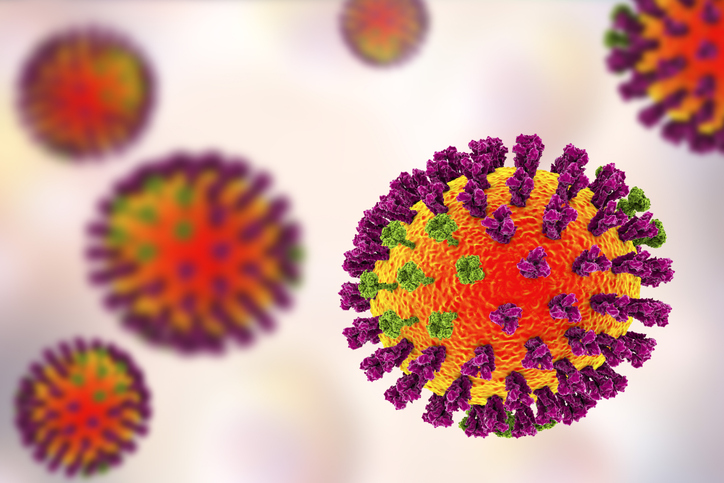
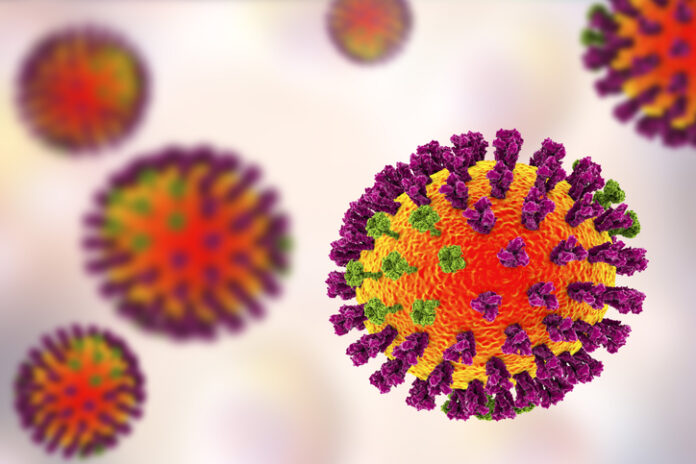
 Credit: Kateryna Kon / Getty Images / Science Photo Library
Researchers at the Institute for Biomedical Sciences at Georgia State University have developed a vaccine platform designed to provide protection against a range of influenza virus infections by targeting conserved viral structures and inducing immunity at mucosal surfaces. The study, published in ACS Nano, details how the development of the novel vaccine uses cell-derived extracellular vesicles (EVs) engineered to display multiple influenza hemagglutinins (HAs) in an inverted configuration, which allows the immune system to recognize conserved regions shared across viral strains. In mouse models, the vaccine elicited cross-reactive antibodies, cellular immune responses, and mucosal immunity, providing protection against heterosubtypic H5N1 and H7N9 influenza virus challenges following intranasal administration.
“The influenza virus is smart. They have evolved to evade the immune system by hiding their critical conserved structures, rendering these elements poorly immunogenic,” said senior author Bao-Zhong Wang, PhD, a professor at the Institute for Biomedical Sciences at Georgia State.
The vaccine’s design centers on two key features: the use of extracellular vesicles (EVs) as a delivery platform and the inversion of HA proteins on their surface. EVs are natural nanoparticles involved in cell-to-cell communication and have been researched extensively for therapeutic delivery due to their biocompatibility. In this study, they were engineered to display multiple HA subtypes simultaneously. The HAs were presented in an upside-down orientation, which partially shields the highly variable head domain while exposing the conserved stalk domain. This structural arrangement directs the immune response toward regions less prone to mutation, enabling broader protection across influenza strains.
“These (vaccine responses) highlight that the inverted HA is a smarter strategy for inducing protective immunity to the conserved HA stalk. Meanwhile, cell-origin EVs are a biocompatible platform for mucosal vaccine delivery. Using EVs simultaneously displaying multiple inverted HAs is a powerful approach for developing universal influenza vaccines,” Wang added.
To test their vaccine design the researchers immunized mice intranasally with the EV-based vaccine, allowing researchers to assess mucosal immunity in addition to systemic responses. The data showed that the vaccine induced cross-reactive antibodies targeting HA stalks, virus-specific T cell responses, and a balanced Th1/Th2 immune profile. Importantly, the vaccinated mice were fully protected against lethal infections from reassortant H5N1 and H7N9 viruses.
The new vaccine designed was based on previous research into EV-based vaccine delivery and different strategies to target the HA stalk. Earlier studies had shown that EVs could serve as adjuvants and antigen carriers for intranasal vaccines. In addition, other research seeking to develop a universal influenza vaccine has focused on the conserved HA stalk domain, which evolves more slowly than the immunodominant head. As the researchers noted, “the conserved HA stalk domain has emerged as a promising candidate for a universal influenza vaccine due to its low evolutionary rate and greater tolerance to mutations.” However, previous approaches had used isolated HA stalk constructs, but faced shortcoming related to structural stability and immunogenicity.
By preserving the full HA ectodomain while inverting its orientation, the new design addressed these limitations. “Our findings suggest that utilizing the entire HA ectodomain as an immunogen, while hiding the HA head and increasing exposure of the HA stalk, is an effective strategy to induce robust immune responses targeting conserved HA epitopes,” the researchers wrote, noting that this approach allows the immune system to access structurally intact conserved regions.
If this vaccine design can be shown effective in humans, it could provide a vaccine with broader and longer-lasting protection against influenza, and reduce the need for frequent reformulations. The use of intranasal delivery could also change how vaccines are administered by targeting immune responses at the site of viral entry. “Mucosal vaccination effectively induces local immune responses, protecting against respiratory virus infections at the site of invasion,” the team noted.
Next steps for the team include continued characterization of the immune responses induced by the vaccine, to include the specificity and neutralizing capacity of antibodies, as well as evaluation of anti-EV immunity with repeated dosing. More animal studies, and eventually clinical trials, will be needed to assess safety, scalability, and efficacy in humans.