There is a wide range of supplements to consider, but one that’s been popular in naturopathic circles for years has recently broken into the mainstream. It’s lion’s mane, and fans swear the supplement will do everything from boost cognition to support digestive health.
While it’s crept into the public consciousness, lion’s mane still isn’t a household supplement. With that, it’s understandable to be aware it exists without understanding what, exactly, it is.
“Lion’s mane — Hericium erinaceus — is a white, shaggy-looking medicinal mushroom that grows on hardwood trees across the Northern Hemisphere,” explains Karen D. Sullivan, PhD, clinical neuropsychologist at the Pinehurst Neuropsychology Brain & Memory Clinic. “It has a long history of use in traditional Chinese medicine and is now widely discussed as a possible brain health enhancer.”
What is lion’s mane?
Lion’s mane is a mushroom that’s used for medicinal purposes. This mushroom has a shaggy appearance that makes it “look more like a carpet from the 70s, a lion, or a hedgehog, than a fungus,” says BreAnna Guan, ND, a licensed naturopathic physician. “It has been used for centuries in China as an elixir for better health, both in food and medicine,” she says.
Lion’s mane can be eaten as food, but it’s most commonly taken as a supplement, Sullivan says. “Its potentially active compounds are better absorbed when the mushroom is prepared through extraction rather than eaten raw,” she adds.
Lion’s mane supplements can be taken in the form of a capsule, powder, or tincture, giving people plenty of options. It’s important to point out that research in support of lion’s mane supplements is ongoing and not robust at the moment. While some data suggest it may help cognition in middle-aged and older adults, results are mixed in younger people. These mushrooms also contain probiotics to support digestive health and potentially the immune system.
Because lion’s mane is a supplement, it’s not tightly regulated by the Food and Drug Administration (FDA). That can make it difficult to know what you’re actually getting. With that in mind, and to learn about the best products to take, we consulted with a neuropsychologist, dietitian, and naturopathic physician who all recommend lion’s mane to their patients.
Read more: Best fiber supplements, according to experts
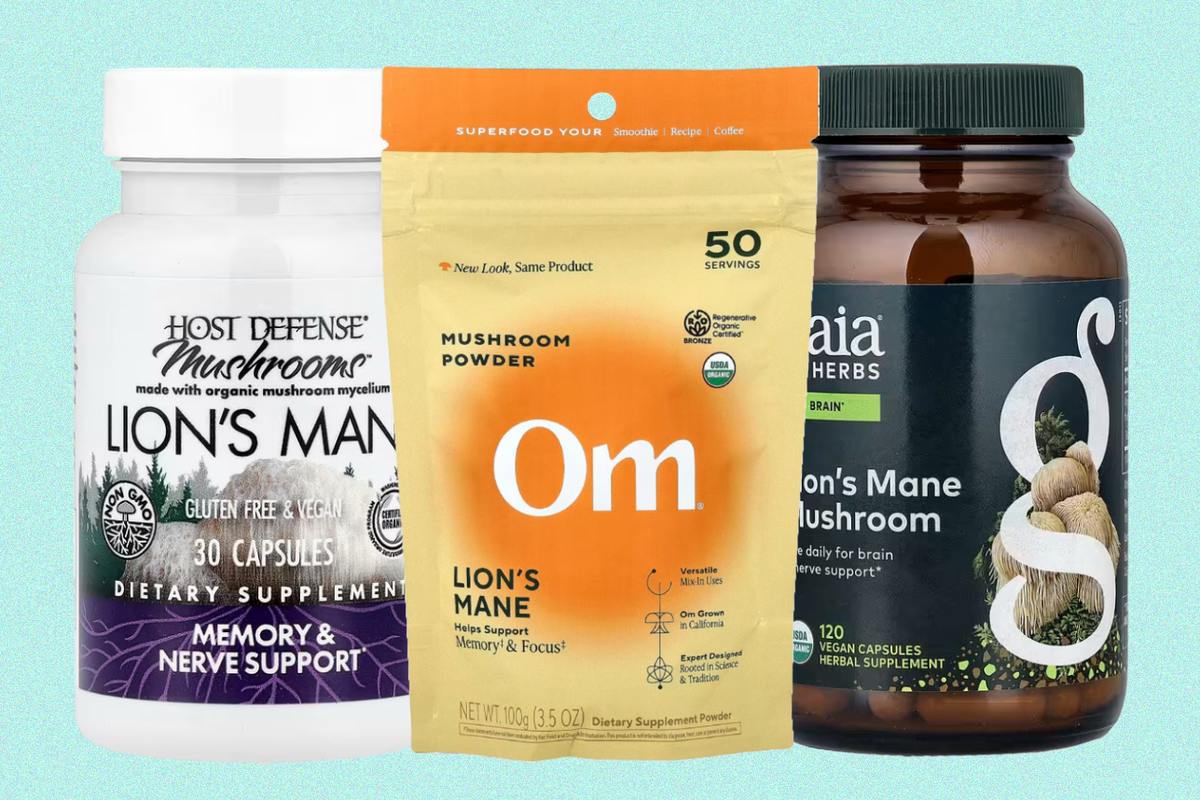
Best lion’s mane supplements for 2026 are: Host Defense mushrooms lion’s mane: $15.72, Iherb.comOm lion’s mane mushroom powder: $18.93, Iherb.comGaia Herbs lion’s mane mushroom: $61.69, Iherb.comLone Star Mushrooms lion’s mane mushroom extract: $35.99, Amazon.com